TAIPEI — March 11, 2026 : Taiwan is on course to establish the world’s highest density of land-based anti-ship missiles, as the island accelerates production of its indigenous Hsiung Feng missile family while simultaneously receiving U.S.-supplied Harpoon coastal defense systems. The buildup forms a central pillar of Taiwan’s asymmetric defense strategy aimed at deterring a potential amphibious invasion by creating a heavily fortified coastal missile network.
The expansion is being implemented under Taiwan’s Sea Air Combat Power Improvement Plan, which significantly increased funding for domestic missile manufacturing. According to defense officials cited by Taiwan’s Liberty Times, mass production of the Hsiung Feng II and Hsiung Feng III anti-ship missile series is proceeding on schedule and is expected to conclude by December 2025.
Domestic Missile Production Expands
Taiwan’s missile manufacturing effort is led by the National Chung-Shan Institute of Science and Technology (NCSIST), the country’s primary state-run defense research and production organization. Under the special defense budget allocated for the program, NCSIST has maintained steady production of multiple missile variants designed to strengthen Taiwan’s coastal strike capability.
By the end of this year, Taiwan’s military inventory is projected to exceed 1,000 domestically produced anti-ship missiles, primarily from the Hsiung Feng II and Hsiung Feng III families.
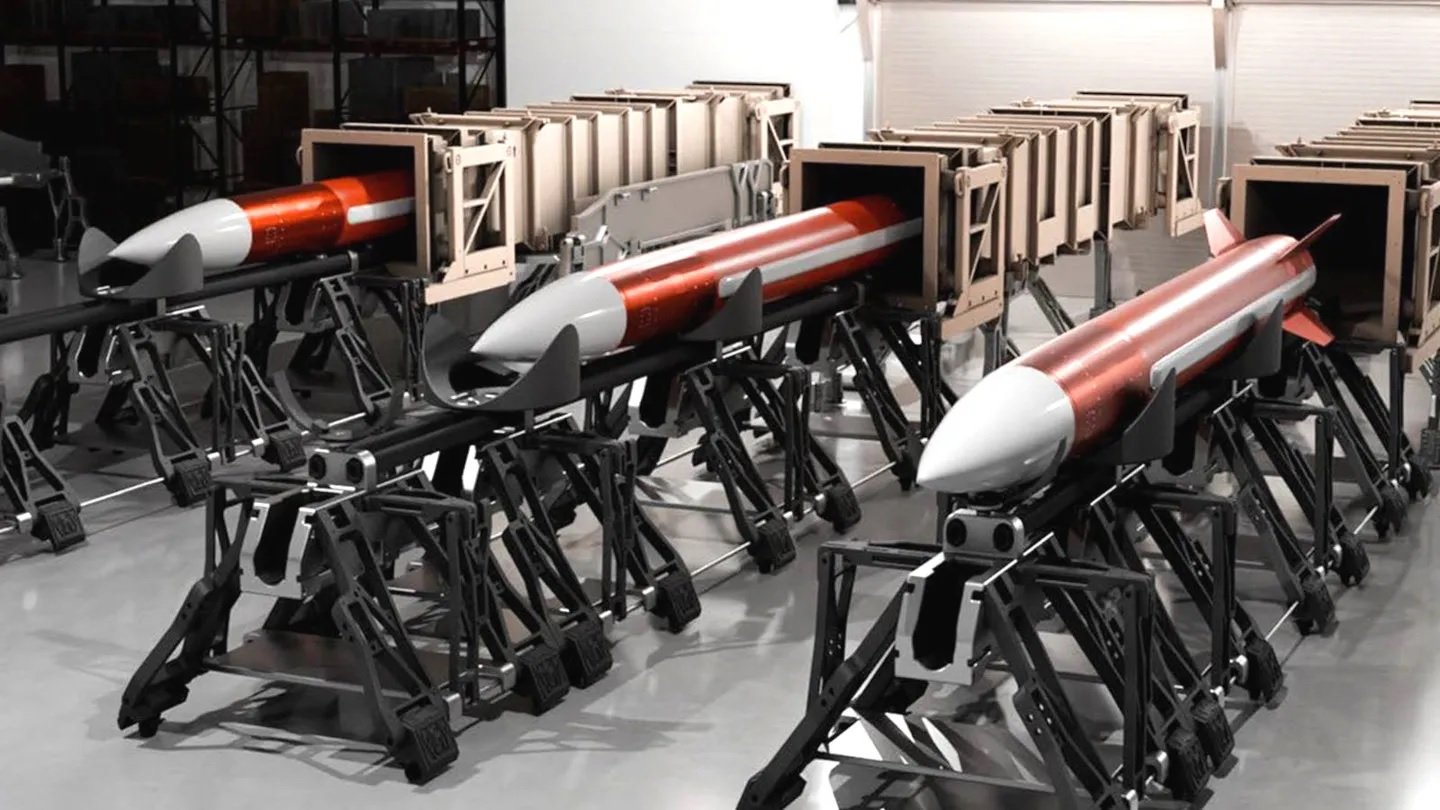
Production is divided between two main assembly lines. One line manufactures the Hsiung Feng II subsonic missile along with its extended-range derivative, the Hsiung Sheng, producing approximately 131 missiles annually. A second production line manufactures the Hsiung Feng III supersonic anti-ship missile and its extended-range variant, yielding roughly 70 missiles per year.
The Hsiung Feng II serves as a medium-range subsonic anti-ship missile designed for coastal defense and surface-to-surface engagements, while the Hsiung Feng III is a supersonic missile intended to penetrate modern naval air defenses. The extended-range versions of both systems are designed to increase engagement distances against hostile naval forces operating in waters surrounding Taiwan.
Officials stated that NCSIST has met several production targets ahead of schedule, allowing Taiwan’s missile inventory to expand more rapidly than initially projected when the Sea Air Combat Power Improvement Plan was approved.
Planned Technology Upgrades
Alongside the ongoing production program, Taiwan’s Ministry of National Defense plans to continue manufacturing upgraded versions of the Hsiung Feng missile series under the regular defense budget.
An estimated 232 additional upgraded Hsiung Feng II and Hsiung Feng III missiles are scheduled to be produced in the coming years. These modernized variants will incorporate improved electronic components and updated chipsets designed to enhance guidance precision while increasing resistance to electronic warfare measures, including jamming and signal interference.
The upgrades are intended to ensure the missile systems remain effective against increasingly sophisticated naval air defense systems and electronic warfare capabilities deployed by potential adversaries.
U.S. Harpoon Coastal Defense Acquisition
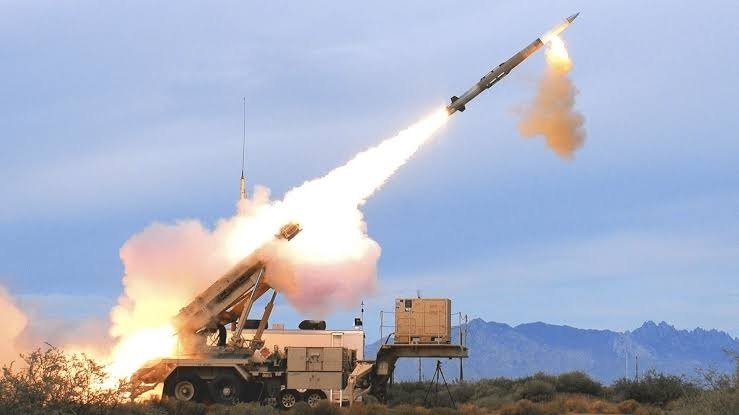
Taiwan’s domestic missile inventory is being supplemented by a large procurement of U.S.-manufactured coastal defense systems centered on the RGM-84L-4 Harpoon Block II anti-ship missile.
Under the acquisition program, Taiwan is purchasing 100 Harpoon Coastal Defense Systems, which collectively include 400 Harpoon Block II missiles, launch vehicles, radar trucks, and associated support equipment.
Deliveries began in late 2024, when the first batch of missiles and associated launch systems arrived in Taiwan. According to the current delivery schedule, Taiwan is expected to receive 32 systems and 128 missiles by 2026, while the remaining units will be delivered in subsequent phases.
Full delivery of the 400 Harpoon missiles and all supporting equipment is projected to be completed by 2028, at which point the systems are expected to be fully operational across Taiwan’s coastal defense network.
Inventory Expected to Exceed 1,400 Missiles
When the domestically produced Hsiung Feng missiles are combined with the Harpoon missiles being delivered from the United States, Taiwan’s land-based anti-ship missile inventory is projected to surpass 1,400 missiles.
Defense officials state that this concentration of coastal strike weapons would represent the densest deployment of land-based anti-ship missiles in the world.
The missile buildup is part of Taiwan’s broader asymmetric warfare doctrine, often described as a “porcupine” strategy. The concept emphasizes deploying large numbers of mobile and survivable defensive systems capable of imposing significant costs on any amphibious invasion force.
Establishment of Littoral Combatant Command
To coordinate the rapidly expanding missile arsenal, Taiwan’s military plans to establish a new Littoral Combatant Command in July 2026. The command will integrate existing coastal missile formations with newly established Harpoon-equipped units.
The new structure will oversee the current Hai Feng brigades, which operate Taiwan’s indigenous anti-ship missile systems, and will unify command and control over all ground-launched anti-ship missile forces into a single operational framework.
Military planners expect the centralized command structure to improve targeting coordination, operational planning, and deployment flexibility across Taiwan’s coastal defense units.
Layered Missile Defense Network
Taiwan’s coastal defense concept relies on the combined deployment of both indigenous and U.S.-supplied missile systems to create a layered strike capability.
The Hsiung Feng III, with its supersonic speed, is designed to reduce interception time for naval air defense systems, while the Hsiung Feng II, Hsiung Sheng, and Harpoon Block II missiles provide additional subsonic strike options with different engagement profiles and ranges.
By fielding a combination of supersonic and subsonic anti-ship missiles launched from multiple mobile platforms along Taiwan’s coastline, military planners aim to enable multi-vector saturation attacks against hostile naval task forces approaching the island.
Officials state that the integration of these missile systems is intended to complicate the operational planning of any naval force attempting to operate within Taiwan’s coastal waters, particularly in the context of a potential amphibious assault scenario.
The ongoing expansion of Taiwan’s anti-ship missile capabilities, supported by both domestic production and U.S. arms transfers, is expected to remain a central element of the island’s coastal defense posture over the coming decade.
——— End of Article ———