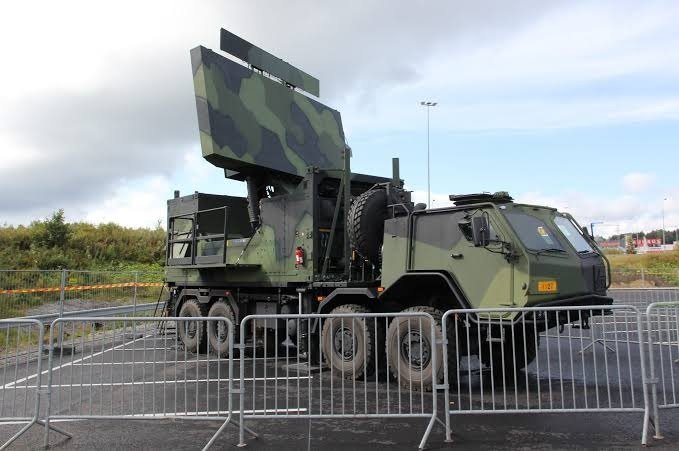
TAIPEI : Taiwan has begun receiving the first major components of its U.S.-supplied land-based Harpoon Coastal Defense Systems (HCDS), marking the initial physical delivery phase of one of the island’s largest recent missile procurement programs. Local media reports and publicly circulated photographs confirm the arrival of mobile missile launcher trucks, radar vehicles, and command-and-control equipment, transported in secured military convoys to designated facilities.
The deliveries mark the transition from preparatory training and documentation to the arrival of fielded hardware under a long-planned acquisition intended to strengthen Taiwan’s coastal strike and maritime denial capabilities.
Procurement Background and Contract Structure
Taiwan is acquiring 100 land-based Harpoon Coastal Defense Systems and 400 RGM-84L-4 Harpoon Block II missiles through the U.S. Foreign Military Sales (FMS) framework. The package is valued at approximately US$2.37 billion and was approved as part of Taiwan’s broader defense modernization program.
The Harpoon systems are produced by Boeing, while the mobile launcher vehicles are based on the Heavy Expanded Mobility Tactical Truck (HEMTT) platform manufactured by Oshkosh Defense. The FMS package includes equipment, training, technical support, spare parts, and long-term sustainment.
Phased Delivery Timeline
The delivery plan follows a multi-year, phased structure designed to align personnel training and system integration with the introduction of operational equipment.
The initial phase (2024–2025) focused on non-combat elements, including training simulators, technical manuals, logistics planning tools, and the deployment of U.S. instructors and technical advisers.
The current phase (late 2025–2026) involves deliveries of mobile launchers, radar systems, fire-control units, and command-and-control vehicles. Taiwanese defense officials expect 32 complete HCDS units to be in country by the end of 2026.
The final phase (by 2028) will complete delivery of the remaining 68 systems and introduce live RGM-84L-4 missiles, bringing the total to 100 operational systems and 400 missiles. The sequencing ensures trained crews and integrated command networks are in place before live munitions are fielded.
System Design and Technical Characteristics
The Harpoon Coastal Defense System uses road-mobile launchers mounted on HEMTT vehicles, allowing rapid relocation across varied terrain and flexible deployment from multiple firing positions.
The RGM-84L-4 Harpoon Block II missile is optimized for littoral and near-shore operations. It combines GPS-aided inertial navigation with active radar homing, enabling engagement of targets in congested sea lanes and complex coastal environments.
Manufacturer specifications list a range exceeding 124 kilometers, while some independent assessments suggest performance may reach approximately 148 kilometers under certain conditions. The missile is designed to strike moving surface vessels and fixed maritime targets, including ships in port and coastal installations.
Operational Command and Integration
The systems will be operated by Taiwan’s Naval Coastal Defense Command, commonly known as the Hai Feng Group. Defense planning documents indicate the unit is expected to be reorganized into a formal Littoral Combatant Command by January 2026.
Once fielded, the Harpoon batteries will operate under a dispersed, road-mobile concept, deploying from concealed, hardened, or temporary positions to reduce vulnerability and improve survivability.
The U.S.-supplied systems will operate alongside Taiwan’s Hsiung Feng II and Hsiung Feng III missile batteries, forming a layered coastal defense network designed to monitor maritime approaches and provide overlapping engagement coverage against surface threats.
Broader Defense Context
The arrival of Harpoon system components follows years of procurement planning and aligns with Taiwan’s emphasis on mobile, survivable, and asymmetric defense capabilities. The program prioritizes road-mobile missile forces, integrated sensors, and distributed command structures.
Further deliveries are scheduled to continue through the remainder of the decade as the program advances toward full operational capability.
——— End of Article ———