MUNICH, — March 2, 2026 : The TP400-D6 engine program, managed by EPI Europrop International GmbH, has reached one million engine flight hours, marking a major operational benchmark for the turboprop powerplant that exclusively equips the Airbus A400M Atlas military transport aircraft.
The total was accumulated through sustained operational deployments, multinational training missions, humanitarian operations, and routine airlift activities conducted by ten operator nations since the engine entered service in 2013. The milestone reflects more than a decade of fleet expansion, technical development, and structured support arrangements across Europe and Asia.
Program Structure and Industrial Consortium
EPI Europrop International GmbH is a consortium formed by Rolls-Royce, Safran Aircraft Engines, MTU Aero Engines, and ITP Aero. The partnership was established to design, develop, manufacture, and support the TP400-D6 engine following Airbus Military’s 2003 selection of the consortium under a contract valued at approximately $3.4 billion covering 900 engines.
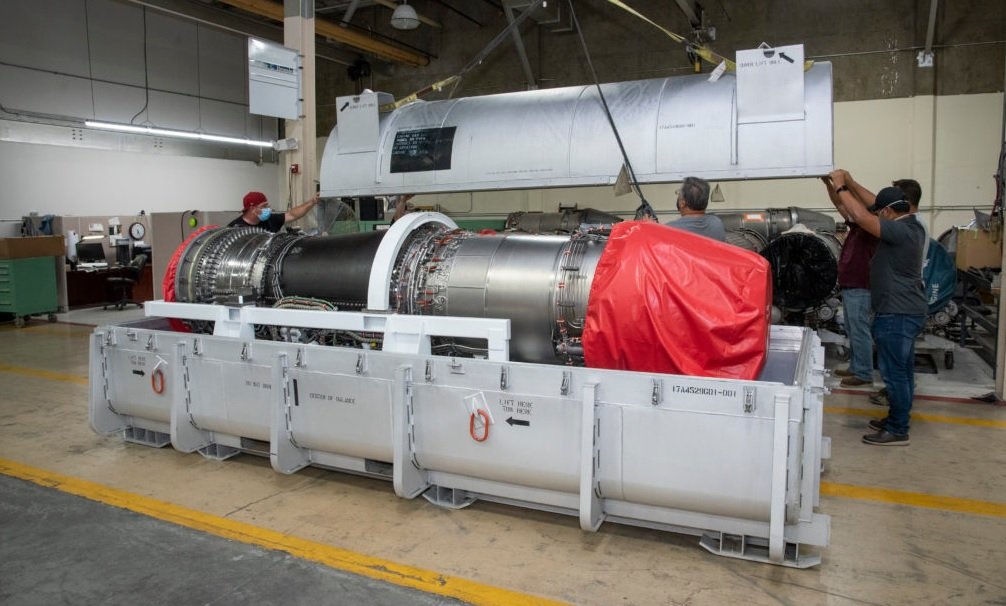
The consortium’s industrial responsibilities are distributed among the partners. Rolls-Royce oversees overall engine performance, air and oil systems, intermediate casing, the six-stage high-pressure compressor, the hot strut module, and the low-pressure shaft. MTU Aero Engines produces the five-stage intermediate-pressure compressor. Safran Aircraft Engines manufactures the annular combustor equipped with 18 fuel nozzles and the single-stage high-pressure turbine. ITP Aero supplies the three-stage low-pressure turbine. Avio provides the reduction gearbox featuring a 9.5:1 reduction ratio and torque capability of approximately 100 kN·m. The propeller system is supplied by Ratier-Figeac and consists of eight composite scimitar blades with a diameter of 5.334 meters, operating between 655 and 860 rpm and converting engine output into approximately 110 kN of thrust.
The program currently holds an order book exceeding 750 engines. In May 2025, the 600th engine entered service.
Technical Specifications and Performance Characteristics
The TP400-D6 is a three-shaft axial-flow turboprop engine delivering more than 11,000 shaft horsepower (8,200 kW). Maximum takeoff power is rated at 8,251 kW, with maximum continuous power of 7,971 kW. The engine measures 4.18 meters in length and 1.218 meters in diameter. Dry weight is 1,938 kilograms for the baseline configuration and 1,965 kilograms for the handed version.
The engine operates at an overall pressure ratio of 25:1 with an air mass flow of 26.3 kilograms per second and a turbine inlet temperature of 1,200 degrees Celsius. Specific fuel consumption in cruise is approximately 210 grams per kilowatt-hour, and the power-to-weight ratio stands at 4.26 kW per kilogram.
The TP400-D6 is certified to operate using multiple fuel types, including Jet A, Jet A1, Jet B, JP4, JP5, JP8, and JP8+100. It incorporates aerodynamic optimization and fuel-efficiency features designed to support a broad operational envelope, from low-level tactical flight profiles to high-speed cruise. Reduced fuel consumption enables the A400M to conduct round-trip missions exceeding 4,800 nautical miles.
The engine is certified for operations from unpaved runways and in sand and dust environments. It was the first military engine to receive civil certification from the European Union Aviation Safety Agency (EASA), meeting civil aviation standards for noise and emissions compliance.
Development and Certification Timeline
Development began after Airbus Military selected the TP400-D6 in 2003. The first engine run occurred on October 28, 2005, followed by propeller integration testing on February 28, 2006. Ground runs and taxi trials were conducted in 2008, and the first single-engine flight took place on December 17, 2008.
The Airbus A400M completed its maiden flight on December 11, 2009. EASA engine certification was achieved in 2011, propeller certification followed in April 2012, and aircraft type certification was granted on March 13, 2013. The engine formally entered operational service in August 2013.
Operational Entry and Fleet Expansion
The first operational aircraft deliveries began in 2013. Aircraft MSN007 was delivered to the French Air and Space Force in August 2013, followed by MSN009 to the Turkish Air Force the same year. In 2014, the United Kingdom’s Royal Air Force received MSN015, and the German Air Force received MSN018.
The Royal Malaysian Air Force became the first non-European operator in 2015. Spain integrated the A400M into its fleet in 2016. In 2020, deliveries were completed to both the Belgian Air Force and the Luxembourg Air Force. Kazakhstan joined the operator base in 2024, and Indonesia recently became the tenth operating nation.
The current operating nations are Belgium, France, Germany, Luxembourg, the United Kingdom, Spain, Turkey, Malaysia, Kazakhstan, and Indonesia. Their combined operational activity has contributed to the accumulation of one million flight hours.
Maintenance, Digital Support, and Institutional Framework
To support the growing fleet, EPI has expanded its Maintenance, Repair, and Overhaul (MRO) infrastructure in alignment with operator requirements. Aftermarket services include MissionCare, which provides fixed-cost-per-flying-hour support, structured engine repair management, and technical training programs.
Digital maintenance tools have been introduced, including augmented reality applications for maintenance procedures, turbine gas system testing capabilities, and vibration monitoring systems for the power gearbox. These measures are designed to enhance predictive maintenance and fleet availability.
Institutional support is provided through the Organisation for Joint Armament Co-operation (OCCAR) under the Engine Support Step 2 (ESS2) contract. The ESS2 agreement establishes a five-year structured support framework covering legacy service continuity, strategic fleet management updates, and cost-of-ownership optimization while maintaining operational readiness levels.
Program Outlook
EPI stated that the one-million-flight-hour milestone reflects the operational experience accumulated by its ten operator nations and the structured support mechanisms implemented over the past decade. The consortium indicated that it will continue executing the ESS2 framework and associated service programs to maintain reliability and mission support for the global TP400-D6 fleet.
——— End of Article ———