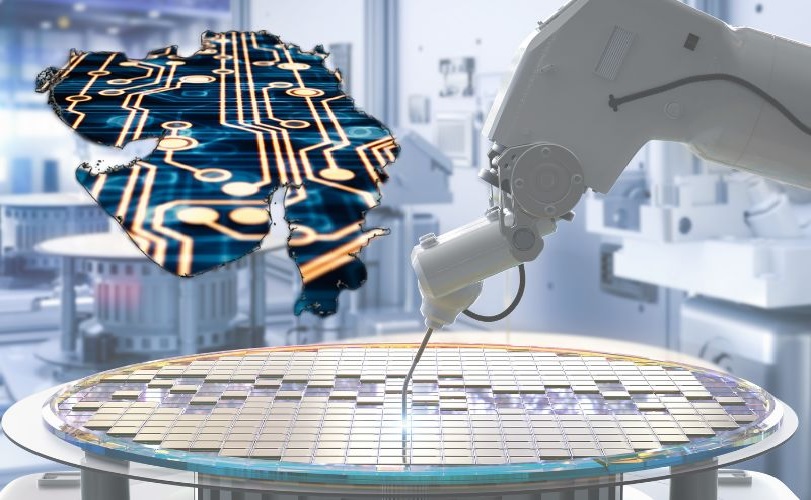
TATA Electronics is setting the stage to become a significant player in India's semiconductor industry, with plans to establish two additional semiconductor fabrication plants (fabs) in Dholera, Gujarat. Following the initial phase of their ₹91,000-crore project in partnership with Taiwan's Powerchip Semiconductor Manufacturing Corporation (PSMC), these expansions mark a bold move in India’s bid to meet the increasing global demand for semiconductors.
The first fab, whose foundation was laid earlier this year in the Dholera Special Investment Region, is projected to be operational by 2026. At peak capacity, it will be capable of producing 50,000 wafers per month, contributing to sectors like automotive, artificial intelligence, data storage, and wireless communication. The chips manufactured here will cater to a variety of functions, including power management, display drivers, and high-performance computing. The facility’s scale and capabilities are designed to boost India's semiconductor manufacturing ecosystem, which has long relied on imports to meet demand.
TATA’s move into semiconductor manufacturing aligns with India’s larger strategic goal of becoming a global hub for electronics production. The two additional fabs being planned in Dholera will likely be of similar scale to the first, although their nodes and technology will depend on advancements within the semiconductor industry and future demand patterns. Decisions regarding partners for these fabs—whether continuing with PSMC or exploring alternatives—will be made once the first facility reaches full capacity.
The expansion timeline will be gradual, with the next phase expected to commence five to seven years from now. While a substantial investment will be required for these subsequent fabs, some infrastructure—shared between the fabs—will already be established during the initial phase, potentially reducing future costs.
In addition to the manufacturing facility, TATA is building a residential complex to house up to 5,000 employees who will work at the first fab. This comprehensive approach also includes collaboration with suppliers to establish a robust local supply-chain ecosystem that will support the chip manufacturing process.
This effort is part of a broader strategy to position India as a key player in semiconductor production, particularly at a time when global supply chains have experienced significant disruptions. TATA’s project has already attracted attention from global suppliers and partners who attended the SEMICON India event, where they discussed the group's ambitious plans.
Notably, TATA Electronics isn’t just investing in Gujarat. The company is also developing a ₹27,000-crore semiconductor assembly and testing unit in Jagiroad, Assam. This facility, spanning 600 acres, is expected to start high-volume production by 2025, with a daily capacity of 48 million chips. This site will focus on technologies such as wire bond, flip chip, and Integrated Systems Packaging (ISP), setting the foundation for advanced packaging techniques in the future.
TATA Electronics’ ambitious plans are not only aimed at catering to domestic demand but also meeting the growing global need for semiconductors. With India positioning itself as a competitive force in semiconductor manufacturing, the future of the country's electronics industry looks promising, with TATA at the forefront of this transformation.
——— End of Article ———