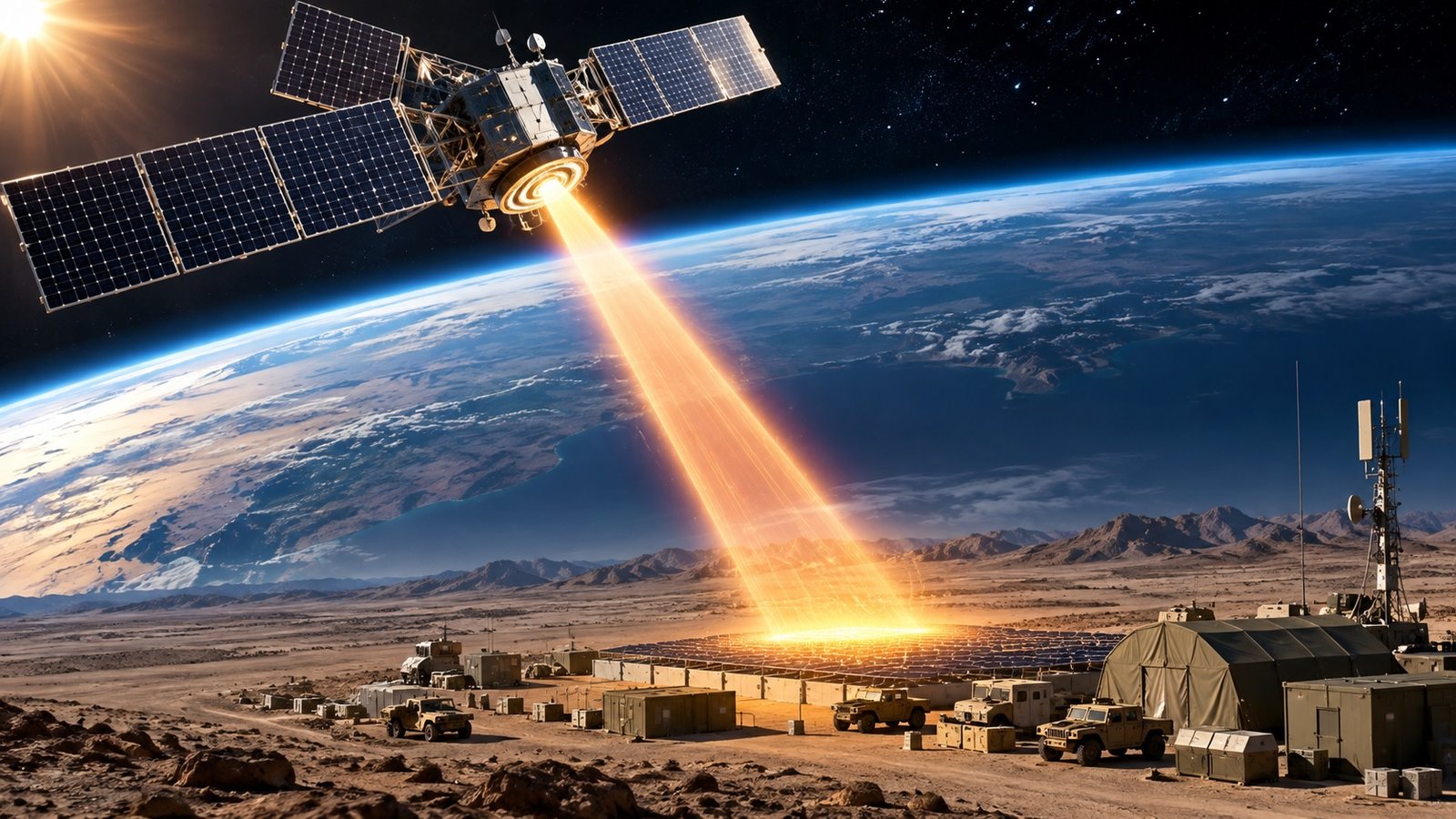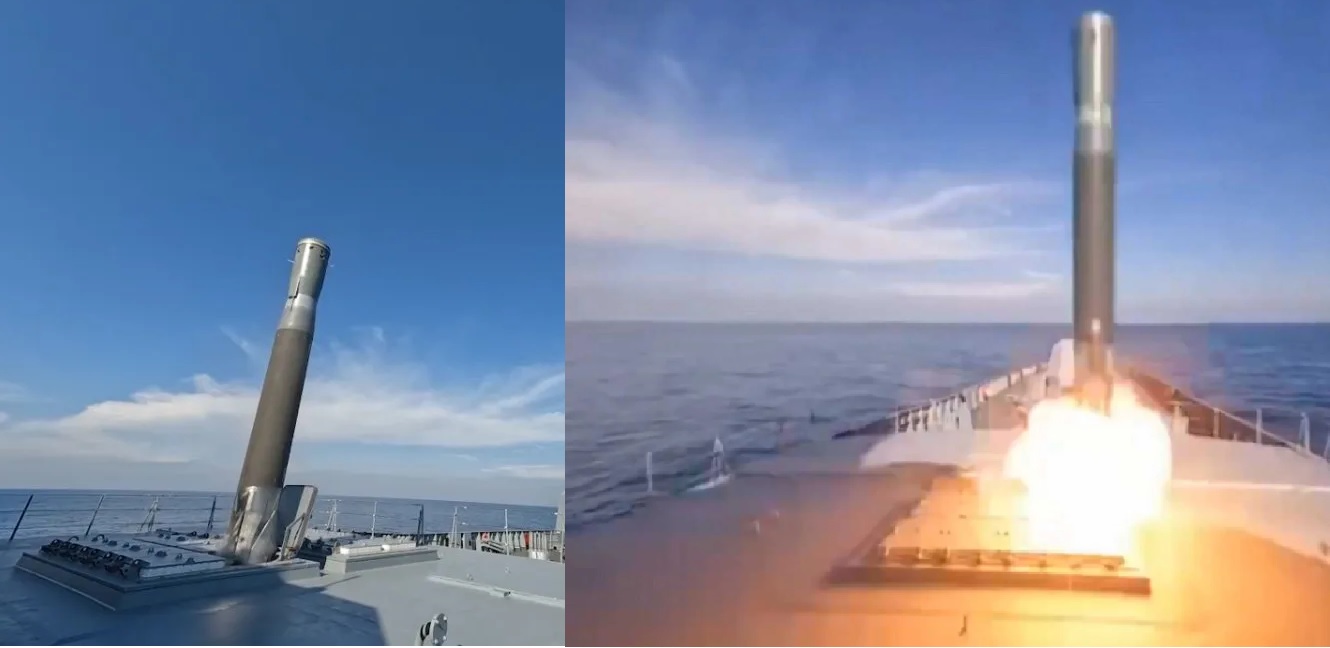
MOSCOW/KYIV, — June 17, 2026 : Russia's 3M22 Zircon (Tsirkon) missile has been one of the most prominent weapons in the country's hypersonic missile portfolio, frequently presented by Russian officials as a next-generation hypersonic cruise missile capable of reaching speeds of up to Mach 9 and striking targets at ranges exceeding 1,000 kilometers. However, growing amounts of battlefield evidence, forensic investigations, patent records, and open-source intelligence analysis suggest the weapon may be better classified as a maneuverable quasi-ballistic missile rather than a true scramjet-powered hypersonic cruise missile.
The Zircon, developed by NPO Mashinostroyeniya, entered Russian military service around 2022 and was initially designed for both anti-ship and land-attack missions. The missile is deployed aboard Admiral Gorshkov-class frigates and Yasen-class nuclear submarines, while a land-based version has also been adapted for launch from modified K-300P Bastion coastal defense systems. Reports indicate that development of a planned air-launched variant has been suspended.
Increasing Use in Ukraine
The missile has seen growing operational use during the war in Ukraine. While early launches were relatively limited during late 2023 and 2024, Russian forces significantly increased deployment of the weapon during 2026.
One of the largest recent attacks occurred on June 15, 2026, when Russia launched a combined strike involving 681 aerial weapons against Ukrainian targets. According to the Ukrainian Air Force, the attack included six Zircon missiles launched from occupied Crimea. Ukrainian authorities reported intercepting five of the six missiles, while debris from the attack was later documented in Kyiv.
As of mid-June 2026, Ukrainian officials estimate that Russia has launched approximately 46 Zircon missiles during the conflict. Prior to the June 15 strike, Ukraine reported an overall interception rate of roughly 41 percent against Zircon missiles, a figure notably higher than interception rates typically reported for Russia's Iskander-M quasi-ballistic missile system.
The growing number of launches appears to reflect expanding production capacity. Ukrainian intelligence assessments indicate Russia's Zircon inventory increased from approximately 40 missiles in April 2024 to as many as 230 missiles by April 2026.
The missile is also considered one of Russia's most expensive conventional precision-strike weapons. Available estimates place the cost of a single Zircon missile at more than $5 million, making it second only to the newer Oreshnik missile system among Russia's conventional strike arsenal.
Russian Performance Claims
Russian officials have consistently promoted the Zircon as a major technological achievement.
Russian President Vladimir Putin has repeatedly stated that the missile can travel at speeds approaching Mach 9 while maintaining a range exceeding 1,000 kilometers.
In 2020, Russian Chief of the General Staff Valery Gerasimov reported that a Zircon test flight covered 450 kilometers in approximately 4.5 minutes, reaching altitudes of 28 kilometers and peak speeds above Mach 8.
The missile has also appeared in Russian strategic exercises, including nuclear drills, leading analysts to believe it may be capable of carrying a nuclear payload. However, no confirmed deployment of nuclear-armed Zircon missiles has been publicly reported.
Questions Over the Missile's Flight Profile
Analysis of combat data collected by Ukrainian military tracking systems presents a more nuanced picture of the missile's performance.
According to Ukrainian assessments, the Zircon follows a variable flight profile that differs from what would be expected of a sustained scramjet-powered hypersonic cruise missile.
Reported flight characteristics include:
- Cruise Phase: Approximately Mach 5.5
- Approach Phase: Acceleration to around Mach 7.5
- Terminal Phase: Deceleration to approximately Mach 4.5 before impact
The reported reduction in speed during the terminal phase is particularly significant because it may increase the probability of interception by advanced air defense systems such as the Patriot PAC-3.
Military analysts note that while the missile remains extremely fast, slowing below hypersonic speeds near the target differs from the sustained high-speed flight profile commonly associated with advanced hypersonic cruise missiles.
Growing Evidence Against a Scramjet Design
For several years, defense analysts debated the Zircon's propulsion system.
One theory suggested the missile used a scramjet engine, enabling sustained atmospheric flight at hypersonic speeds. Another proposed a ramjet-powered design similar to Russia's P-800 Oniks anti-ship missile.
However, evidence collected from launch footage, patent documentation, official Russian awards, and battlefield debris increasingly supports a third explanation: a solid-rocket-powered quasi-ballistic missile utilizing a boost-and-glide flight profile.
Absence of Air Intakes
One of the strongest indicators concerns the apparent absence of air intakes.
Both ramjet and scramjet propulsion systems require visible air intake structures to compress incoming airflow during flight. Extensive reviews of available launch footage, static displays, testing imagery, and recovered missile fragments have failed to reveal any clear air intake features on the Zircon.
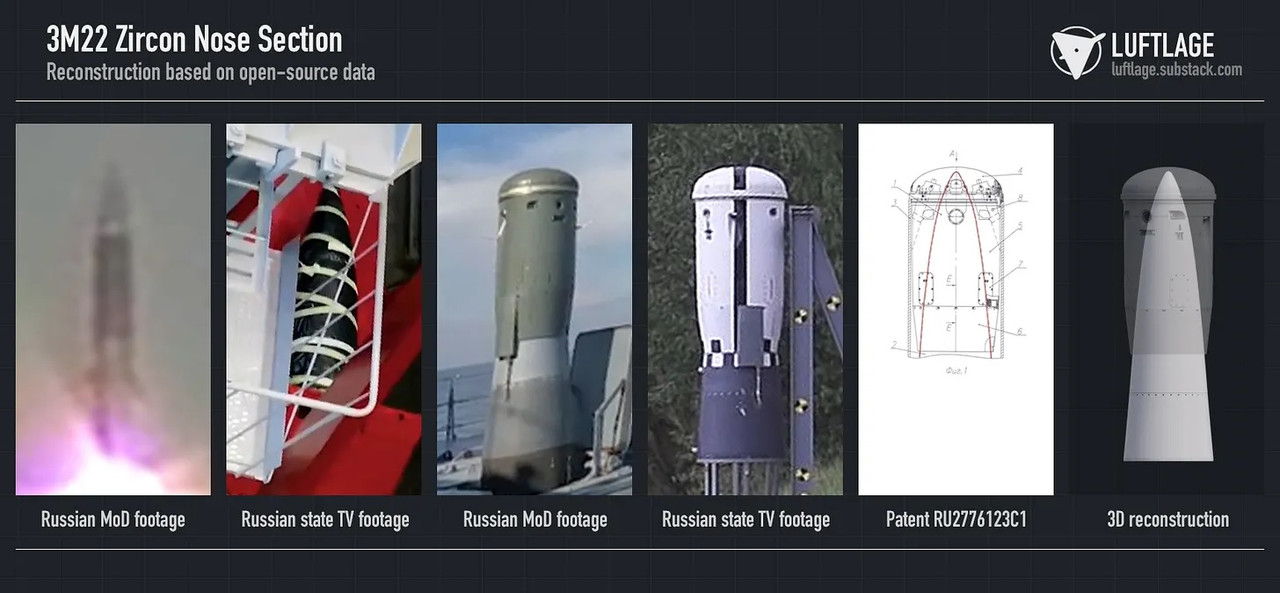
Recovered debris instead shows a largely cylindrical composite structure more consistent with a rocket-powered design.
A Russian patent covering the missile's jettisonable launch cap similarly shows no visible nose-mounted intake system.
Solid Propellant Evidence
Further evidence emerged in 2023 when Yuri Milekhin, head of Russia's Soyuz Federal Dual-Technology Center, received the title of Hero of Labor.
Russian state media credited Milekhin with developing an innovative high-energy composite solid propellant specifically for the Zircon program. Such propulsion technology is associated with rocket motors rather than scramjet engines and directly challenges earlier claims that the missile relied on advanced liquid fuels such as the often-cited Detsilin-M.
Forensic Analysis of Recovered Debris
Perhaps the most significant findings have come from forensic investigations conducted by Ukraine's Kyiv Scientific Research Institute of Forensic Expertise (KNDISE).
Investigators recovered components believed to belong to the Zircon's second stage, including structures resembling the forward closure section of a solid-propellant rocket motor.
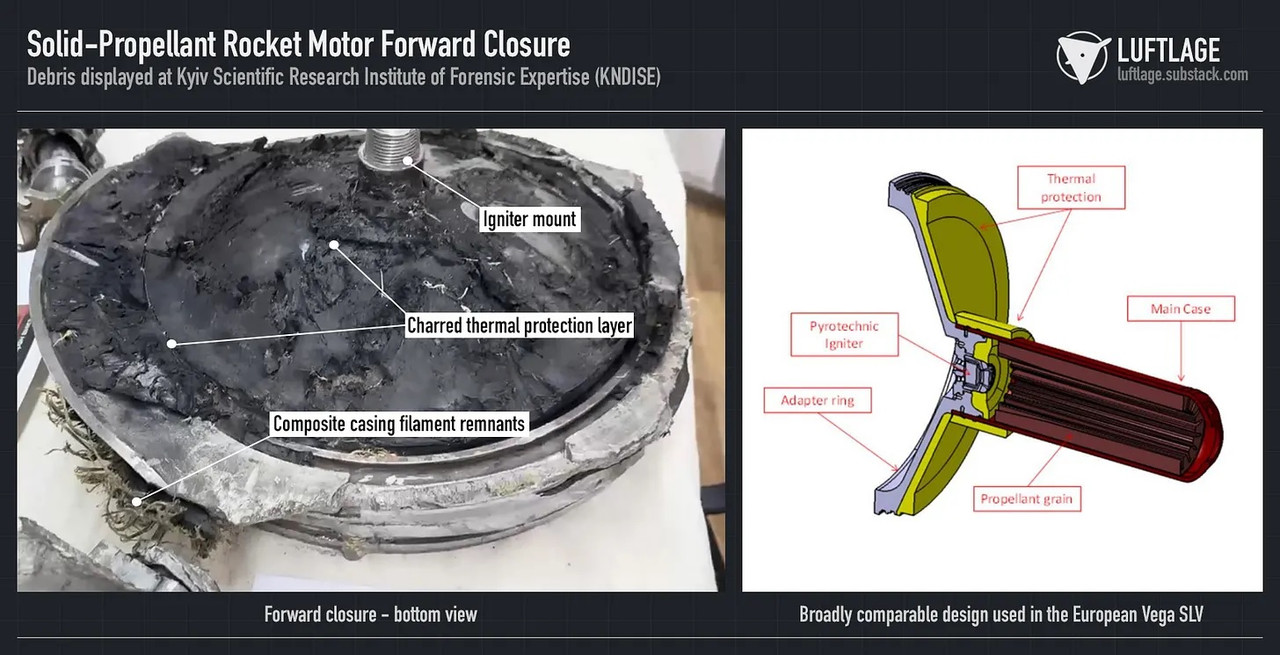
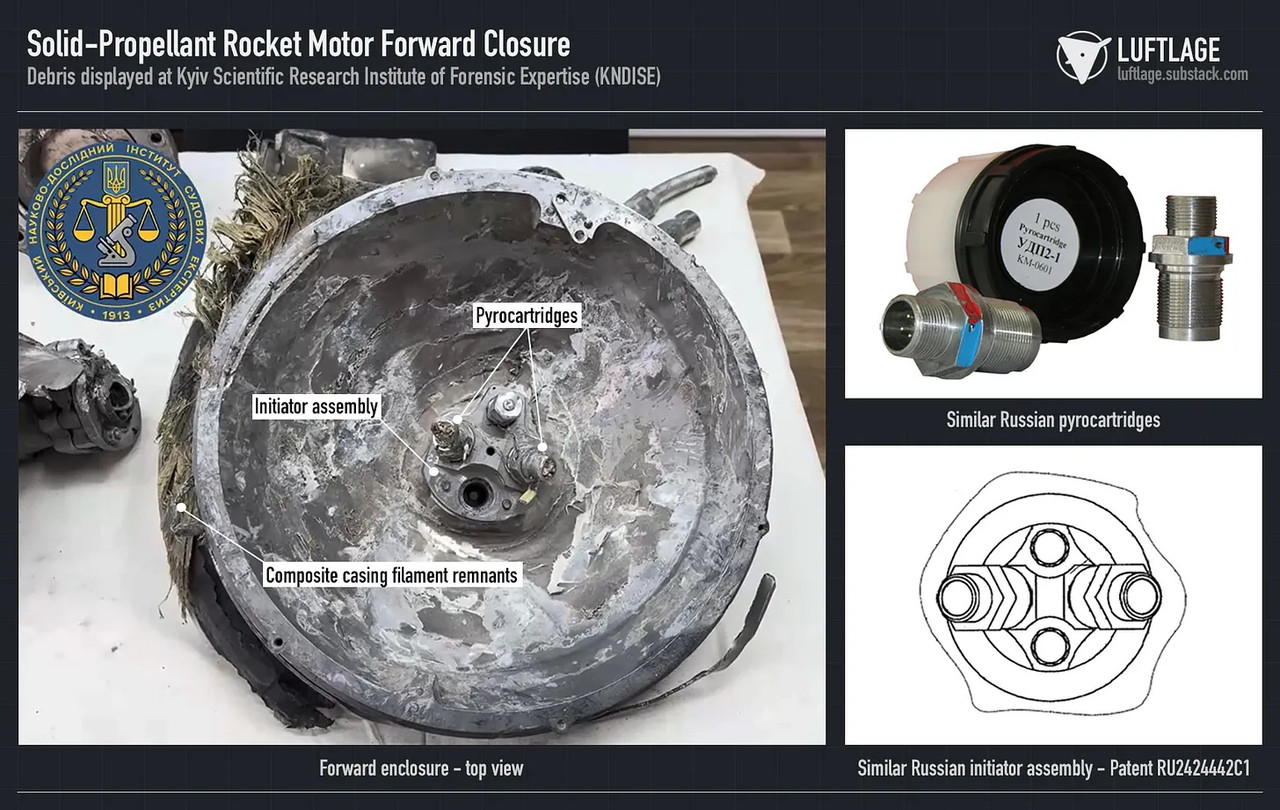
Researchers compared these components with Russian patent filings and identified similarities with a 2019 patent involving upper-stage solid rocket motors. The patent was co-authored by engineers from NPO Iskra and Aleksandr Dergachyov, a senior figure closely associated with the Zircon program who became acting head of NPO Mashinostroyeniya in 2026.
Additional Russian patents filed in 1999 and 2011 describe maneuverable anti-ship missiles using solid-fuel propulsion and boost-glide trajectories, concepts closely matching the flight characteristics now associated with the Zircon.
A Quasi-Ballistic System
Based on available evidence, analysts increasingly assess that the Zircon functions as a quasi-ballistic missile rather than a traditional hypersonic cruise missile.
Under this concept, the missile uses powerful solid-fuel rocket propulsion to accelerate rapidly and climb to high altitude before transitioning into an unpowered glide phase. During this stage, the weapon can maneuver while descending toward its target, making interception difficult but not impossible.
Such an approach remains highly effective for long-range strike missions while requiring significantly less technological complexity than a fully operational scramjet-powered cruise missile.
Strategic Implications
The ongoing debate surrounding the Zircon highlights the broader challenge of defining hypersonic weapons. Many modern missile systems operate across a spectrum of speeds, altitudes, and maneuvering capabilities rather than fitting neatly into traditional categories.
Even if the Zircon is ultimately classified as a quasi-ballistic system, it remains a capable long-range strike weapon that poses significant challenges for modern air defense networks.
At the same time, open-source evidence suggests Russia continues to pursue more advanced hypersonic technologies. NPO Mashinostroyeniya has previously filed patents for conceptual scramjet-powered missile designs, indicating that development of a true hypersonic cruise missile remains an active objective.
For now, however, available battlefield evidence increasingly suggests that the weapon currently employed in Ukraine is a rocket-powered quasi-ballistic missile utilizing a boost-and-glide profile rather than a sustained scramjet-powered hypersonic cruise missile.
Counterarguments and Remaining Uncertainties
Despite the growing body of evidence cited by analysts who classify the Zircon as a quasi-ballistic missile, some defense experts argue that the available data does not conclusively rule out the possibility of a scramjet-powered hypersonic cruise missile design.
A key counterargument is that scramjet engines cannot operate from a standstill. Unlike conventional jet engines, a scramjet requires extremely high airflow velocities before combustion can occur. As a result, all scramjet-powered vehicles require an initial booster stage to accelerate them to hypersonic speeds and suitable altitudes before the scramjet engine can ignite.
This launch method is not unique to Russia. India's Hypersonic Technology Demonstrator Vehicle (HSTDV), for example, was carried to the required speed and altitude by an Agni-derived rocket booster before its scramjet engine was activated. Similar boost-assisted architectures have been used in several hypersonic research programs worldwide.
Supporters of the scramjet hypothesis argue that the Zircon may follow a comparable approach, with a solid-fuel booster accelerating the missile after launch and a scramjet engine taking over during the cruise phase. Under this interpretation, the discovery of solid-propellant components, booster-related patents, or rocket motor debris would not necessarily disprove the existence of a scramjet-powered sustainment stage.
They also note that the apparent absence of visible air intakes in publicly available imagery may not be definitive evidence. Some advanced missile concepts use intake covers, deployable structures, or configurations that are difficult to identify from limited launch footage and fragmented battlefield debris.
Furthermore, Russian officials have consistently maintained that the Zircon is capable of sustained hypersonic flight at speeds approaching Mach 9 over long distances. While independent verification remains limited, proponents argue that publicly available evidence may be insufficient to fully determine the missile's internal propulsion architecture.
As a result, although recent forensic findings and open-source analysis have strengthened the case for the Zircon being a rocket-powered quasi-ballistic weapon, the debate remains unresolved. Until more detailed technical data or official disclosures emerge, both interpretations are likely to continue being discussed within the defense analysis community.
——— End of Article ———