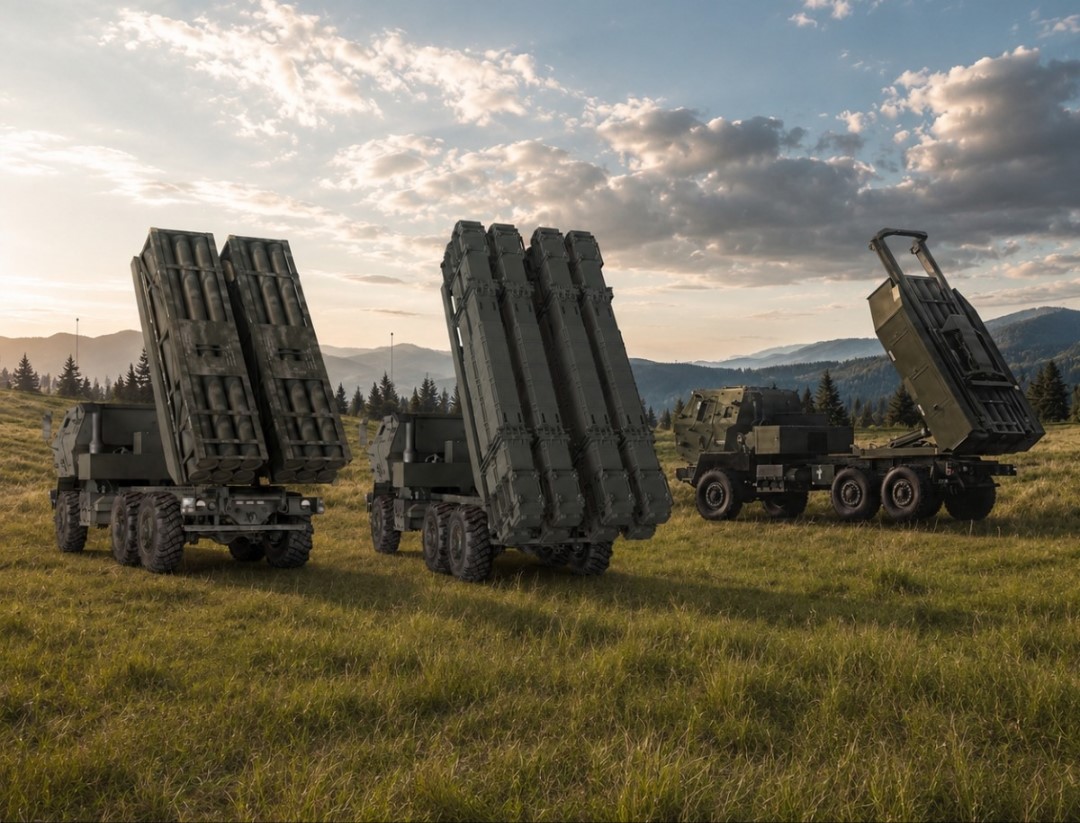
PARIS, — June 17, 2026 : Lockheed Martin has unveiled HIMARS FLEX, a modular evolution of the combat-proven M142 High Mobility Artillery Rocket System (HIMARS), introducing a new dual-pod launcher configuration and the company's FLEXFires technology ecosystem. The system was presented at Eurosatory 2026 on June 16 and is designed to provide greater operational flexibility, increased firepower, and enhanced interoperability for allied forces.
The new HIMARS FLEX builds upon the existing HIMARS platform, which has accumulated more than 2.5 million operational hours worldwide. Lockheed Martin has delivered approximately 750 HIMARS launchers, with more than 540 systems currently in service with the U.S. Army and international operators.
Dual-Pod Configuration Doubles Firepower
The most significant enhancement in HIMARS FLEX is its dual-pod launcher configuration, which doubles the ammunition capacity compared to the standard single-pod HIMARS. The original system carries either six Guided Multiple Launch Rocket System (GMLRS) rockets or one tactical missile before requiring resupply.
With the new dual-pod arrangement, operators can carry twice the number of munitions, allowing them to engage more targets during a single deployment and maintain sustained fire support for longer periods before reloading. The expanded capacity also enables mixed munition loadouts, allowing commanders to tailor weapons configurations according to mission requirements.
This improvement addresses a key operational limitation of the legacy system, where launchers often needed to withdraw after firing a single pod, temporarily reducing available fire support on the battlefield.
Offensive and Defensive Roles on a Single Platform
Lockheed Martin designed HIMARS FLEX as a multirole fires platform, capable of performing both offensive strike missions and defensive air and missile defense operations.
The launcher maintains compatibility with a broad range of NATO-standard and U.S. Army munitions, including:
- Guided Multiple Launch Rocket System (GMLRS)
- Extended-Range GMLRS (ER GMLRS)
- Precision Strike Missile (PrSM)
- Army Tactical Missile System (ATACMS)
- PAC-3 missile interceptors
- Indirect Fire Protection Capability (IFPC) munitions
This compatibility allows military forces to conduct long-range precision strikes against ground targets while also deploying interceptors to counter aircraft, drones, cruise missiles, and other aerial threats. Commanders can configure the launcher with offensive and defensive munitions simultaneously, enabling rapid adaptation to changing battlefield conditions.
FLEXFires Open-Architecture Technology
At the center of the new system is the FLEXFires technology suite, an open-architecture framework designed to simplify integration of future weapons, sensors, and software upgrades.
According to Lockheed Martin, the architecture enables both current and future customers to adopt new capabilities with minimal structural modifications to the launcher. The modular approach is intended to accelerate modernization efforts while reducing long-term sustainment and training costs.
The system can be configured in several forms, including:
- Standard single-pod launcher configuration
- Dual-pod HIMARS FLEX configuration
- Mobile launcher variants
- Containerized launch solutions
- Optional autonomous operating capabilities
The company stated that this flexibility allows operators to customize systems according to operational requirements, budget constraints, and regional mission needs.
Retaining Mobility and Rapid Deployment
Despite carrying significantly more ammunition, HIMARS FLEX retains the mobility characteristics that have made the original HIMARS widely adopted by allied militaries.
The launcher remains mounted on the XM1140 chassis and continues to be transportable by C-130 aircraft, preserving its strategic deployability. The system also maintains the well-known "shoot-and-scoot" capability, allowing crews to launch munitions and rapidly relocate before enemy forces can respond.
The increased ammunition load, combined with rapid reloading and optional autonomous features, supports distributed operations in highly contested environments, helping reduce vulnerability to enemy targeting and improving battlefield survivability.
Integration with Joint Force Networks
HIMARS FLEX is designed to integrate directly into joint fire-control and command networks, enabling coordination across coalition forces and multiple military domains.
The launcher's interoperability with NATO-standard munitions and command systems enhances coalition operations by allowing allied nations to share logistics, ammunition stockpiles, and targeting information. This capability supports dispersed force structures and multinational operations across a wide range of operational scenarios.
Growing Demand for Precision Fires
The unveiling of HIMARS FLEX comes as several NATO members and partner nations continue expanding investments in long-range precision strike and integrated air defense capabilities. The system provides an upgrade path for existing HIMARS operators while also offering a new option for countries seeking a mobile platform capable of combining strike and defensive missions.
By integrating increased ammunition capacity, modular architecture, NATO interoperability, autonomous operation options, and both offensive and defensive capabilities into a single platform, HIMARS FLEX is intended to meet evolving operational requirements while preserving the mobility, precision, and reliability associated with the HIMARS family.
Lockheed Martin has not announced a production timeline or fielding schedule for the new system. The company describes HIMARS FLEX as a modernization effort aimed at enhancing mission flexibility, survivability, and interoperability for allied artillery and air defense forces.
——— End of Article ———