STOCKHOLM : The Swedish Defence Materiel Administration (FMV) has signed a four-year framework agreement with German defense manufacturer Rheinmetall for the procurement of the Seasnake 30 naval weapon system, marking the first adoption of the system by a NATO member state.
The agreement, finalized in February 2026, is valued at approximately €63 million and covers the initial delivery of eight Seasnake 30 systems. The weapon stations will serve as the primary armament for the Swedish Navy’s new fleet of Combat Boat 90 (CB90) fast military assault craft.
Contract Scope and Delivery Schedule
Under the framework arrangement, Sweden will receive eight remote-controlled Seasnake 30 systems, with the first unit scheduled for delivery in February 2028. The contract also includes 30 mm calibre training ammunition and programmable airburst ammunition, as well as spare parts and long-term maintenance services.
The framework agreement provides Sweden with the option to procure up to 29 additional systems under the same contractual structure. This option is intended to allow fleet expansion or integration onto additional platforms if required in the future.
Platform Integration: Combat Boat 90
The Seasnake 30 will be installed on Sweden’s Combat Boat 90 (CB90) fast assault craft. The CB90 is a high-speed, shallow-draft platform designed for coastal and littoral operations, troop transport, and rapid-response missions. The integration of a stabilized 30 mm remotely operated naval gun is intended to enhance close-range defensive and offensive capabilities during coastal security operations.
Technical Characteristics of the Seasnake 30
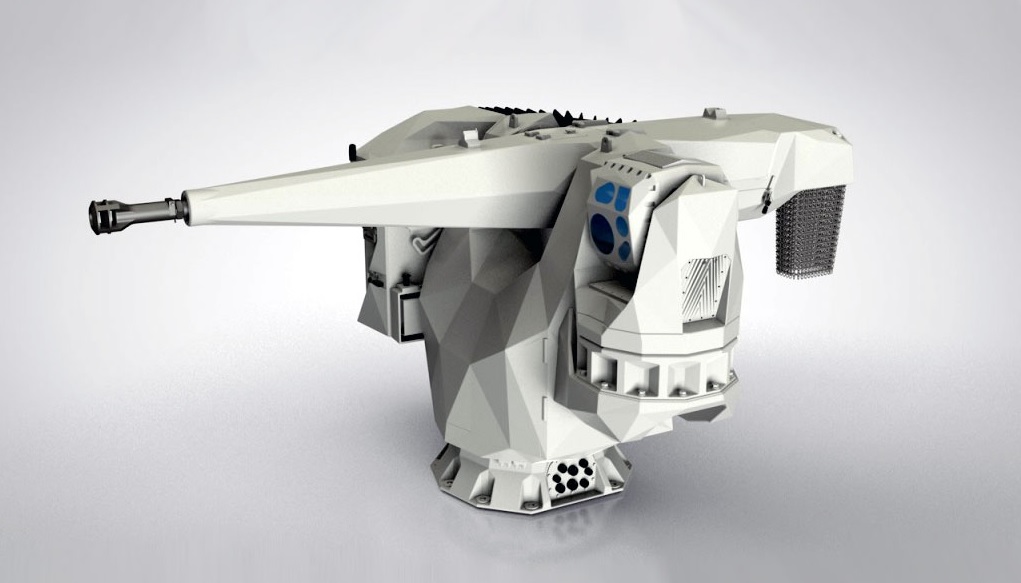
The Seasnake 30 is a stabilized, remotely controlled light naval gun system designed for close-range defense and engagement of asymmetric threats. It is built around Rheinmetall’s KCE30/ABM revolver cannon and is capable of a nominal maximum rate of fire of 1,100 rounds per minute.
The system incorporates an integrated sensor and targeting suite consisting of:
-
Three daylight cameras
-
A cooled infrared (thermal) imaging sensor
-
A laser rangefinder for distance measurement
The fire-control system includes multi-target tracking software designed to support automatic target detection and simultaneous engagement of multiple threats.
Airburst Ammunition Capability
A key operational feature of the Seasnake 30 is its programmable airburst capability. The system uses airburst munitions that can be set to detonate at a predetermined point in the air, allowing for engagement of small and fast-moving targets. This capability is particularly suited for countering unmanned aerial vehicles (UAVs) and other agile aerial threats.
In addition to airburst ammunition, the contract includes 30 mm training ammunition for operational readiness and crew training.
Design and Operational Profile
The Seasnake 30 features a compact, low-profile turret design intended to reduce a vessel’s radar cross-section. The system’s stabilized configuration enables accurate firing while the platform is underway, including in high-speed littoral operations.
The remote-controlled operation allows crew members to operate the system from within protected areas of the vessel, improving crew safety during engagements.
NATO Integration and Industrial Context
The Swedish order establishes the Seasnake 30 within the NATO procurement environment. Sweden, which recently joined the North Atlantic Treaty Organization (NATO), becomes the first NATO member state to select this specific naval weapon system.
Prior to the Swedish contract, the Seasnake 30 had been selected by the Brazilian Navy for installation on its Tamandaré-class frigates. The Swedish procurement expands Rheinmetall’s naval systems presence within alliance member states.
Rheinmetall stated that the Swedish selection reflects the system’s operational performance and future viability within modern maritime defense frameworks.
The agreement positions the Seasnake 30 for potential wider adoption within NATO naval modernization programs, subject to future procurement decisions by member states.
——— End of Article ———