Tehran / Washington : Iran has launched its most visible naval mobilization in years across the Persian Gulf, the Strait of Hormuz and the Gulf of Oman, deploying a dense concentration of Islamic Revolutionary Guard Corps (IRGC) vessels as a U.S. carrier strike group advances toward the region. Satellite imagery, maritime tracking data and regional security reporting indicate that Tehran is signaling readiness for confrontation at the world’s most critical energy chokepoint, even as both sides warn of the danger of miscalculation.
Western defense analysts say the IRGC Navy has surged Iranian-flagged ships linked to the Guards into key waterways, including waters adjacent to the United Arab Emirates (UAE) and along the approaches to the Strait of Hormuz. The deployments follow a week of Iranian missile drills involving both ballistic and cruise systems, and come amid sharp rhetoric from senior commanders declaring that Iranian forces are “more ready than ever.”
A Swarm, Not a Fleet
Unlike conventional naval buildups, Iran has not concentrated large surface combatants in formation. Instead, the IRGC has activated its asymmetric doctrine, dispersing dozens—possibly more than a hundred—fast-attack craft into narrow maritime corridors. These small, high-speed vessels, long central to Iran’s “mosquito fleet” strategy, are designed to harass and overwhelm larger warships through numbers, speed and unpredictability.
Maritime imagery reviewed by regional monitoring groups shows clusters of fast boats loitering near the UAE coastline and at chokepoints along Hormuz, where commercial shipping lanes narrow to just a few miles. Analysts say many of the craft are capable of laying naval mines or launching short-range torpedoes, tactics intended to complicate navigation and raise the cost of any military engagement.
More notably, the IRGC’s newer Shahid Soleimani-class catamaran corvettes have reportedly left port. These stealth-shaped vessels are believed to be armed with long-range anti-ship cruise missiles, including the Abu Mahdi system, and are designed to operate as mobile missile platforms that are harder to detect on radar.
Iran has also repositioned at least one sea-base vessel into the Gulf of Oman. Security officials describe the ship as a floating command and logistics hub, potentially supporting long-range drones and unmanned systems that could be used to shadow or harass U.S. naval assets operating farther from the Iranian coast.
U.S. Forces Move to High Alert
The Iranian mobilization is being closely watched in Washington, where Pentagon officials confirm that a U.S. carrier strike group centered on the USS Abraham Lincoln has been redirected toward the Middle East from the Indian Ocean. The group is expected to arrive in the region within days, bringing with it a powerful mix of air, surface and missile-defense capabilities.
According to U.S. defense sources, the strike group includes stealth fighters, carrier-based strike aircraft and multiple Arleigh Burke-class destroyers equipped with advanced radar and ballistic-missile defense systems. Officials stress that the deployment is operating under elevated alert conditions, with tighter command oversight and more permissive rules of engagement than during routine patrols.
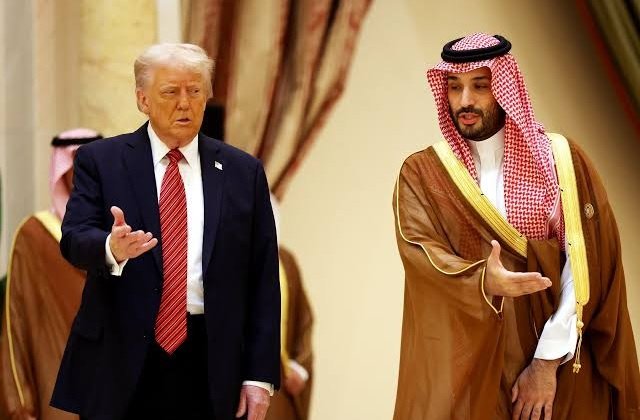
Former president Donald Trump, speaking publicly as the ships moved westward, referred to the formation as an “armada,” language that underscored the administration’s intent to project deterrence at a moment of rising tension.
“Finger on the Trigger”
In Tehran, the military rhetoric has been unusually blunt. In a televised address, IRGC Ground Force Commander Brigadier General Mohammad Pakpour warned that U.S. forces should avoid “any mistake,” saying Iranian units were on the highest state of readiness.
“Our finger is on the trigger,” he said, according to state media, adding that Iran would respond decisively if its red lines were crossed.
Iranian officials frame the naval deployments as defensive, but regional intelligence assessments suggest they are also part of contingency planning for a potential attempt to close the Strait of Hormuz. Reports circulating in Gulf capitals claim the IRGC has prepared thousands of explosive-laden boats, stockpiled naval mines and readied missile-armed warships to enable a temporary or sustained shutdown of the waterway in the event of conflict.
An IRGC spokeswoman, Fatima Majrahani, said Iran was preparing “all necessary measures” amid what she described as indications of possible U.S. attacks. Any move to block Hormuz would represent a dramatic escalation, threatening nearly a fifth of the world’s daily oil supply.
A Region on Edge
The standoff is unfolding against a backdrop of internal strain inside Iran, including widespread protests and severe restrictions on communications. Regional security sources also point to recent disruptions affecting Iranian air-defense and radar coverage, developments that could heighten the risk of misinterpretation during a fast-moving naval encounter.
Military analysts warn that the proximity of forces—U.S. warships operating on high alert and IRGC fast boats known for close-in maneuvers—creates a volatile environment where a single incident could spiral rapidly. A misidentified drone, an aggressive interception or a nervous weapons crew could trigger exchanges neither side initially intends.
For now, both Washington and Tehran insist they are acting to deter the other. But with Iranian “swarm” tactics deployed across Hormuz and a U.S. carrier group closing in, the margin for error is narrowing. The Strait of Hormuz, long a pressure point in U.S.–Iran relations, has once again become the focal point of a confrontation with global economic and security stakes.
——— End of Article ———