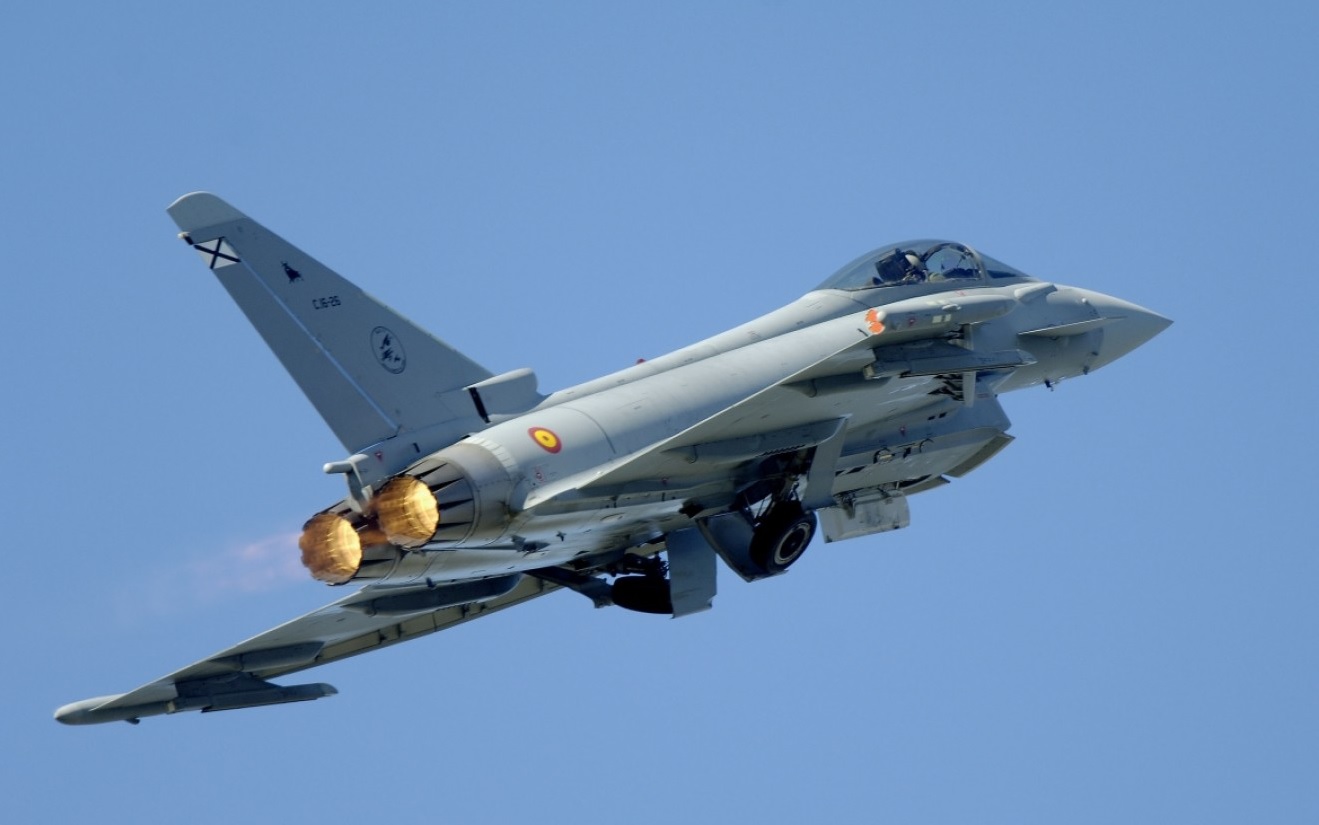
MIHAIL KOGĂLNICEANU AIR BASE, Romania : Three Eurofighter Typhoon fighter jets from the Spanish Air and Space Force have deployed to Mihail Kogălniceanu Air Base on Romania’s Black Sea coast, where they have joined German Air Force units already stationed at the base as part of NATO’s Air Policing and deterrence operations along the Alliance’s Eastern Flank.
The Spanish contingent, supported by an Airbus A400M transport aircraft carrying personnel, equipment, and logistical supplies, will operate alongside German Eurofighters under NATO’s Enhanced Vigilance Activities (eVA) framework. The mission is coordinated by NATO Allied Air Command and is designed to sustain a flexible and combat-ready air presence in Eastern Europe.
Strategic Framework Under Enhanced Vigilance Activities
The deployment falls under the Eastern Sentry initiative within NATO’s Enhanced Vigilance Activities, a set of measures established to reinforce the Alliance’s deterrence and defense posture following changes in the regional security environment. The framework enables the rapid positioning of high-readiness air assets at forward operating bases across member states bordering NATO’s eastern boundary.
By operating from Mihail Kogălniceanu Air Base, the Spanish and German detachments contribute to maintaining the integrity of Allied airspace over Romania and the wider Black Sea region. NATO’s concept emphasizes scalability and adaptability, allowing airpower assets to be adjusted according to operational requirements and security developments.
Agile Combat Employment and Cross-Servicing Integration
A central operational component of the joint deployment is the implementation of NATO’s Agile Combat Employment (ACE) concept. ACE focuses on dispersing and sustaining combat aircraft from multiple operating locations while maintaining operational readiness under dynamic conditions.
Because both Spain and Germany operate the Eurofighter Typhoon platform, the mission enables cross-servicing between the two air forces. Maintenance crews, engineers, and pilots from both nations are able to support each other’s aircraft using shared technical standards and procedures. This arrangement increases flexibility, improves sortie generation capacity, and enhances resilience in forward-deployed environments.
Joint maintenance and operational integration also facilitate the exchange of technical expertise and standardized mission planning practices, strengthening interoperability at both tactical and operational levels.
Host Nation Support and Base Operations
Mihail Kogălniceanu Air Base, operated by Romania’s 57th Air Base, serves as a key logistical and operational hub for Allied air missions in the region. The base supports the reception, staging, onward movement, and integration of multinational air assets.
Romanian personnel are responsible for providing host nation support, including infrastructure access, ground services, and coordination for flight operations. The facility’s proximity to the Black Sea and NATO’s southeastern perimeter makes it a strategic location for sustained air policing and deterrence missions.
Colonel Gabriel Goagă, Commander of the 57th Air Base Mihail Kogălniceanu, stated that the arrival of Spanish Eurofighters highlights the base’s role in enabling multinational cooperation and rapid integration of Allied forces.
Command and Control Structure
While deployed in Romania, the Spanish and German detachments will share Quick Reaction Alert (QRA) duties on behalf of NATO. Under QRA protocols, designated fighter aircraft remain on standby to respond to potential airspace violations or unidentified aircraft approaching Allied airspace.
Operational control of QRA missions is exercised by NATO’s Combined Air Operations Centre (CAOC) in Torrejón, Spain. The CAOC is responsible for monitoring regional airspace, coordinating responses, and directing assigned aircraft when required.
To support integrated operations, the Spanish and German contingents have established joint mission planning cells. These shared planning structures enhance situational awareness, streamline communication, and ensure coordinated execution of air policing tasks.
Major Félix Diéguez, the Spanish Detachment Commander, stated that the deployment reflects Spain’s contribution to NATO’s collective defense obligations and demonstrates the ability to deploy rapidly and integrate with Allied forces under the ACE concept.
Lieutenant Colonel Andreas Beckmann, the German Detachment Commander, noted that the joint operation underscores established interoperability between the two air forces and reinforces NATO’s presence along the Eastern Flank.
Ongoing NATO Air Policing Role
NATO’s Air Policing mission is a peacetime collective defense activity that ensures the security of Allied airspace. Under this framework, member states rotate fighter detachments to maintain continuous coverage across different regions of the Alliance.
The concurrent operation of Spanish and German Eurofighter detachments at Mihail Kogălniceanu Air Base forms part of these broader Enhanced Vigilance Activities. By combining forward deployment, shared logistics, and integrated command structures, the mission supports NATO’s objective of maintaining a sustained, adaptable, and multinational air defense posture in Eastern Europe.
Through coordinated operations under Allied Air Command, the Spanish and German forces continue to contribute to NATO’s deterrence and air policing responsibilities in the Black Sea region.
——— End of Article ———