SEOUL, — April 7, 2026 : South Korea has reached a working-level agreement with Indonesia to transfer the fifth prototype of the KF-21 Boramae fighter, formalizing a revised financial settlement and advancing negotiations for a separate 16-aircraft export contract. The arrangement, concluded in February 2026 and disclosed through documents submitted to the National Assembly’s National Defense Committee by the Defense Acquisition Program Administration (DAPA), aligns with Jakarta’s reduced participation in the joint development program scheduled for completion in June 2026.
Financial Settlement and Program Adjustment
Indonesia joined the KF-X/KF-21 program in 2015 as a 20 percent partner, committing approximately 1.6 trillion won in exchange for technology transfer, a prototype aircraft, and participation in an Indonesian IF-X development pathway. However, repeated delays in payments, attributed to domestic economic conditions, led both governments to renegotiate the framework.
In June 2025, Seoul and Jakarta agreed to reduce Indonesia’s financial contribution to 600 billion won (approximately $398 million), accompanied by a proportional reduction in the scope of technology transfers. As of April 2026, Indonesia has paid 536 billion won, with the remaining 64 billion won scheduled for settlement by June 2026. South Korean authorities have stated that the timing of the prototype transfer, along with associated data delivery, will be finalized only after the outstanding balance is fully paid.
The revised 600 billion won value package consists of three components: the KF-21 prototype No. 5 valued at 350 billion won, technology transfer and participation costs totaling 174.2 billion won—including labor expenses for Indonesian research personnel—and development data valued at 75.8 billion won. South Korea opted to proceed with the transfer of a prototype aircraft, rather than expand sensitive combat-system technology sharing, as part of a risk-managed approach following the financial restructuring.
Role and Capabilities of Prototype No. 5
The aircraft designated for transfer is the fifth KF-21 prototype, a single-seat variant that conducted its maiden flight on May 16, 2023. Since then, it has been used extensively in flight testing, focusing on validation of core avionics and operational systems.
Its primary test activities have included evaluation of the indigenous Active Electronically Scanned Array (AESA) radar and aerial refueling trials. The AESA radar functions as a multi-role fire-control sensor capable of detecting and tracking air, ground, and maritime targets while simultaneously guiding missiles. These capabilities underpin the KF-21’s role as a multi-domain platform suited for both air-defense and maritime-strike missions.
Although not configured as a frontline operational aircraft, the prototype provides Indonesia with immediate utility as a training and evaluation platform. It enables pilot familiarization, maintenance training, doctrine development, systems assessment, and the early establishment of a domestic support and sustainment framework.
Linkage to 16-Aircraft Export Negotiations
The prototype transfer is directly connected to ongoing negotiations over Indonesia’s planned acquisition of 16 KF-21 Block 2 aircraft, which would equip a full Indonesian Air Force squadron. The prospective deal is structured as a separate commercial export, rather than an extension of the development partnership, effectively positioning Indonesia as the launch export customer for the aircraft.
Financing options for the acquisition are currently under review by the Export-Import Bank of Korea. For South Korea, securing an initial foreign operator is expected to strengthen production economics, reduce long-term sustainment risks, and improve supply-chain stability as the program transitions into mass production. The KF-21 program completed more than 1,600 accident-free test sorties by January 2026 and has entered its production phase following the rollout of initial serial aircraft earlier this year.
Operational Context for Indonesia
Indonesia’s interest in the KF-21 is driven by ongoing efforts to modernize an aging and diverse combat aircraft inventory that includes F-16s, Su-27/30s, and Hawk 200 platforms. The country began inducting Dassault Rafale fighters in late January 2026 but continues to require additional aircraft capable of supporting air-defense and maritime security missions across its geographically dispersed archipelago.
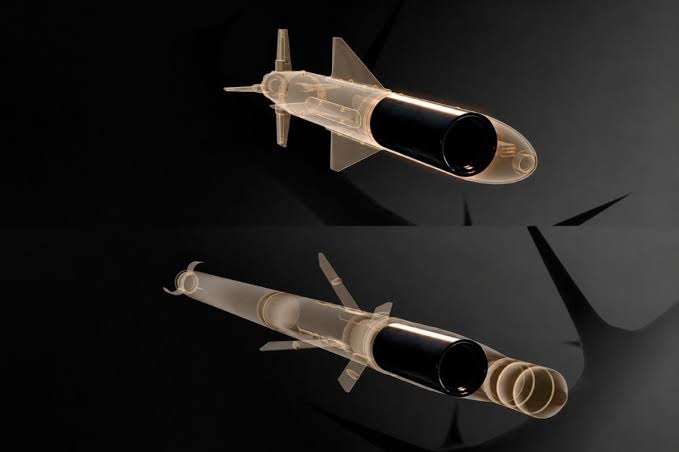
The KF-21 offers a twin-engine configuration with AESA radar, aerial-refueling capability, and a modern weapons suite. Its current air combat configuration integrates the MBDA Meteor beyond-visual-range missile and the IRIS-T (AIM-2000) short-range missile. The Meteor’s ramjet propulsion enables sustained energy at extended ranges, increasing engagement effectiveness against maneuvering targets, while the IRIS-T provides high agility for close-range combat with high off-boresight targeting capability.
South Korea’s ongoing cooperation with European partners also indicates potential future integration of precision-guided munitions such as the SPEAR system, expanding the aircraft’s capability for long-range strikes against land and maritime targets.
The platform’s characteristics support a range of operational roles relevant to Indonesia, including long-range quick-reaction alert missions, maritime air denial, escort operations, and distributed defensive counter-air missions over remote islands and sea lanes.
Strategic and Bilateral Context
The agreement comes amid broader expansion of bilateral cooperation. During a summit held on April 1, 2026, South Korean President Lee Jae-myung and Indonesian President Prabowo Subianto agreed to strengthen collaboration in energy, strategic industries, and defense. Both sides highlighted progress in the KF-21 program and acknowledged the ongoing discussions regarding the 16-aircraft acquisition.
The current arrangement converts a previously strained partnership into a structured framework combining financial settlement, capability transfer, and export alignment. For South Korea, it reinforces the KF-21’s position as an export-oriented platform entering serial production. For Indonesia, it provides access to an advanced fighter system while maintaining a degree of industrial participation and preparing the foundation for future operational integration.
Negotiations on the 16-aircraft deal are expected to continue in the coming months, with final terms likely contingent on financing arrangements and the completion of Indonesia’s remaining financial obligations under the development program.
——— End of Article ———