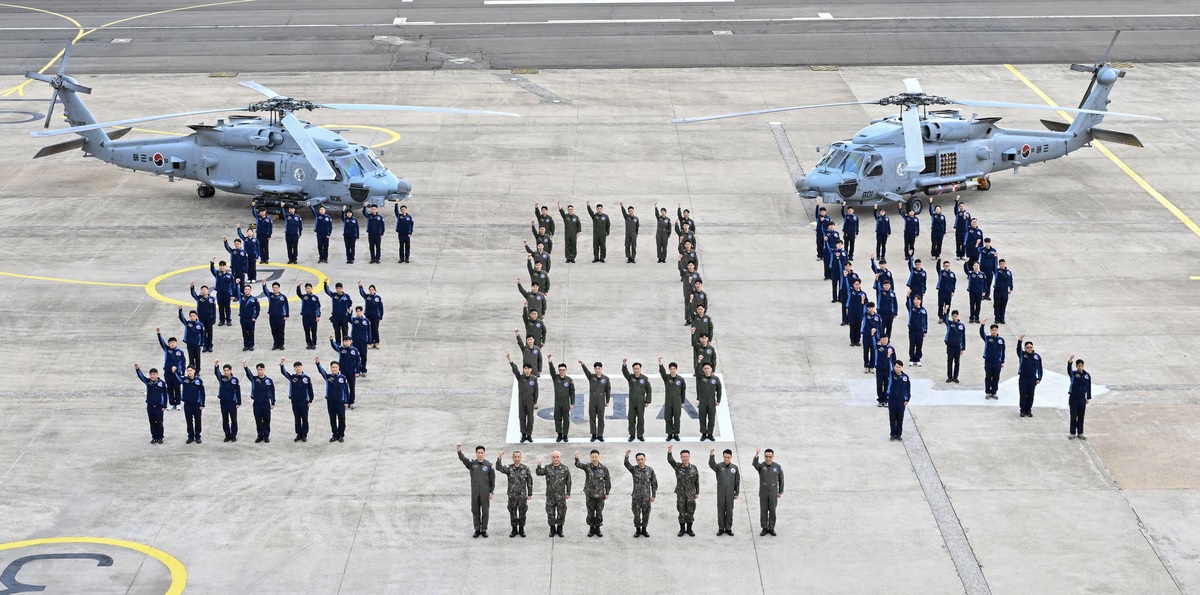
JINHAE, South Korea — April 1, 2026 : The Republic of Korea (ROK) Navy has formally inducted its first two MH-60R Seahawk maritime helicopters into operational service, marking the initial activation of a new airborne anti-submarine warfare (ASW) and anti-surface warfare (ASuW) capability. The commissioning ceremony was held at a naval aviation unit in Jinhae, South Gyeongsang Province, where the aircraft were assigned following completion of operational readiness testing.
The deployment represents the first operational phase of a 12-helicopter acquisition program designed to extend fleet detection range, improve targeting coordination, and reduce response timelines in high-threat maritime environments. While only two aircraft are currently active, the remaining ten helicopters are scheduled for phased induction as deliveries and integration continue.
Transition from Acquisition to Operational Use
The entry of the MH-60R into service signifies the transition of South Korea’s Maritime Operation Helicopter Batch II program from procurement to frontline capability. Naval leadership has identified the platform as a key component in strengthening detection, tracking, and engagement capacity against underwater and surface threats.
The helicopters are expected to operate as forward-deployed airborne sensors, capable of rapidly responding to contacts beyond the limitations of ship-based systems. Their deployment is aligned with broader naval modernization efforts aimed at improving maritime domain awareness and operational responsiveness.
Platform Design and Performance
The MH-60R Seahawk, manufactured by Lockheed Martin, is the primary multi-mission maritime helicopter used by the U.S. Navy. It is designed for operations from destroyers, frigates, and other aviation-capable surface combatants.
The aircraft is powered by two GE T700-GE-401C or -401D engines and has a maximum speed of approximately 333 kilometers per hour. With the use of an auxiliary fuel tank, it can remain airborne for up to four hours, enabling extended on-station operations. The helicopter measures 64 feet 10 inches in length, stands 17 feet high, and has a maximum gross weight of 23,500 pounds. It operates with a crew of three.
Integrated Mission Systems and Sensors
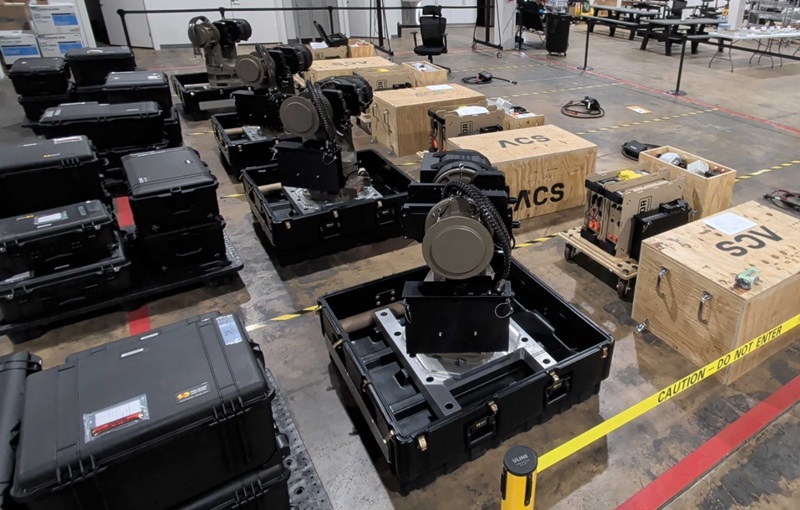
A central feature of the MH-60R is its integrated mission system, which enables it to function as a networked airborne sensor node. Under the U.S. Foreign Military Sales (FMS) package approved for South Korea, the program includes:
-
12 APS-153(V) multi-mode maritime radars
-
12 Airborne Low Frequency Sonar (ALFS) systems
-
12 AN/AAS-44C(V) multispectral targeting systems
-
Digital electro-optical and infrared (EO/IR) sensors
-
Link 16 tactical data links
-
Embedded GPS/inertial navigation systems with anti-spoofing protection
-
Secure communications and Identification Friend or Foe (IFF) systems
-
An initial stock of approximately 1,000 sonobuoys
This configuration enables the helicopter to detect, classify, and track both surface vessels and submarines, while sharing targeting-quality data with ships and allied networks in real time.
Armament and Combat Role
The MH-60R is equipped to conduct both anti-submarine and anti-surface missions. Standard armament includes MK-54 lightweight torpedoes for submarine engagement and Hellfire-class guided missiles for surface targets. South Korea is also integrating its domestically developed “Blue Shark” lightweight torpedo into the platform.
The helicopter’s operational concept centers on extending the reach of naval task groups. Unlike hull-mounted sonar systems constrained by sea conditions and ship positioning, the MH-60R can deploy rapidly to a contact location, release sonobuoys, conduct dipping sonar operations, and maintain continuous tracking.
Strategic Role and Fleet Integration
The deployment is directly linked to South Korea’s requirement to address persistent underwater threats, particularly from North Korean submarines. By shortening the detect-to-engage cycle, the MH-60R enhances the navy’s ability to respond quickly in environments where warning times are limited.
The aircraft will complement, rather than replace, existing maritime aviation assets. The ROK Navy currently operates eight AW159 Wildcat helicopters, which were acquired under an earlier procurement phase. The MH-60R provides a heavier, more networked capability suited for long-duration missions and integration with larger surface combatants.
The platform is also expected to operate from next-generation naval assets, including the KDX-III Batch 2 destroyer Jeongjo the Great, supporting expanded blue-water operations and task group deployments.
Procurement and Program Timeline
The Seahawk program follows a multi-year acquisition pathway:
-
August 2019: The United States approved the potential sale of 12 MH-60R helicopters to South Korea under an FMS package valued at approximately $800 million.
-
December 2020: South Korea’s Defense Acquisition Program Administration (DAPA) selected the MH-60R for the Batch II requirement, approving a program budget of 960 billion won (approximately $637–$881 million).
-
April 2021: The U.S. Navy awarded Lockheed Martin a $447.23 million contract for production of the 12 aircraft.
-
September 2024: The first helicopter was delivered to the ROK Navy.
-
April 2026: The first two aircraft entered operational service.
To support long-term sustainment, an additional U.S. government package valued at $350 million was approved, covering six spare T700 engines, maintenance support, and training infrastructure.
Sustainment and Operational Readiness
The early establishment of maintenance, logistics, and training pipelines is intended to ensure that the fleet maintains operational readiness as additional helicopters are delivered. The inclusion of spare engines and support systems addresses sustainment requirements critical to continuous deployment.
The remaining ten MH-60R helicopters will be inducted in phases, progressively expanding the navy’s ability to conduct coordinated ASW and ASuW operations across a wider operational area.
Expanding Maritime Defense Architecture
The induction of the MH-60R marks a significant step in South Korea’s effort to build a layered maritime defense structure. By integrating shipborne sensors, airborne platforms, and networked communication systems, the navy aims to improve situational awareness and operational coordination across its fleet.
As additional helicopters enter service, the MH-60R is expected to play a central role in extending the operational reach of South Korean naval forces and enhancing their ability to monitor and respond to maritime threats.
——— End of Article ———