SEOUL, — April 3, 2026 : South Korea has approved an accelerated timeline for deploying its Low-Altitude Missile Defense (LAMD) system, moving the planned fielding of prototype batteries from 2031 to 2029, according to an announcement by the Defense Acquisition Program Administration (DAPA) following the 174th Defense Acquisition Program Promotion Committee meeting.
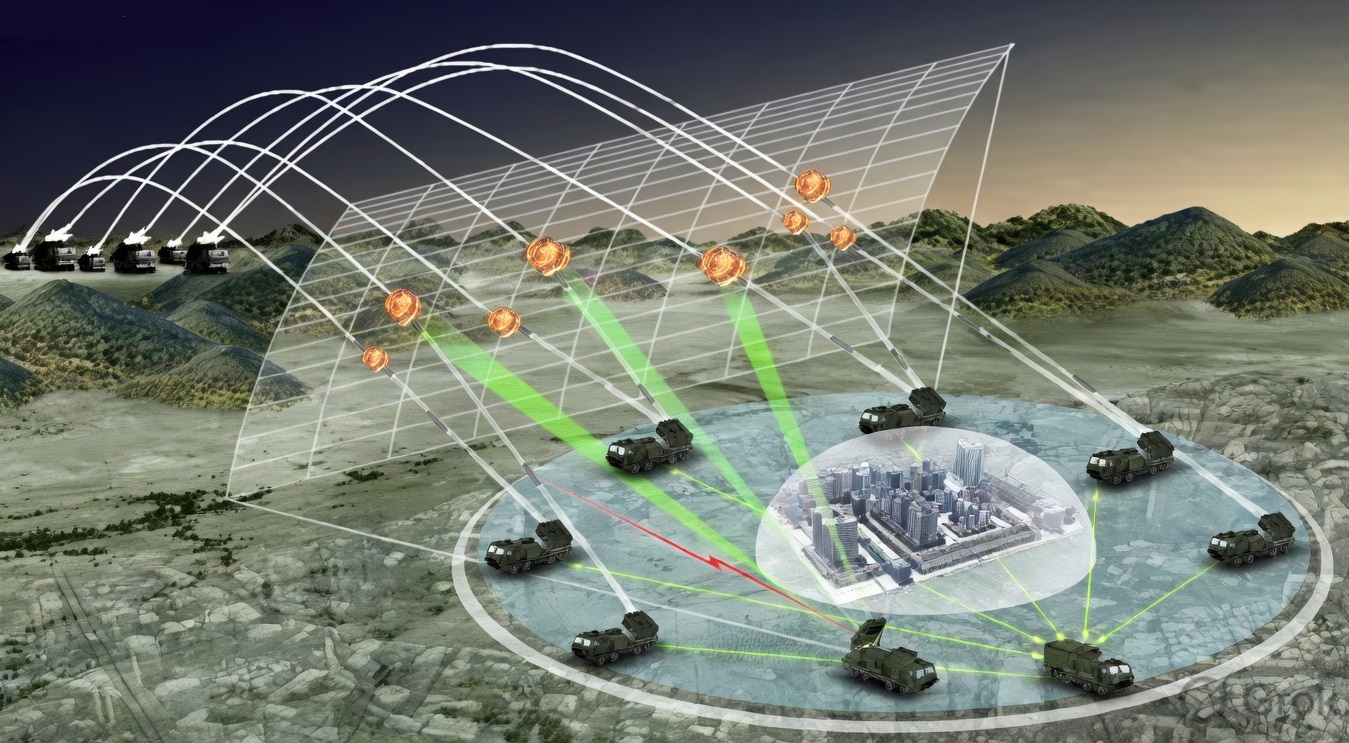
The decision endorses revisions to the project’s basic strategy and system development master plan, with the aim of reducing capability gaps against large-scale, short-warning artillery and rocket threats. The LAMD system, widely referred to as the “Korean Iron Dome,” is designed to intercept dense, simultaneous barrages of low-altitude projectiles, including artillery shells, multiple rocket launcher rounds, and hybrid systems.
Program Funding and Development Structure
The updated plan allocates a total program budget of 842 billion won (approximately $620 million) through 2030. The increase reflects expanded interceptor testing requirements as well as additional investments in infrastructure, sustainment, and maintenance capabilities.
Formal development of LAMD began in January 2025 under the leadership of the Agency for Defense Development (ADD). The program is being executed in partnership with domestic defense firms LIG Nex1, Hanwha Aerospace, and Hanwha Systems.
Hanwha Systems is responsible for the system’s core sensor, having secured a 131.5 billion won contract in 2025 to develop the multifunction radar. The radar is scheduled for completion by November 2028 and is designed to detect, identify, and track hundreds of incoming targets simultaneously in dense engagement environments.
The LAMD engagement sequence integrates multiple processes within seconds, including target discrimination, fire-control-quality tracking, interceptor allocation, and intercept confirmation. The system employs proximity-fuze fragmentation warheads optimized for intercepts at altitudes of up to approximately 10 kilometers.
Operational Requirement and Threat Environment
The acceleration decision reflects the scale and complexity of North Korea’s artillery and rocket capabilities, which continue to pose a persistent threat to the Seoul metropolitan area and surrounding military infrastructure.
North Korea fields a range of long-range systems, including 170 mm self-propelled guns, 240 mm multiple rocket launchers, and the 600 mm KN-25 system. The KN-25 has a demonstrated range of approximately 380 kilometers and is assessed to bridge the operational gap between heavy rocket artillery and short-range ballistic missiles.
These systems are capable of launching large volumes of projectiles in rapid succession, creating dense salvos that travel at low altitudes typically between 5 and 10 kilometers. Such trajectories reduce the effectiveness of higher-tier missile defense systems and necessitate a dedicated lower-tier interceptor layer.
Recent activity has reinforced these requirements. During the allied Freedom Shield exercise in March 2026, North Korea launched approximately 10 ballistic missiles, alongside prior demonstrations of large-caliber multiple rocket launcher systems. LAMD is specifically designed to operate in this mixed-threat environment, engaging artillery, rockets, and missile-like projectiles simultaneously.
Integration Within Layered Missile Defense
LAMD will function as the innermost layer of South Korea’s Korea Air and Missile Defense (KAMD) architecture. It is intended to intercept targets at altitudes up to 10 kilometers, complementing existing and planned systems across higher engagement layers.
The middle tier includes Patriot PAC-3 and the domestically developed Cheongung-II (M-SAM II), both capable of intercepting targets at altitudes of approximately 40 kilometers or below. The upper tier is provided by the L-SAM system, which operates in the 50–60 kilometer range, with L-SAM II and M-SAM Block III currently under development to address higher-altitude and higher-density threats.
LAMD will be connected to the broader KAMD network through tactical communications and centralized engagement management. This integration is intended to ensure prioritization of defended assets and prevent inefficient interceptor expenditure on non-critical targets during high-volume attacks.
Each LAMD battery is expected to include six launchers, with each launcher capable of engaging up to 32 targets simultaneously. This configuration would allow a single battery to address nearly 200 incoming projectiles in a single engagement cycle.
Strategic Context and Allied Considerations
The need for a domestically developed lower-tier defense layer has gained additional importance following reported shifts in allied missile defense deployments. In March 2026, elements of United States Forces Korea (USFK) Patriot systems and components of the Terminal High Altitude Area Defense (THAAD) system were reportedly repositioned toward the Middle East.
While LAMD is not designed to replace upper-tier systems such as THAAD, officials assess that its accelerated deployment will strengthen the resilience of South Korea’s layered defense architecture from the lowest tier upward.
DAPA has stated that LAMD is intended to provide a sovereign counter-artillery capability, reducing reliance on external systems while enhancing operational continuity during the early stages of a conflict.
Additional Defense Initiatives Approved
During the same committee meeting, DAPA approved several complementary defense programs aimed at reinforcing multi-layered defense and allied interoperability.
A 753 billion won (approximately $555 million) program was authorized for the acquisition of Standard Missile-3 (SM-3) interceptors through the U.S. Foreign Military Sales (FMS) framework. These ship-based interceptors will be deployed on ROKS King Jeongjo the Great-class Aegis destroyers (KDX-III Batch-II), enabling interception of ballistic missiles during midcourse and terminal phases.
The committee also approved a 592 billion won (approximately $436 million) initiative to replace the existing Link-11 maritime tactical data link with the more advanced Link-22 system. The upgrade is expected to enhance transmission speed, network capacity, and resistance to electronic jamming in combined maritime operations.
In parallel, the “2026–2030 Defense Industry Development Master Plan” was adopted, outlining structured support and funding mechanisms for South Korea’s domestic defense sector over the next five years.
Operational Role and Deployment Objective
Once deployed in 2029, LAMD prototype batteries are expected to play a critical role in protecting high-value assets during the initial phase of a conflict. These include air bases, command and control centers, logistics hubs, ammunition storage facilities, and key transportation and mobilization routes.
By mitigating the effects of massed artillery and rocket strikes, the system is intended to preserve operational decision-making time for military commanders while enabling counterbattery operations and precision strikes to neutralize enemy launch systems.
DAPA officials stated that development and coordination efforts will continue to meet the revised deployment timeline, with a focus on ensuring system performance under high-density engagement conditions and integration within the broader national missile defense framework.
——— End of Article ———