SEGOVIA, Spain — March 24, 2026 : Aerospace firms Shield AI and Destinus have completed a two-month autonomy integration campaign on the Destinus Hornet unmanned aerial system (UAS), successfully validating the deployment of Shield AI’s Hivemind software on the interceptor platform during live flight tests conducted in Segovia.
The campaign focused on integrating Hivemind—a modular, platform-agnostic autonomy software—with the Hornet’s flight control and mission systems. According to both companies, the effort was completed within a compressed timeline while maintaining operational continuity, demonstrating the feasibility of rapidly fielding advanced autonomy on existing aerial platforms.
Flight Testing Validates Real-Time Autonomous Adaptation
During the flight trials, the Hornet platform demonstrated real-time autonomous decision-making capabilities enabled by Hivemind. A key test objective involved dynamically adjusting flight paths to avoid geofenced areas that were actively modified while the aircraft was airborne.
The system executed these changes independently, without requiring manual reprogramming or intervention from ground control. This capability highlights the software’s ability to adapt to evolving operational constraints during missions, a requirement in complex and contested environments.
Company officials stated that the tests confirmed that autonomy can be integrated without interrupting mission execution, supporting the need for flexible and responsive systems in modern operational scenarios.
“Operational requirements are evolving quickly, and autonomy must be integrated at the same pace,” said Christian Gutierrez, Vice President of Hivemind Solutions at Shield AI. “Our collaboration with Destinus shows that Hivemind can be deployed rapidly on new platforms to support emerging operational needs.”
Hornet Platform Used as Baseline for Integration
The Destinus Hornet served as the baseline platform for the initial phase of integration, allowing both companies to reduce technical risk before expanding the autonomy stack to additional systems.
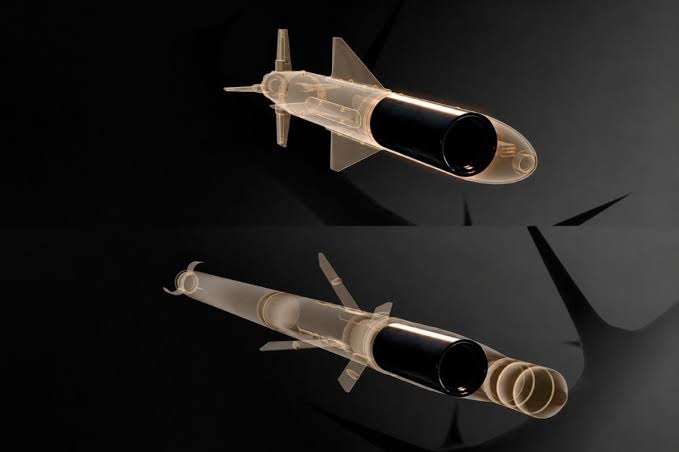
Developed by Netherlands-headquartered Destinus, the Hornet is a multi-role, electrically powered autonomous interceptor designed primarily for counter-unmanned aerial system (C-UAS) and strike missions.
Operational specifications of the Hornet Block 2 variant include a range exceeding 70 kilometers and a payload capacity of up to 3 kilograms. The system is designed with foldable wings and is launched via a booster from a sealed canister, enabling deployment from mobile ground vehicles, fixed installations, or naval platforms.
The platform is engineered to intercept loitering munitions, intelligence, surveillance, and reconnaissance (ISR) drones, as well as helicopters. In addition to its primary interceptor role, the Hornet can be configured for reconnaissance, data relay, and security operations through modular payloads.
Destinus offers the system in multiple configurations, including variants designated Hunter, Stalker, and Plotter. The platform is intended to function as a kinetic element within a layered air defense architecture designed to protect critical infrastructure and high-value assets.
Hivemind Software Enables Autonomous and Coordinated Operations
Shield AI’s Hivemind autonomy software is designed to operate across different platforms without requiring extensive customization. Unlike traditional autopilot systems that rely on pre-programmed waypoints, Hivemind uses artificial intelligence to perceive its environment, process data, and make decisions during flight.
The system supports coordinated operations among multiple uncrewed platforms, enabling what the companies describe as a “reconnaissance-to-strike loop.” It operates within defined command frameworks, maintaining human oversight while enhancing decision-making speed and system responsiveness.
“Speed of fielding matters in today’s threat environment,” said Tim Moser, Chief Technology Officer at Destinus. “The modular architecture of Hivemind allowed straightforward integration with our flight control and mission systems. Because Destinus platforms share a common technical architecture, the capabilities validated during this campaign can be extended across additional systems in our portfolio.”
Strategic Partnership and Future Development Phases
The Segovia trials mark the first phase of a broader strategic partnership between Shield AI and Destinus, originally announced on November 19, 2025. The collaboration aims to integrate Hivemind across multiple Destinus platforms, including the Ruta and Hornet UAS, alongside Shield AI’s V-BAT system.
The partnership combines U.S.-developed autonomy software with European manufacturing capabilities, with the stated objective of strengthening defense resilience across Europe and supporting allied operational requirements, including those related to Ukraine.
Future phases of testing will expand the autonomy envelope across additional platforms and mission sets. Planned developments include advanced real-time mission planning, terrain-aware flight profiles for low-altitude operations, and coordinated multi-platform behaviors to enable distributed fleet operations.
The companies indicated that the shared architecture across Destinus systems will allow capabilities validated during the Hornet campaign to be scaled across its broader portfolio without significant redesign.
Industry Context
Destinus operates as a European defense and aerospace manufacturer focused on autonomous strike and air defense systems, emphasizing vertical integration and industrial-scale production. Shield AI, founded in 2015, develops artificial intelligence-based systems for defense applications, including its Hivemind software suite and unmanned platforms such as V-BAT and X-BAT.
The successful integration campaign reflects ongoing efforts within the defense sector to accelerate the deployment of autonomy-enabled systems capable of operating in dynamic and contested environments while maintaining structured human oversight.
——— End of Article ———