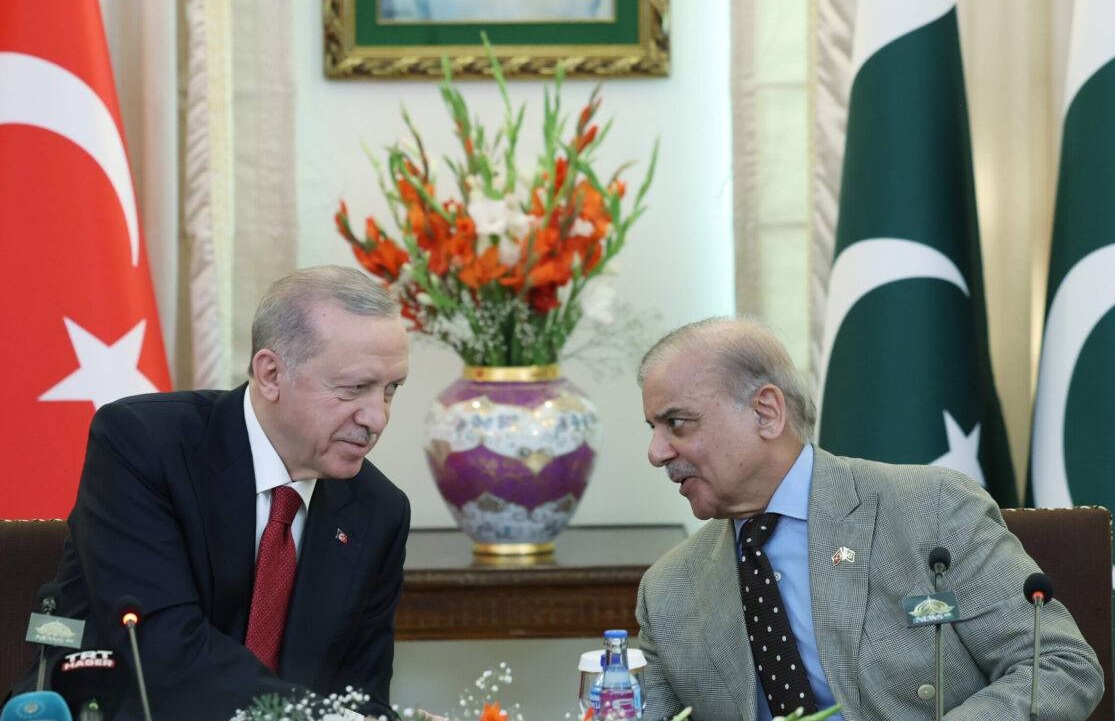
RIYADH : Saudi Arabia has formally dismissed reports that Turkey is set to join a proposed defense arrangement between the Kingdom and Pakistan, confirming that the emerging security framework will remain a strictly bilateral agreement between Riyadh and Islamabad.
Officials familiar with the discussions said the clarification was issued to counter speculation that Saudi Arabia was attempting to construct a broader regional military bloc involving multiple Sunni-majority states. According to a source close to the Saudi military, speaking to Agence France-Presse (AFP), Turkey is not part of the agreement and has not been invited to join it. The source stressed that the pact was conceived from the outset as a bilateral understanding and would not be expanded.
A second senior Gulf official echoed that position, noting that while Saudi Arabia maintains defense and security cooperation with Turkey through separate channels, those arrangements are unrelated to the structure being developed with Pakistan. The official said Riyadh intends to manage its security relationships on a case-by-case basis rather than through a single multilateral alliance.
Background to the Speculation
Talk of a wider alliance gained traction amid heightened regional tensions over the past year. The Gulf security environment deteriorated following a series of military incidents, including Israeli air strikes in Doha that targeted officials linked to Hamas, and a subsequent Iranian strike on a United States military facility in Qatar. The incidents raised concerns among Gulf states about escalation and the resilience of existing security guarantees.
Against this backdrop, reports circulated that Saudi Arabia was exploring options to deepen its strategic partnerships, potentially combining Pakistan’s long-standing military ties with the Kingdom and Turkey’s advanced conventional capabilities as a member of NATO. Saudi officials have now moved to shut down those claims.
Nature of the Saudi–Pakistan Pact
The Saudi–Pakistan defense agreement, announced in principle last year, focuses on military cooperation, training, intelligence sharing, and defense planning. While specific provisions have not been made public, the pact builds on decades of close ties between the two countries, including the stationing of Pakistani military personnel in Saudi Arabia and extensive defense cooperation.
Because Pakistan is a nuclear-armed state, the agreement has attracted close attention from Western governments and analysts. Questions have been raised about whether the arrangement could imply extended deterrence or other strategic assurances in extreme scenarios. Saudi officials have not commented publicly on any nuclear-related aspects, and there is no indication that such provisions are formally included.
The absence of Turkey, which is bound by NATO obligations and international non-proliferation frameworks, is viewed by some observers as allowing the Saudi–Pakistan relationship to retain a degree of strategic flexibility without introducing additional legal or political constraints.
Regional Context and India–Pakistan Tensions
The importance of Pakistan as a security partner was underscored by last year’s brief but intense conflict between Pakistan and India. In May, the two nuclear-armed neighbors exchanged missile, drone, and artillery fire over a four-day period, resulting in more than 70 fatalities. The fighting marked the most serious confrontation between the rivals since the 1999 Kargil conflict.
Saudi Arabia was widely reported to have played a diplomatic role in easing tensions during that episode. Officials and analysts said Riyadh used its economic influence in Islamabad and its growing commercial and energy ties with New Delhi to encourage de-escalation and support a ceasefire.
Balancing Multiple Partnerships
Despite its expanding defense cooperation with Pakistan, Saudi Arabia has continued to deepen economic relations with India. The Kingdom is currently one of India’s leading energy suppliers, ranking among its top sources of crude oil and refined petroleum products. Energy trade remains a central pillar of Saudi–Indian relations, alongside investment and infrastructure cooperation.
Saudi officials say this dual-track approach reflects a broader strategy of compartmentalizing relationships, allowing Riyadh to pursue security cooperation with one partner while maintaining strong economic and diplomatic ties with others. The decision to keep the defense pact with Pakistan bilateral appears consistent with that approach, signaling caution against entangling alliances at a time of regional uncertainty.
——— End of Article ———