Riyadh / Washington / Tehran : Saudi Arabia has privately communicated a clear policy of conditional neutrality as tensions between the United States and Iran continue to rise, according to multiple regional and Gulf officials familiar with the discussions. Saudi Arabia has indicated it will not retaliate against Iran if any Iranian military action is strictly limited to United States military assets located on Saudi territory and does not extend to Saudi sovereign infrastructure, population centers, or energy facilities.
Officials say the position reflects a calculated effort by Riyadh to avoid being drawn into a direct confrontation while preserving its security partnership with Washington. Saudi authorities expect that, in the event of an escalation, Iran would confine any strikes to U.S. bases in Saudi Arabia and elsewhere in the Gulf, with Gulf states refraining from participation as long as their own assets are not targeted.
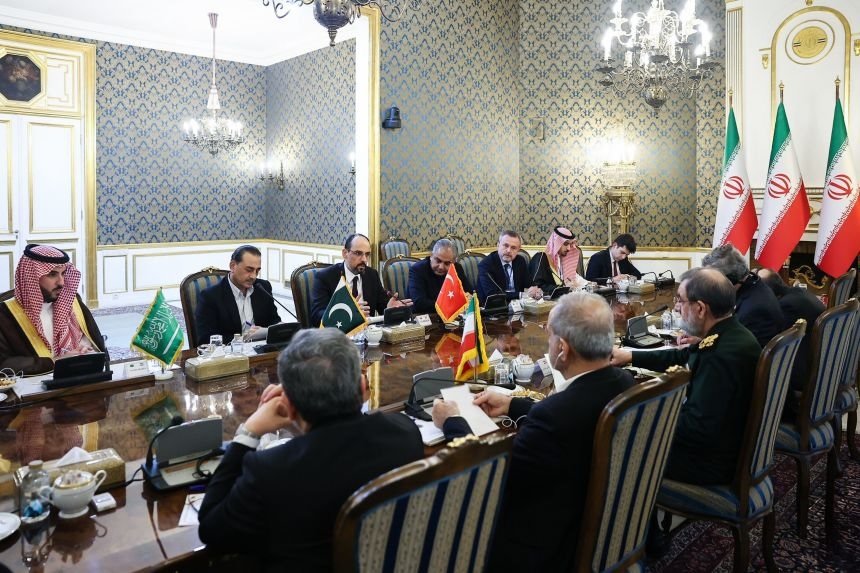
The messaging has reportedly been conveyed to Tehran through diplomatic backchannels involving Oman and Qatar. Gulf states have warned that their neutrality is conditional: limited strikes on U.S. military facilities may be tolerated to prevent a wider regional war, but significant damage to Gulf cities, energy infrastructure, or civilian areas would trigger a collective response, potentially involving the Gulf Cooperation Council (GCC).
A Defined Red Line
According to regional reports, Saudi Crown Prince Mohammed bin Salman has informed Iranian President Masoud Pezeshkian that Saudi Arabia will not permit its airspace or territory to be used for offensive U.S. operations against Iran. At the same time, Riyadh has made clear that it will not accept attacks on Saudi-owned infrastructure, including oil facilities, ports, desalination plants, or urban areas.
The approach is shaped in part by the memory of the September 2019 Abqaiq–Khurais drone and missile attacks, which temporarily cut Saudi oil production by roughly half. Officials describe the current doctrine as one aimed at ensuring that any confrontation remains narrowly focused on U.S. military assets rather than spilling over into the Gulf’s economic and energy systems.
Saudi policymakers are also seeking to protect long-term domestic priorities, including large-scale economic diversification projects under Vision 2030, which they view as particularly vulnerable to regional instability.
Military Posture and Regional Pressure
The Saudi position has emerged as the United States increases its military presence in the region. The arrival of the USS Abraham Lincoln carrier strike group in the Arabian Sea, along with its guided-missile destroyer escorts, has been accompanied by heightened naval and air activity. On February 3, a U.S. F-35 fighter shot down an Iranian drone during what U.S. officials described as a defensive encounter, further raising tensions.
President Donald Trump has characterized the naval deployment as a means of pressuring Iran back into negotiations over its nuclear and missile programs. U.S. officials say the buildup is intended to deter escalation while creating leverage for renewed talks ahead of the expiration of the New START arms control framework.
Iran’s leadership has responded cautiously. Supreme Leader Ali Khamenei has warned that any direct U.S. strike would lead to a broader regional conflict, a statement widely interpreted as a test of whether Gulf states would maintain neutrality under pressure.
Gulf States’ Positions
Across the Gulf, governments are attempting to balance their security relationships with the United States against their desire to avoid becoming targets. Saudi Arabia hosts an estimated 2,500 U.S. troops and has publicly denied allowing its airspace to be used for offensive strikes. The United Arab Emirates, with roughly 5,000 U.S. personnel, has issued warnings to Iran against regional escalation while maintaining a neutral stance. Qatar, which hosts around 10,000 U.S. troops and the forward headquarters of U.S. Central Command, has taken on a mediating role between Washington and Tehran. Oman, with a smaller U.S. presence, continues to serve as the primary backchannel for direct U.S.–Iran communication.
Despite the emphasis on neutrality, Saudi Arabia remains deeply integrated into U.S.-led defensive arrangements. Saudi air defense systems, including Patriot and THAAD batteries, are fully coordinated with U.S. Central Command, underscoring that Riyadh’s restraint applies to offensive operations rather than defensive cooperation.
Strategic Implications
Security analysts say the Saudi “red line” serves multiple strategic purposes. By signaling that it will not function as a launchpad for U.S. attacks, Riyadh is attempting to reduce Iran’s incentive to strike Saudi economic assets. At the same time, limiting the operational use of Gulf bases increases Washington’s reliance on carrier-based aviation and long-range strike capabilities, raising the cost and complexity of any potential military action.
The approach also reflects a broader regional effort to compartmentalize U.S.–Iran tensions, allowing Gulf states to remain formally aligned with Washington while minimizing their exposure to retaliation.
Diplomatic Track Shifts to Oman
As of February 4, diplomatic efforts aimed at de-escalation have reportedly shifted from Istanbul to Oman at Iran’s request. Iranian officials have indicated a preference for bilateral talks with the United States focused narrowly on nuclear issues, excluding missile development and regional proxy activities that Saudi Arabia and the UAE have argued should be addressed in any comprehensive agreement.
For now, Gulf officials describe the situation as stable but fragile. Saudi Arabia’s conditional neutrality, they say, is intended to hold as long as all parties respect clearly communicated limits—limits that Riyadh has made clear are not open-ended.
——— End of Article ———