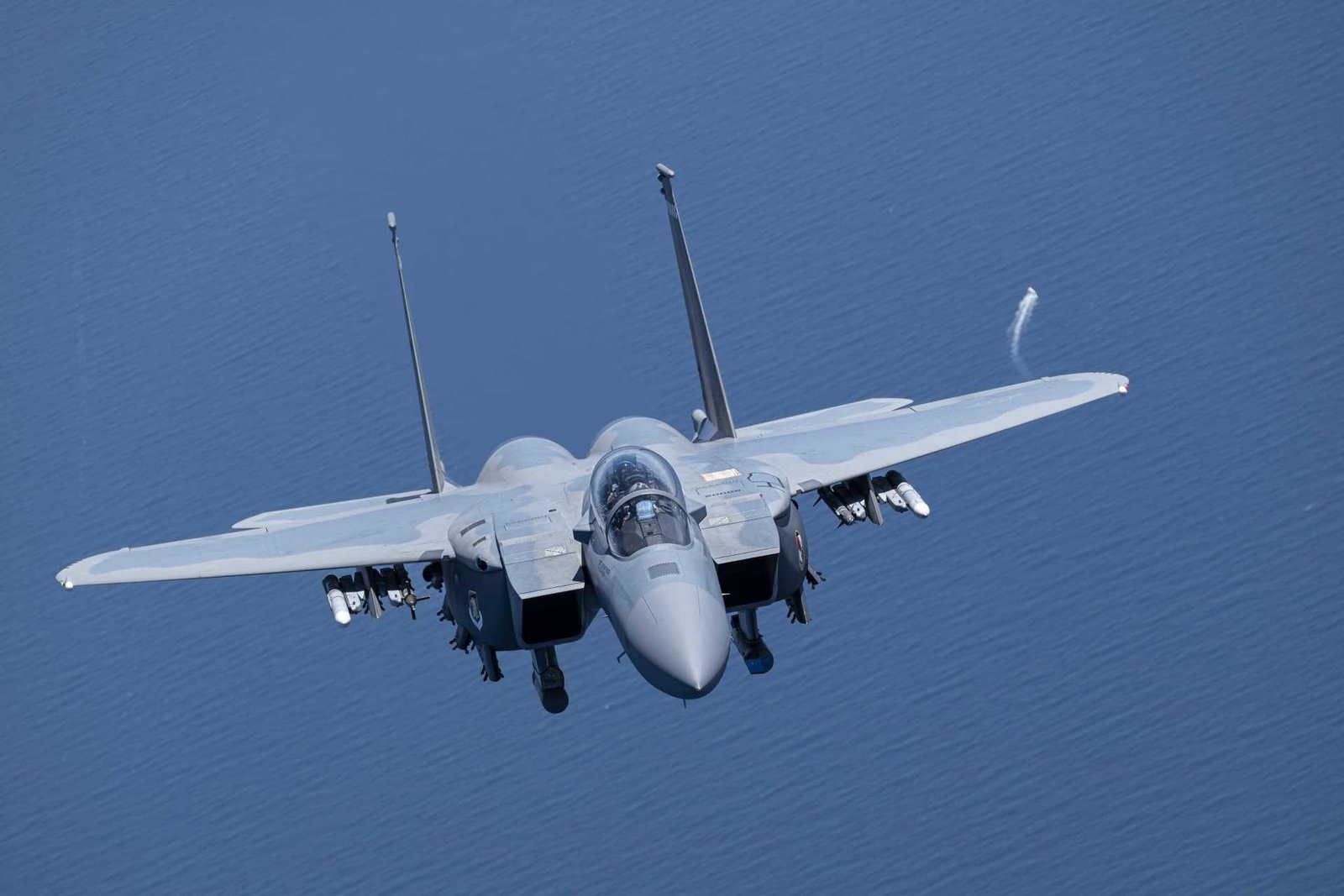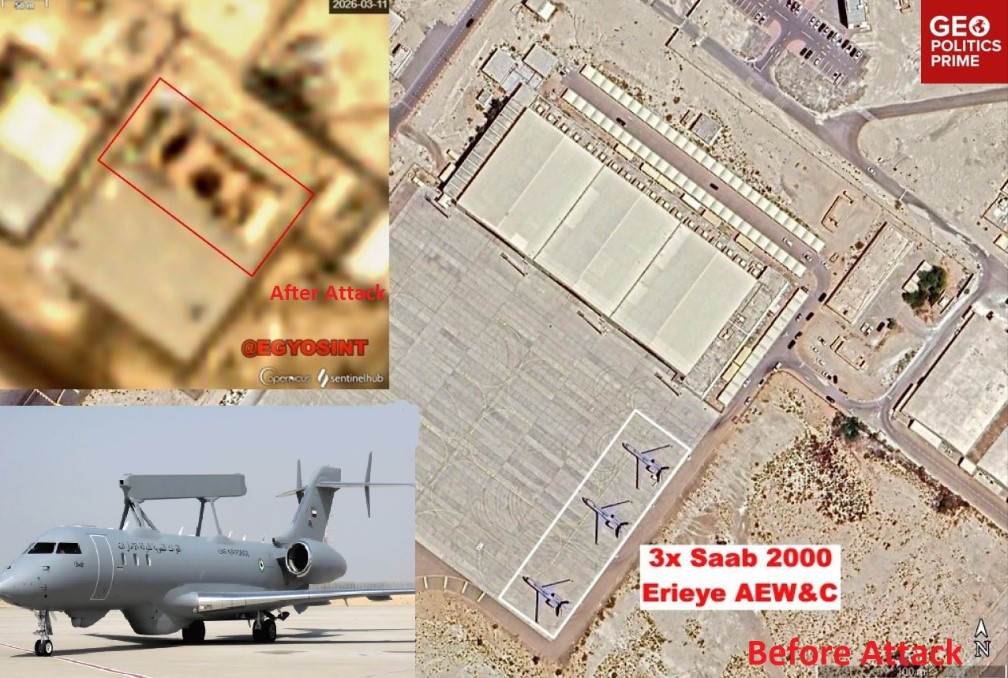
Abu Dhabi — March 16, 2026 : The United Arab Emirates has lost one of its Saab GlobalEye airborne early warning and control (AEW&C) aircraft following Iranian drone and missile attacks targeting Al Dhafra Air Base earlier in March 2026. Satellite imagery released in mid-March indicates that the aircraft was destroyed after several reinforced aircraft shelters at the base were struck during the attacks.
Open-source satellite analysis shows heavy structural damage and burn marks on multiple hangars previously used to house GlobalEye aircraft and other large platforms. Defense observers report that the aircraft was likely destroyed by a Shahed-series loitering munition, a system estimated to cost approximately $20,000. The GlobalEye aircraft itself is valued at roughly $460 million to $500 million per unit, though total system costs including mission equipment, support, and integration can approach or exceed $1 billion.
The strikes formed part of a broader wave of Iranian attacks targeting sites in the United Arab Emirates during the escalation in early March. Recorded attacks occurred on March 10 and March 13, when drones, cruise missiles, and ballistic missiles were launched toward several locations. Al Dhafra Air Base, located south of Abu Dhabi, was among the primary targets. The facility hosts assets from the UAE Air Force and Air Defence and is also used by United States and French forces operating in the Gulf region.
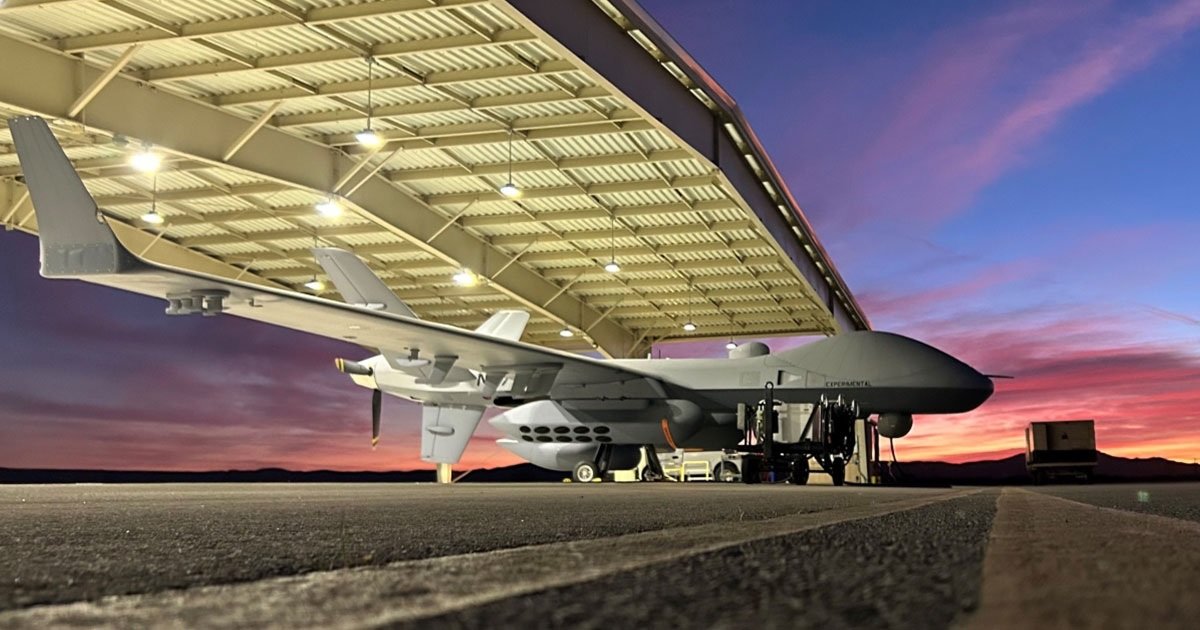
Satellite imagery released on March 15 and March 16 shows that at least three large hangars designed for high-value aircraft sustained visible damage. These shelters had previously been associated with the storage and maintenance of the UAE’s GlobalEye aircraft. Additional platforms reportedly present in the affected area included C-235 transport aircraft, MQ-9 Reaper unmanned aerial vehicles, and MQ-4C Triton high-altitude surveillance drones.
The UAE Ministry of Defence confirmed that air defence systems intercepted a large number of incoming missiles and drones during the attacks. However, officials have not issued a formal statement specifying aircraft losses or confirming the destruction of a GlobalEye platform. Defense reporting and open-source imagery analysis nonetheless indicate that at least one aircraft from the fleet was destroyed during the strike.
UAE GlobalEye Fleet
Prior to the incident, the UAE operated a fleet of five GlobalEye aircraft. The type represents the most advanced airborne early warning and surveillance platform currently deployed in the Middle East. These aircraft form a central component of the UAE’s integrated air defence and surveillance architecture.
The GlobalEye system is based on the Bombardier Global 6000 long-range business jet and integrates Saab’s Erieye ER extended-range radar. The platform combines multiple sensor systems capable of detecting and tracking air, surface, and ground targets while operating at high altitude. The aircraft provides long-range surveillance coverage exceeding 550 kilometers for certain aerial targets and can remain airborne for more than 11 hours depending on mission configuration.
GlobalEye aircraft also serve as airborne command and control nodes. The platform supports coordination of fighter aircraft, naval assets, and ground-based air defence systems through its integrated communication and battle management systems.
Acquisition History
The UAE was the launch customer for the GlobalEye program. The procurement was carried out through several contracts with Saab over nearly a decade.
The initial agreement was signed during the Dubai Air Show in November 2015 for two aircraft with a value of approximately $1.27 billion. The contract included the aircraft, mission systems, training, and associated support services.
In February 2017, the UAE exercised an option to acquire a third aircraft under the original agreement. A further expansion of the fleet was approved in December 2020 when the UAE signed a follow-on contract valued at approximately $1.018 billion for two additional GlobalEye aircraft.
Deliveries occurred in several stages over the following years. The first aircraft was delivered in April 2020, followed by the second in September 2020. The third aircraft was delivered in 2021. The fourth and fifth aircraft were delivered in 2024, completing the UAE’s five-aircraft fleet less than ten years after the initial contract.
In January 2024, Saab and the UAE signed a three-year in-service support agreement valued at approximately $190 million. The contract covers maintenance services, logistics support, training, and operational sustainment for the fleet through 2026.
Impact and Operational Considerations
The destruction of one aircraft reduces the UAE GlobalEye fleet from five aircraft to four remaining operational platforms. No official information has been released regarding the operational impact on UAE airborne surveillance coverage or command capabilities.
Military analysts note that AEW&C platforms such as GlobalEye play a critical role in managing modern air operations. These aircraft extend radar coverage far beyond ground-based sensors and allow commanders to coordinate fighter aircraft, missile defense systems, and maritime forces across large areas.
At present, neither the UAE government nor Saab has announced any plans to replace the destroyed aircraft or to expand the fleet further. The remaining aircraft continue to operate under the existing support and maintenance contract signed in 2024.
Broader Context
The strike on Al Dhafra Air Base highlights the growing role of low-cost unmanned systems in modern conflicts. Iranian strike waves during the escalation included ballistic missiles, cruise missiles, and multiple types of unmanned aerial vehicles, including loitering munitions.
Although UAE air defenses intercepted the majority of incoming threats during the March attacks, several weapons reached infrastructure at Al Dhafra. The resulting damage to aircraft shelters demonstrates the vulnerability of high-value air assets when targeted by relatively inexpensive drone systems.
As of March 16, 2026, UAE authorities have not released additional details regarding damage assessments, repair efforts at the base, or potential procurement decisions related to the GlobalEye fleet.
——— End of Article ———