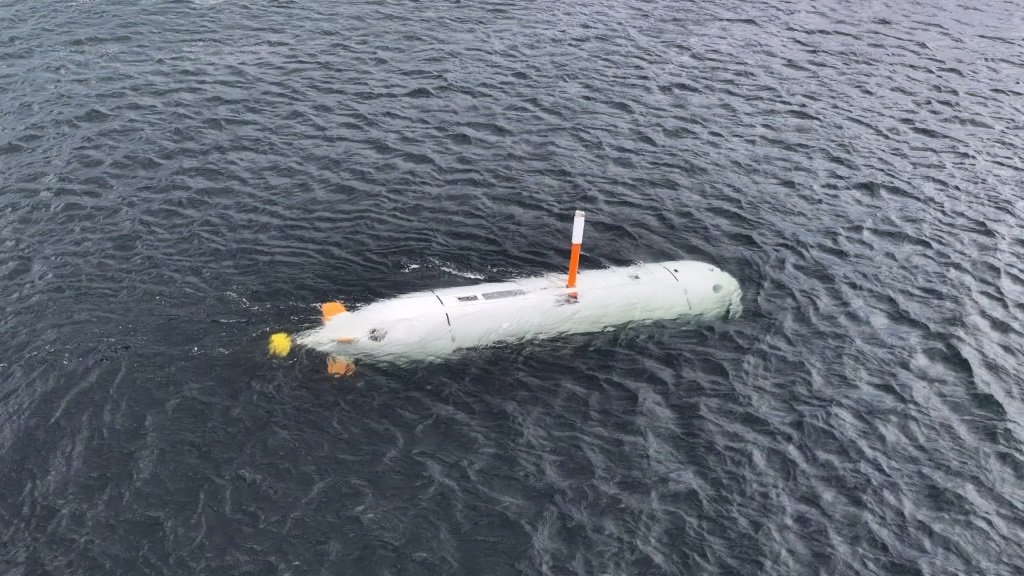
STOCKHOLM, — Swedish defence company Saab, the Swedish Defence Materiel Administration (FMV) and the Swedish Armed Forces have completed the first phase of a Large Uncrewed Underwater Vehicle (LUUV) demonstrator project following successful sea trials.
FMV awarded Saab a SEK 60 million contract in August 2025 for the vehicle's design, construction and testing. Saab is the prime contractor, while FMV leads the project in cooperation with the Swedish Armed Forces. The demonstrator progressed from concept to sea trials in less than a year, marking the completion of the project's initial phase.
Autonomous Underwater Surveillance
The LUUV is designed primarily as a sensor platform, not a weapons system. Its intended missions include seabed monitoring and mapping, intelligence, surveillance and reconnaissance (ISR), protection of critical underwater infrastructure, and detection of potential underwater threats.
The vehicle could operate alongside existing naval platforms, including crewed submarines, to increase endurance, improve situational awareness and strengthen Sweden's underwater capabilities. It is intended to support operators by collecting information and helping them assess underwater conditions.
Saab has also referred to the vehicle in some contexts as the Autonomous Ocean Drone (AOD). Reported baseline specifications for the ISR-configured version include a length of approximately 7 metres, a diameter of 1.4 metres and a weight of around 6.5 tonnes. Powered by lithium-ion batteries, it has a reported range exceeding 600 nautical miles at a patrol speed of approximately 4 knots. Earlier FMV design requirements specified a length of around 6.5 metres, a maximum speed of 14 km/h and a maximum operating depth of 500 metres. These earlier figures are design requirements, not necessarily the demonstrator's final specifications.
Saab's Autonomous Technology
The rapid development was supported by Saab's software-centric approach and its Autonomous Ocean Core control system, which provides autonomous capabilities for surface and underwater platforms. The system combines with Sweden's expertise in submarine design and sensor integration, building on Saab's earlier work in autonomous underwater systems.
The project reflects Sweden's growing focus on protecting Baltic Sea infrastructure, including undersea cables and other critical maritime assets. Autonomous underwater vehicles could help monitor large areas and complement existing naval platforms in surveillance missions.
Further Testing and Development
The project will now enter a more advanced testing phase in relevant marine environments. Future work will focus on software development, advanced sensor integration and expanded autonomous functions. The long-term objective is for the vehicle to remain at sea for extended periods, operating with or without direct human supervision. Potential launch and recovery from submarines or other platforms is also part of the concept.
Martin Nyqvist, FMV's project manager for underwater warfare systems, said the next step would involve continued evaluation in relevant marine environments.
Mats Wicksell, head of Saab's Naval business area, said: “This project demonstrates how new technologies can be rapidly translated into practical operational value. The uncrewed underwater vehicle can contribute to increased endurance, enhanced situational awareness and strengthened underwater capabilities. The fact that we have also been able to develop and test the system in such a short timeframe demonstrates the strength of the collaboration between the Swedish Armed Forces, FMV and Saab.”
The demonstrator's test results will support further development and help Swedish authorities assess future procurement and operational use of autonomous underwater systems. Although the first phase has been completed, the vehicle is not yet confirmed as operationally ready or in military service.
——— End of Article ———