BERLIN : German defence technology company STARK has announced the opening of a 2,000-square-meter research and development (R&D) center in Ukraine, marking a key step in its broader European expansion strategy. The announcement was made ahead of the Munich Security Conference and reflects the company’s focus on integrating operational battlefield data directly into its engineering and production processes.
Founded in 2024 and headquartered in Berlin, STARK has reached a valuation exceeding €1 billion within two years of its establishment. The company develops AI-enabled unmanned systems for strike and reconnaissance missions and has been expanding its industrial capacity across Europe to address rising demand for autonomous capabilities.
Ukrainian Hub to Link Frontline Feedback with Production
The newly established facility in Ukraine is designed to accommodate more than 200 specialists. Its functions include research and development, systems integration, operator training, and technical support. The center is structured to shorten the transition period between system design, field testing, and large-scale manufacturing.
By positioning development teams closer to operational environments, STARK aims to implement daily technical iterations based on feedback from military operators. The company has confirmed plans to move beyond R&D activities and establish full-cycle unmanned aerial vehicle (UAV) manufacturing in Ukraine. This approach will integrate domestic supply chains and enable rapid system updates in response to evolving battlefield conditions and electronic warfare countermeasures.
Maksym Cherkis, Chief Operating Officer of STARK Ukraine, stated that the ongoing conflict has reshaped Europe’s security framework and underscored the importance of sustained industrial production capacity alongside military capability.
Integrated AI Command Architecture
STARK’s unmanned systems operate on a unified command-and-control (C2) software platform known as Minerva. The AI-driven architecture enables distributed coordination among autonomous systems, including swarm operations configured for “hunter-killer” mission profiles.
The software is designed to maintain operational effectiveness in environments where Global Navigation Satellite Systems (GNSS) signals are denied or degraded, and where conventional communications are disrupted. Minerva functions as the central software layer across STARK’s hardware portfolio, ensuring interoperability and coordinated deployment across air and maritime domains.
Product Portfolio: Air and Maritime Systems
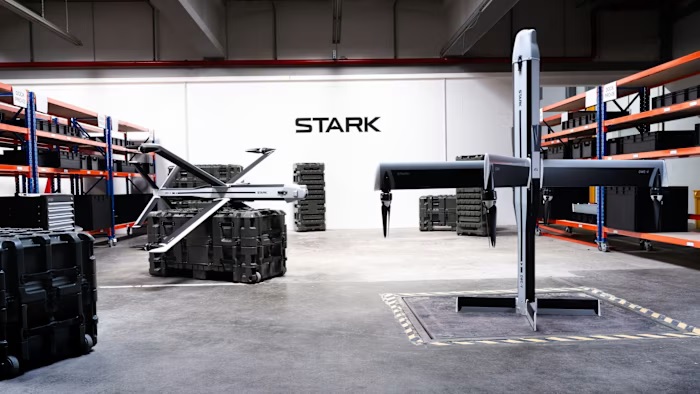
The company’s aerial system, Virtus, is a Vertical Take-Off and Landing (VTOL) loitering munition platform. It operates without catapults or heavy launch equipment and has a top speed of 250 kilometers per hour, a range of 120 kilometers, and an endurance of up to 60 minutes.
Virtus carries a 5-kilogram payload and integrates advanced warheads, including Ukrainian-produced munitions from Rendrock and German-manufactured TDW Lion Strike 110 warheads. The Lion Strike 110 has demonstrated the ability to penetrate 800 millimeters of rolled armored steel.
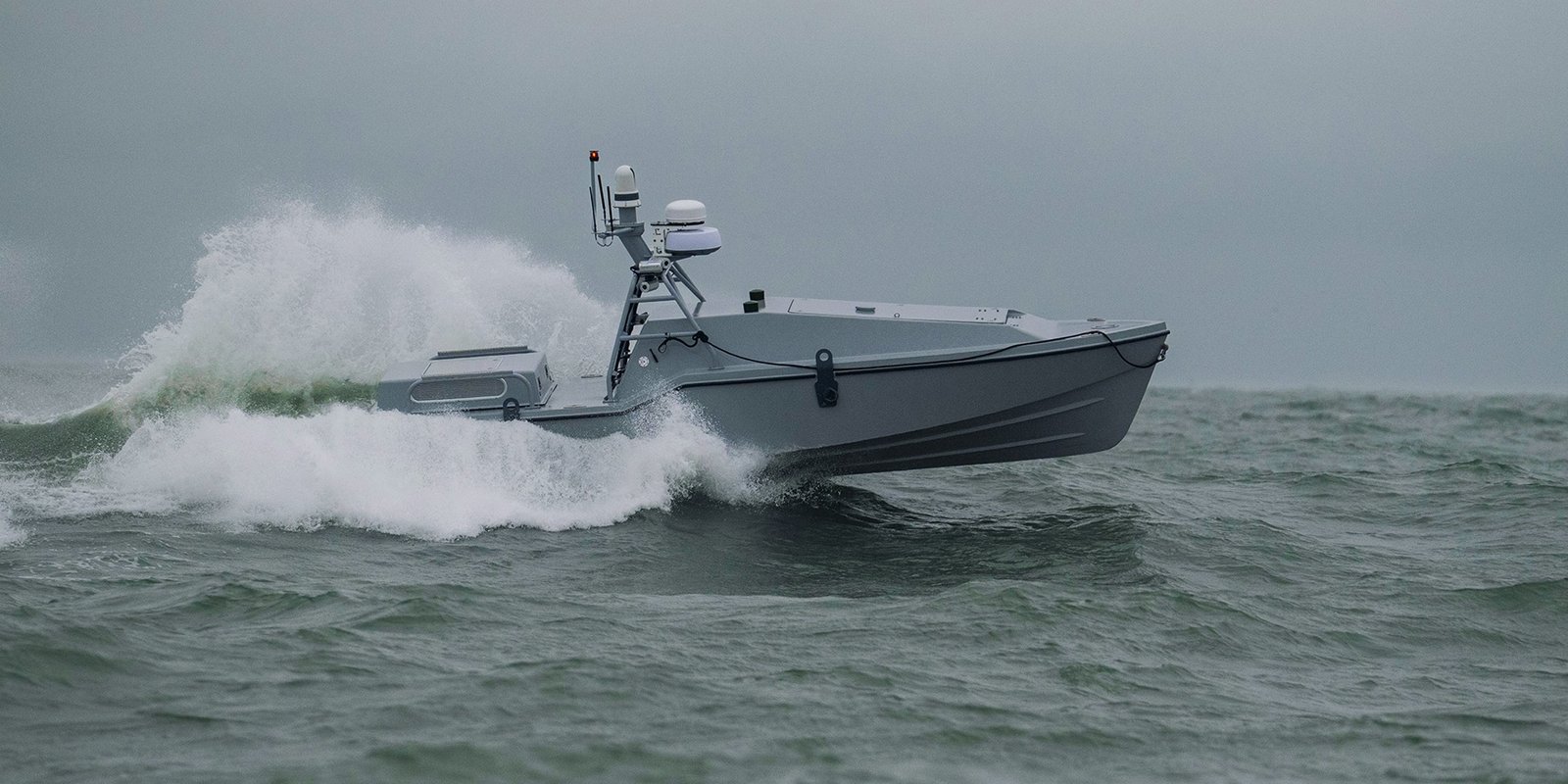
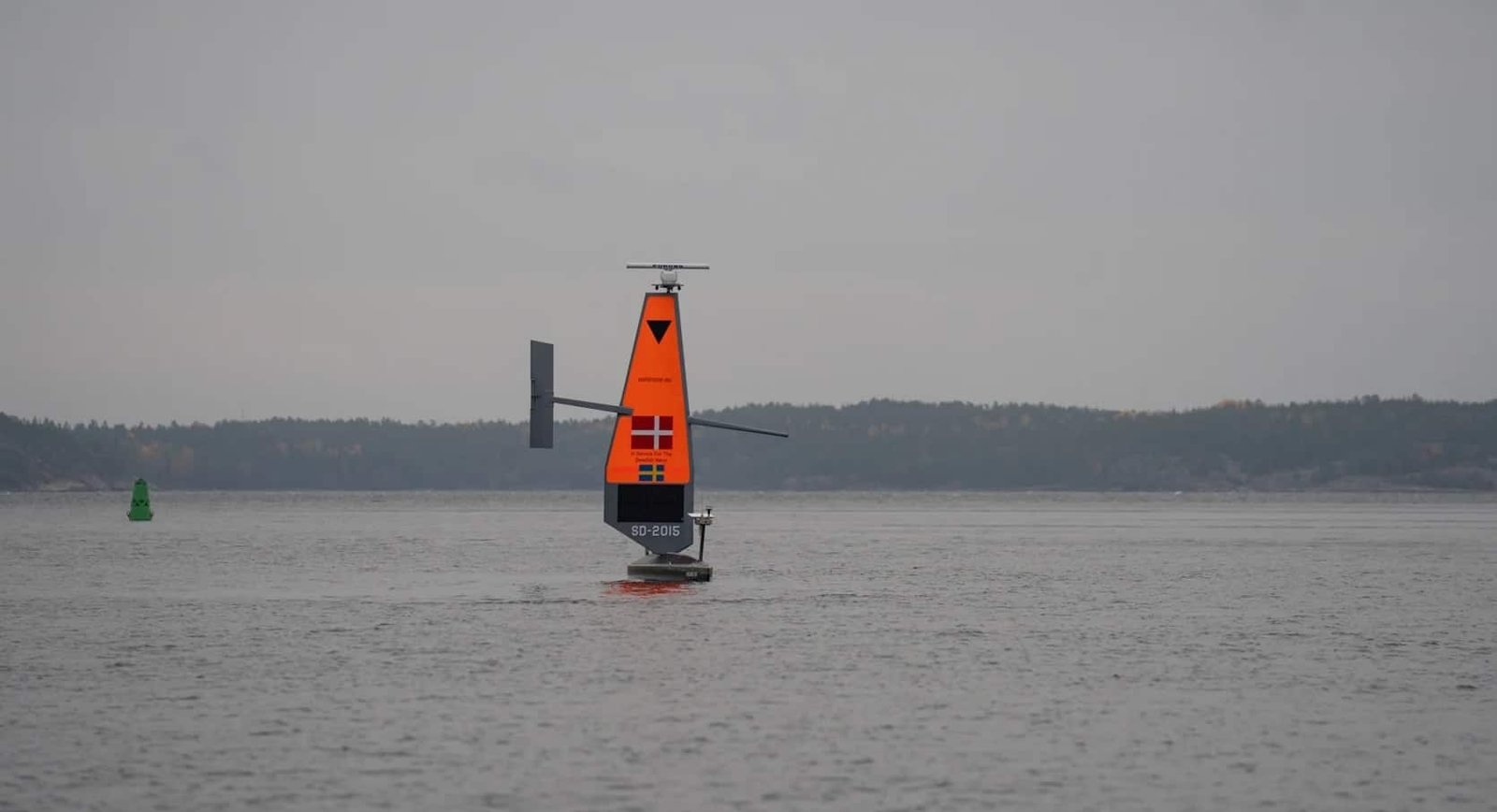
In the maritime domain, STARK produces the Vanta unmanned surface vessel (USV), designed for reconnaissance and strike missions. Vanta was tested during NATO’s REPMUS exercises and can carry tube-launched loitering munitions, allowing it to function as a mobile launch platform that extends operational reach at sea.
European Manufacturing and Investment Expansion
The Ukrainian R&D center is part of STARK’s broader pan-European expansion. The company recently opened a regional office in Greece and launched a 40,000-square-foot manufacturing facility in Swindon, United Kingdom, with the capacity to produce up to 2,400 systems annually.
STARK’s operational network now spans Germany, Sweden, the United Kingdom, Ukraine, and Greece, forming a distributed European defence production structure.
The expansion is supported by government procurement commitments. The German federal government has approved €300 million in funding for the acquisition of STARK loitering munitions, reinforcing European investment in scalable autonomous strike systems.
Uwe Horstmann, Chief Executive Officer of STARK, stated that the company’s strategy focuses on combining frontline operational insight with distributed European manufacturing capacity, ensuring that systems can be produced at scale and adapted to evolving operational requirements.
——— End of Article ———