MOSCOW — Russia's Bureau 1440 has reached a new milestone in the deployment of its low-Earth orbit (LEO) Rassvet satellite constellation, with the first operational group now providing at least two stable communication windows over Ukraine each day, according to trajectory analysis shared by satellite communications expert Volodymyr Stepanets.
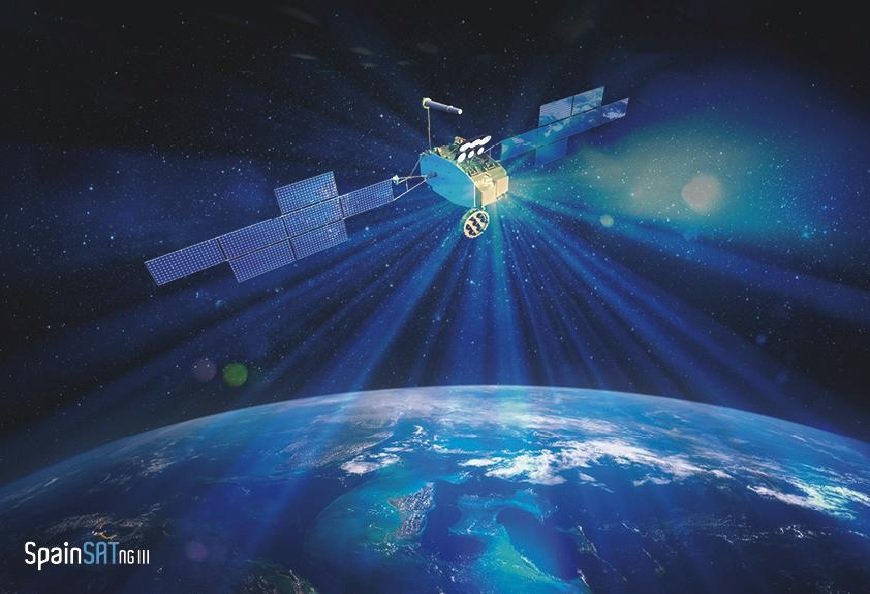
Speaking to Ukrainian defense publication Militarnyi, Stepanets said the first batch of 16 Rassvet communications satellites, launched in late March 2026, has formed a configuration capable of supporting regular satellite connectivity over Ukraine. As of July 31, 2026, 12 satellites had reached their planned operational altitude of 550 kilometers, three satellites were still gradually ascending, and one satellite had burned up, reportedly due to a manufacturing defect.
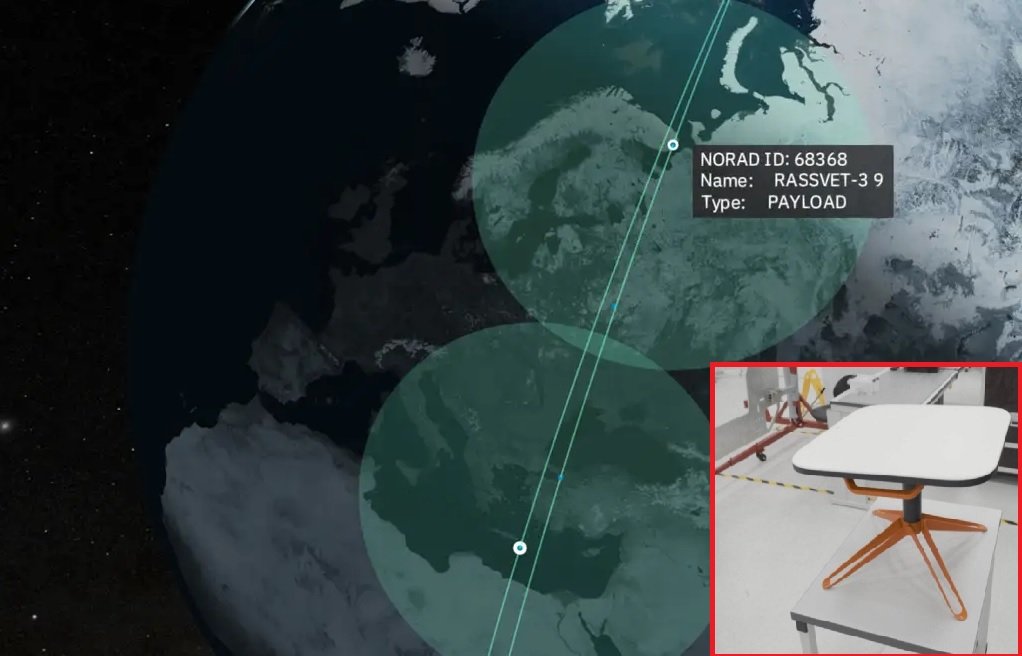
According to Stepanets, the current satellite formation provides at least two communication windows per day, each lasting between one and one-and-a-half hours. Additional satellite passes occur more frequently, with multiple satellite chains moving across different regions at intervals of about 1.5 hours, creating relatively dense coverage.
Tracking data from the N2YO satellite monitoring service shows that the Rassvet satellites pass within line of sight over Ukraine four times each day. However, only two or three of those passes rise high enough above the horizon to provide stable communication links with ground terminals.
During these communication windows, the satellite network could theoretically support communications and control for Russian military systems, including maritime drones and heavier strike and reconnaissance unmanned aerial vehicles (UAVs) such as the Geran-2, Geran-3, and Geran-4 series.
Ground Terminals Designed for High-Speed Connectivity
Bureau 1440 has also completed development of the base version of its subscriber terminal and is preparing to begin mass production.
The terminals measure up to 60 centimeters in length and width, weigh less than 15 kilograms, and provide bandwidth of up to 1 Gbit/s. They are designed to operate in temperatures ranging from -40°C to +40°C.
Like SpaceX's Starlink terminals, the Rassvet terminals use active phased-array antenna technology, enabling them to automatically locate satellites, establish connections, and maintain links without manual antenna positioning.
Once production increases, the terminals are expected to be introduced into Russian military service. Potential applications include deployment at command posts, aboard military vehicles and naval vessels, and integration with long-range strike and reconnaissance UAVs, including future Geran-5 variants, the Garpiya, and other unmanned platforms. Defense analysts also assess that the communication links could support guidance for cruise missiles, glide bombs, and similar systems.
Second Satellite Batch Launched
Russia launched a second batch of 16 Rassvet satellites in late July 2026. If these satellites follow the same deployment timeline as the first group, they are expected to reach operational altitude by October or November 2026, adding two more daily communication windows over Ukraine.
Bureau 1440's official roadmap targets the start of commercial operations in 2027 as part of its plan to build a domestic low-Earth orbit broadband communications network.
Earlier company plans outlined expansion of the constellation to 250 satellites by 2027, 730 satellites by 2030, and more than 900 satellites by 2035.
Based on those targets, maintaining the planned schedule would require launching approximately 16 satellites each month. So far, however, launches have taken place at a rate of roughly one mission every four months.
Even at the current pace, analysts estimate that a fourth batch of satellites could be launched by March 2027. If deployment continues as expected, the constellation could become large enough to provide continuous satellite coverage over Ukraine by mid-summer 2027.
According to Ukrainian defense experts cited by Militarnyi, this timeline provides a limited period for the development and deployment of electronic countermeasures before the Rassvet constellation reaches continuous operational capability.
Rassvet Program Development
Bureau 1440, a company within IKS Holding, began developing the Rassvet satellite program through the experimental Rassvet-1 and Rassvet-2 missions conducted in 2023 and 2024. The project transitioned to operational satellite deployments in 2026 and is intended to establish Russia's domestic low-Earth orbit broadband communications network.
Source : militarnyi
——— End of Article ———