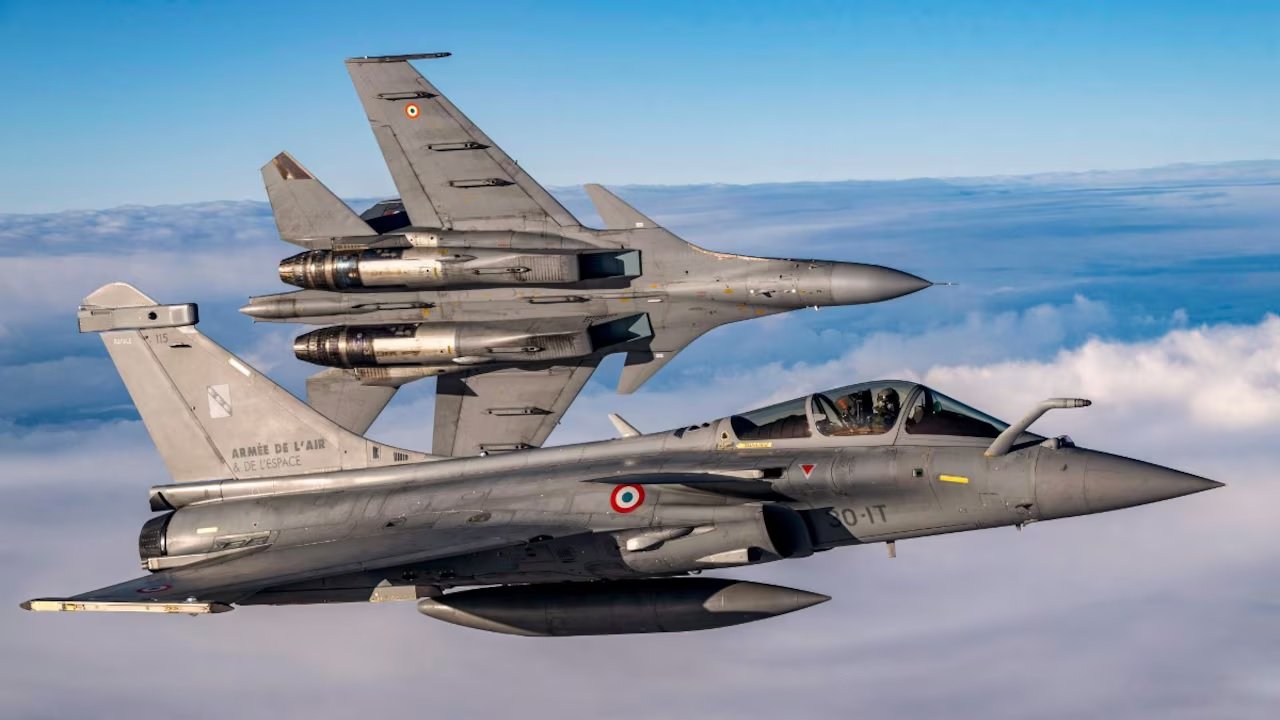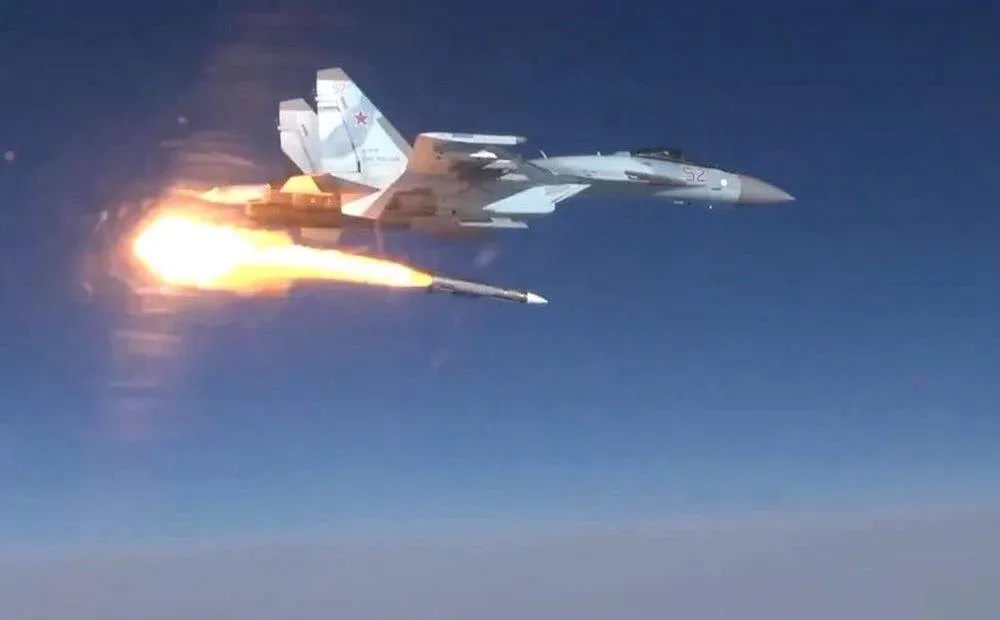
KYIV, June 29, 2026 — A Russian Aerospace Forces Su-35S fighter reportedly shot down a Ukrainian MiG-29 during a nighttime combat mission over Ukraine's Poltava Oblast from an estimated distance of 190 kilometers (approximately 118 miles). If confirmed, the interception would rank among the longest-range air-to-air kills recorded in modern combat.
The engagement took place during the night of June 26–27, 2026. Ukraine confirmed the loss of the MiG-29, stating that the pilot successfully ejected and survived.
The reported shootdown came on the same day that Russian loitering munitions reportedly destroyed two additional Ukrainian MiG-29s on the ground at the Voznesensk airfield in Ukraine's Mykolaiv region, adding further pressure on Ukraine's tactical aviation fleet.
Long-Range Engagement
According to open-source intelligence assessments and tracking data, the Russian Su-35S launched the missile while operating inside Russian-controlled airspace over the Belgorod region. The Ukrainian MiG-29 was reportedly flying near Velyka Bahachka or Shyshaky in Poltava Oblast when it was engaged.
Military analysts say launching from within Russian territory enables Russian fighters to employ long-range stand-off tactics while remaining beyond the reach of many Ukrainian ground-based air defense systems.
R-37M Believed to Have Been Used
Military observers believe the Su-35S used the R-37M long-range air-to-air missile, known by NATO as the AA-13 Axehead, although independent verification of the missile type remains limited.
Originally developed by Vympel for the MiG-31BM interceptor, the R-37M was designed to engage high-value airborne targets such as AWACS aircraft and aerial refueling tankers at extended ranges. It was later integrated onto the Su-35S and Su-30SM multirole fighters.
The missile is powered by a dual-pulse solid rocket motor, reaches speeds approaching Mach 6 (around 7,350 km/h), and carries a 60-kilogram high-explosive fragmentation warhead. It has a reported maximum range of up to 400 kilometers when launched from a MiG-31BM and an estimated effective range of about 350 kilometers when fired from a Su-35S due to differences in launch altitude and speed.
Shift Toward Network-Centric Air Combat
The reported engagement reflects the growing role of beyond-visual-range (BVR) combat, where long-range sensors, data links, and missile performance are increasingly more important than close-range maneuvering.
Although equipped with the powerful Irbis-E radar, the Su-35S requires external targeting support to engage targets at its longest ranges. Russian forces reportedly rely on A-50U airborne early warning aircraft and ground-based radar networks to provide target tracking and mid-course guidance updates to the missile.
Impact on Ukrainian Operations
The continued use of long-range missiles such as the R-37M has forced Ukrainian pilots to adapt their tactics by flying at very low altitudes to reduce radar detection. While terrain masking can improve survivability, it also increases fuel consumption, reduces sensor effectiveness, and limits operational flexibility.
Ukraine's MiG-29 fleet, including aircraft upgraded to employ selected Western-supplied weapons, continues to carry out combat missions despite ongoing losses.
Open-source analysts have identified flight paths and missile trajectories broadly consistent with reports of the engagement. However, independent confirmation of the exact launch distance, missile type, and full sequence of events remains limited.
If confirmed, the reported 190-kilometer interception would be among the longest-range fighter-versus-fighter air combat kills documented in modern military aviation, highlighting the increasing importance of long-range weapons and integrated sensor networks in contemporary air warfare.
——— End of Article ———