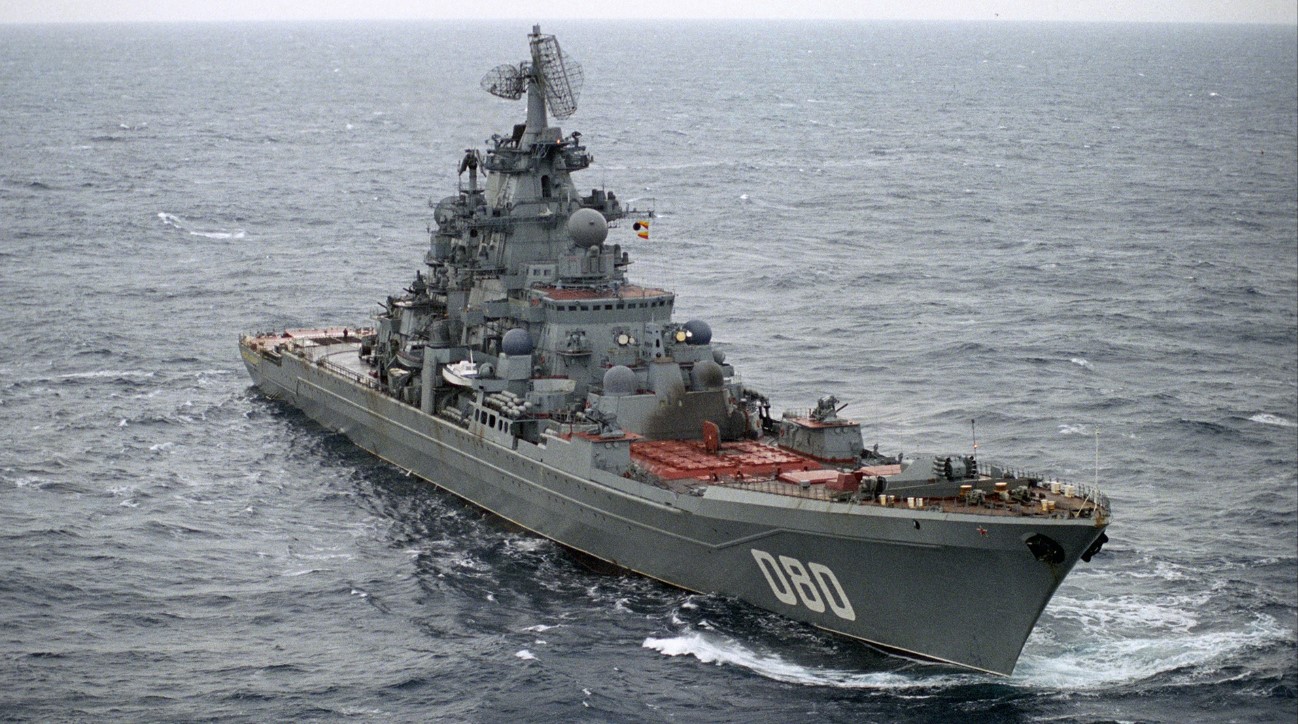
SEVEROMORSK : The Russian Navy has commenced sea trials of the nuclear-powered battlecruiser Admiral Nakhimov, marking the culmination of a modernization program that began in the mid-2010s and has reportedly cost up to $5 billion (approximately 200 billion rubles). The 28,000-ton warship, one of the largest surface combatants currently in service worldwide, is expected to rejoin the Northern Fleet as its flagship following completion of testing.
Originally commissioned in 1988 under the name Kalinin, the vessel is the third unit of the Soviet-era Project 1144 Orlan, known in NATO classification as the Kirov-class. After being withdrawn from active service in the late 1990s due to financial constraints following the dissolution of the Soviet Union, the ship remained laid up for years before entering a deep refit at the Sevmash shipyard. Full-scale modernization work began around 2015 and has continued for nearly a decade.
Expanded Missile Capacity and Updated Combat Systems
The modernization program focused on replacing legacy Soviet-era systems with contemporary missile and air-defense capabilities.
The ship’s original armament centered on 20 P-700 Granit (SS-N-19) supersonic anti-ship missiles. Under the upgrade, these were removed and replaced with 80 universal vertical launch system (VLS) cells. These launchers are designed to accommodate a mix of modern Russian cruise missiles, including the Kalibr family for land-attack and anti-ship roles, the P-800 Oniks (SS-N-26), and the 3M22 Zircon hypersonic cruise missile.
In total, the vessel’s VLS capacity reaches 176 cells when including air-defense launchers, placing it among the most heavily armed surface combatants by missile count.
The air-defense suite has been comprehensively upgraded. The earlier S-300F (SA-10) system has been replaced with a navalized version of the S-400 (SA-21 Growler). Russian sources state the system can track up to 80 targets simultaneously, forming a layered defensive network when integrated with Pantsir-M close-in weapon systems. Close-range guns, anti-submarine rocket launchers, and torpedo systems have also received iterative improvements.
The vessel retains its twin KN-3 nuclear reactors, which were refurbished during the overhaul. Nuclear propulsion provides virtually unlimited operational range and supports a reported maximum speed of approximately 32 knots.
Strategic Context and Fleet Structure
The return of Admiral Nakhimov comes amid restructuring within Russia’s large surface fleet.
Russia’s sole aircraft carrier, Admiral Kuznetsov, has experienced extended repair delays and technical challenges, and reports suggest it may be decommissioned rather than restored to operational service. Meanwhile, the Nakhimov’s sister ship, Pyotr Velikiy, is expected to be retired or placed in reserve due to the substantial cost of maintaining nuclear-powered battlecruisers.
As a result, Admiral Nakhimov may become the only active Kirov-class vessel, concentrating significant combat capability in a single platform. Analysts describe this as the formation of a limited capital fleet component, centered around one heavily modernized hull.
Drone Warfare and Operational Challenges
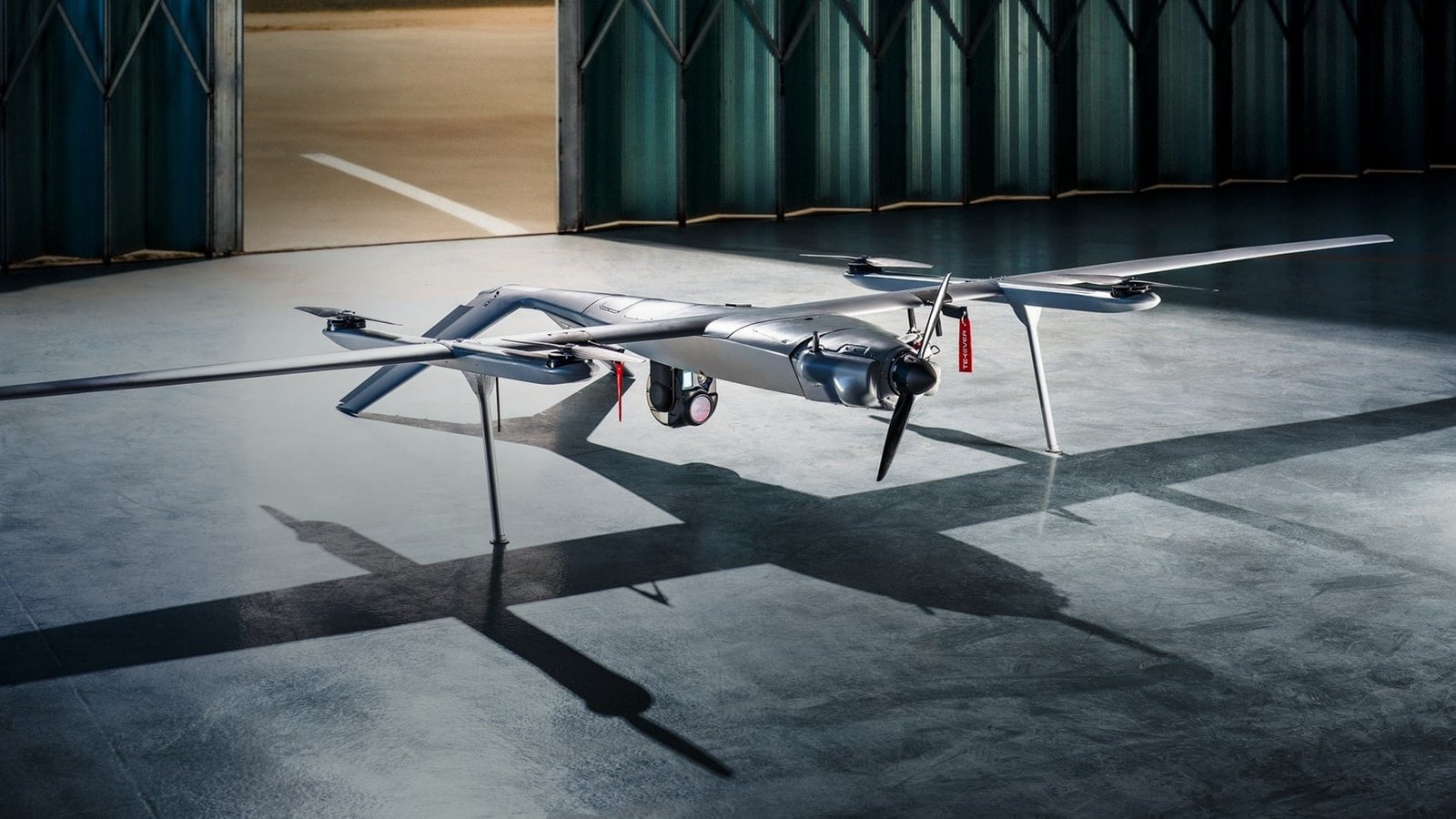
The modernization program began before the full-scale invasion of Ukraine and prior to the expanded use of uncrewed surface vessels (USVs) in naval operations. Since 2022, Ukrainian systems such as the Magura V5 and Sea Baby have targeted Russian naval assets in the Black Sea.
These relatively low-cost platforms, often estimated at under $250,000 per unit, have damaged or destroyed multiple Russian vessels. Their deployment contributed to the relocation of elements of the Black Sea Fleet from Crimea to ports such as Novorossiysk, reducing exposure to repeated drone attacks.
While the S-400-based air-defense system aboard Admiral Nakhimov is designed to counter aircraft and missile threats, its effectiveness against low-profile surface drones operating in coordinated swarms remains under assessment. Close-in defense systems are intended to counter short-range threats, yet recent engagements in the Black Sea have highlighted the difficulty of intercepting small, fast-moving maritime drones.
Naval specialists note that large surface combatants remain dependent on layered defense, electronic warfare capabilities, and damage control systems when confronting asymmetric threats. Increased cruise missile capacity and long-range air defense do not directly eliminate vulnerabilities associated with drone saturation attacks.
Historical Background of the Kirov-Class
When introduced in the late 1970s, the Project 1144 Orlan ships were the largest and most heavily armed surface combatants constructed since World War II, excluding aircraft carriers. Due to their displacement and armament, Western analysts frequently classified them as battlecruisers rather than conventional cruisers.
The original design emphasized long-range anti-carrier operations, with the P-700 Granit missile as the primary offensive system. These missiles had an approximate range of 260 nautical miles (480 kilometers) and carried a 750-kilogram warhead. They were also deployed aboard Oscar-class submarines, forming a core component of Soviet anti-carrier doctrine.
Following the collapse of the Soviet Union, budgetary reductions significantly curtailed fleet operations. Admiral Nakhimov was withdrawn from service during this period but later selected for comprehensive modernization as part of Russia’s effort to restore blue-water naval capability.
Operational Outlook
Upon completion of sea trials and final certification, Admiral Nakhimov is expected to operate with the Northern Fleet, where its nuclear propulsion, endurance, and missile capacity are suited for Arctic and North Atlantic missions.
The refit extended nearly a decade and exceeded initial timelines and budget projections. The outcome is a single, highly modernized platform rather than a broader fleet expansion. Concurrently, other major surface units are likely to leave service, narrowing Russia’s inventory of large capital ships.
The ship’s long-term operational role will depend on the performance of its upgraded sensors, air-defense systems, and close-in protection measures in an evolving maritime environment increasingly influenced by uncrewed systems.
In current fleet planning terms, Admiral Nakhimov represents the continuation of Russia’s large-displacement surface combatant doctrine, now adapted with contemporary missile and air-defense technology within a naval landscape shaped by distributed and unmanned capabilities.
——— End of Article ———