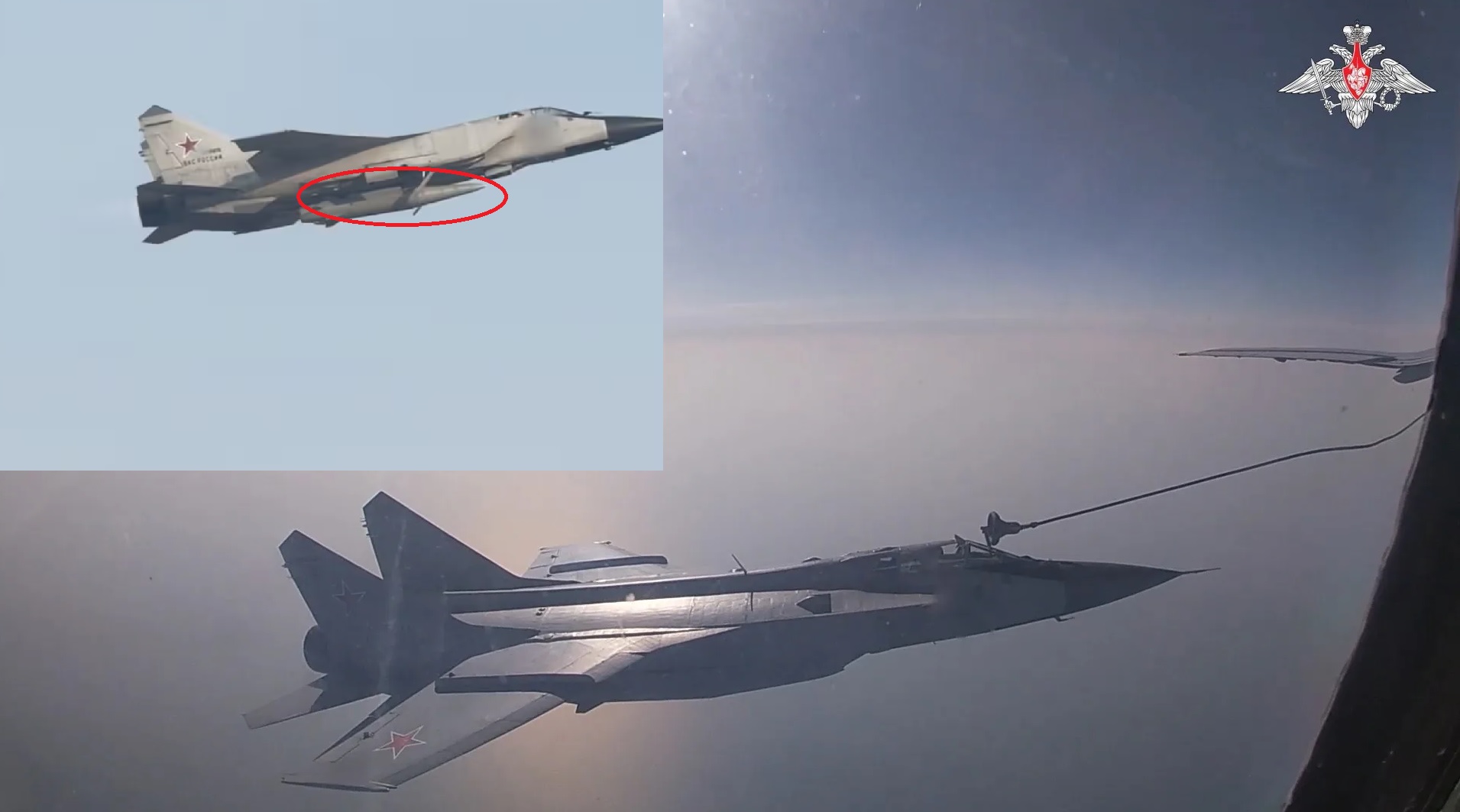
MOSCOW / SEOUL — March 18, 2026 : The Russian Aerospace Forces (VKS) have carried out a scheduled long-range aviation training mission involving MiG-31I strike aircraft equipped with Kh-47M2 Kinzhal air-launched ballistic missiles over neutral waters of the Sea of Japan, according to official statements released on March 17.
The exercise included coordinated operations with Il-78 aerial refuelling tankers, enabling participating aircraft to extend their operational range and maintain prolonged presence in the maritime corridor linking Japan, the Korean Peninsula, and the wider Pacific Ocean. Russian authorities stated that the flight was conducted in accordance with international airspace regulations and did not violate national boundaries.
Operational Profile and Flight Activity
During the mission, MiG-31I crews practiced in-flight refuelling procedures, a capability integrated into the modified aircraft beginning in 2023. This enhancement allows the platform to conduct extended-duration patrols and launch operations from greater stand-off distances, including missions originating from bases located deep within Russian territory.
Flight tracking and regional monitoring indicate that the formation operated over the Sea of Japan before adjusting its route along approaches near western Japan, including areas adjacent to Shimane Prefecture, prior to returning toward Russian airspace. The aircraft operated as part of a broader long-range aviation framework supported by tanker assets and, in some instances, additional escort aircraft.
MiG-31I Platform and Capabilities
The MiG-31I is a specialized strike adaptation of the MiG-31 interceptor, designed to carry the Kh-47M2 Kinzhal missile. The baseline MiG-31, introduced into service in 1982, remains the fastest combat aircraft in sustained operational use, capable of cruising at approximately Mach 2.35 and reaching altitudes above 20 kilometers.
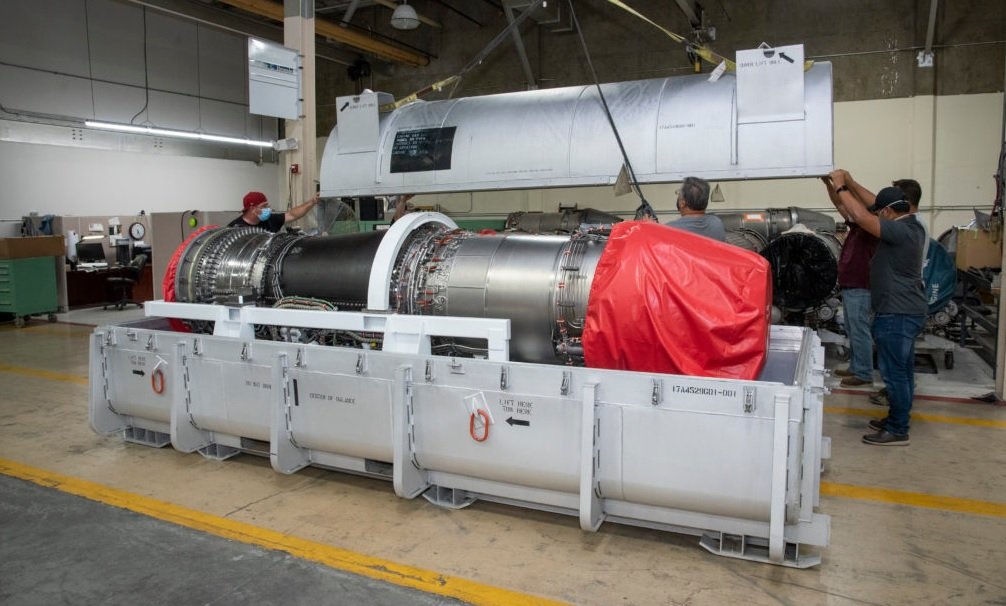
The aircraft measures 22.7 meters in length, has a wingspan of 13.5 meters, and a maximum takeoff weight of approximately 46,200 kilograms. It is powered by two D-30F6 turbofan engines and is configured in the Kinzhal-carrying role to transport a single missile mounted under the fuselage.
Russian defense planning has emphasized expansion of the MiG-31I fleet through the refurbishment and modernization of stored interceptor airframes. Aircraft assigned to this role operate within Russia’s Strategic Aviation Command and share tanker support infrastructure with Tu-22M3, Tu-95MS, and Tu-160 strategic bombers.
Kinzhal Missile System
The Kh-47M2 Kinzhal is an air-launched aeroballistic missile derived from the ground-based 9K720 Iskander-M system. It follows a semi-ballistic trajectory and incorporates maneuvering capabilities during flight, particularly in the terminal phase, which are designed to complicate interception by conventional air defense systems.
Russian sources report that the missile can reach speeds of up to Mach 10 and achieve a range exceeding 2,000 kilometers when launched from a high-speed, high-altitude platform such as the MiG-31. The system is capable of carrying either a conventional or nuclear payload, with an estimated warhead weight of approximately 480 kilograms.
Combat Use and Tactical Developments
The MiG-31I and Kinzhal combination has been employed operationally in the Ukrainian theater, targeting high-value infrastructure and air defense assets. In May 2023, Kinzhal missiles launched from MiG-31I aircraft were credited by Russian sources with successfully striking a U.S.-produced MIM-104 Patriot air defense system.
Subsequent operational assessments by Ukrainian and Western officials in October 2025 indicated that updated flight profiles and terminal maneuvering patterns had increased the difficulty of intercepting incoming Kinzhal missiles. These developments have been associated with evolving Russian strike tactics, including the use of long-endurance patrols supported by aerial refuelling prior to missile launch.
Regional Air Defense Context
The training activity took place amid ongoing adjustments to U.S. and allied air defense deployments in East Asia. Since late February 2026, the United States has redeployed multiple MIM-104 Patriot and Terminal High Altitude Area Defense (THAAD) batteries from South Korea to the Middle East in response to operational demands linked to regional conflict involving Iran.
The redeployments have been conducted using U.S. Air Force C-17 transport aircraft operating from bases such as Osan Air Base. South Korean officials have acknowledged the movement of these systems, noting concerns regarding the temporary reduction in local air defense coverage.
Japan and South Korea continue to rely on Patriot systems for point and area defense against missile threats, while additional layered capabilities remain in place, particularly in Japan. The combination of reduced interceptor availability in parts of the region and the demonstrated deployment of long-range, high-speed strike systems has introduced new planning considerations for regional defense authorities.
Strategic Implications
The March 2026 exercise highlights the integration of high-speed interceptor platforms with long-range aeroballistic missile systems, supported by aerial refuelling to extend operational reach. It also reflects continued growth in the number of MiG-31I aircraft available for such missions as modernization programs convert legacy airframes to the Kinzhal carrier configuration.
Russian officials described the flight as part of routine training activity. However, the location of the patrol and the capabilities demonstrated during the mission underscore the evolving operational dynamics in the Asia-Pacific region.
——— End of Article ———