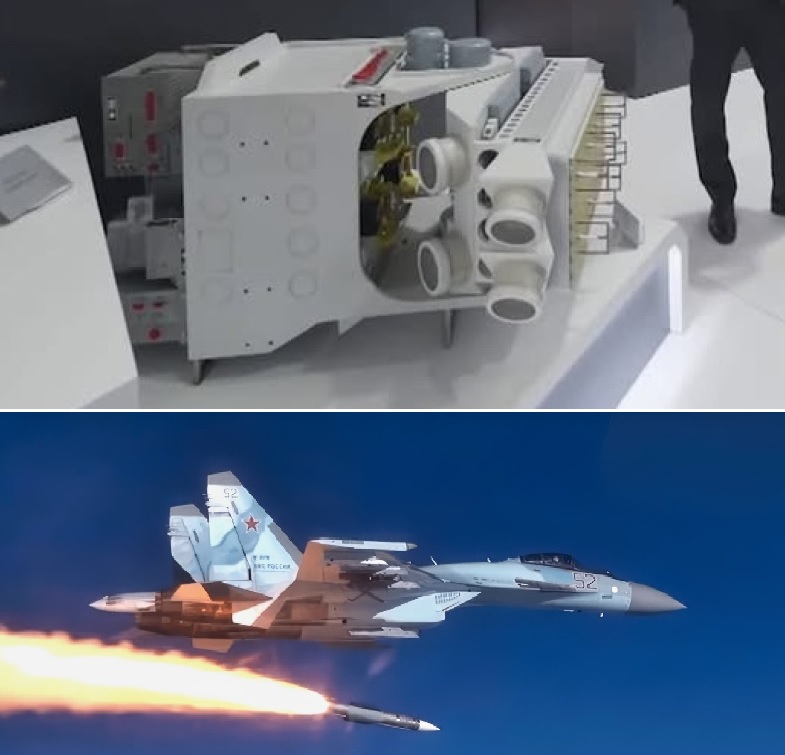
Moscow, — March 30, 2026 : Russian state media have reported the unveiling of a new active electronically scanned array (AESA) radar for the Su-35 air superiority fighter, marking a significant step in the aircraft’s ongoing modernization. The new radar is intended to replace the N035 Irbis-E passive electronically scanned array (PESA) system that has equipped the platform since it entered operational service in 2014.
Transition From Irbis-E to AESA Technology
The Irbis-E, an X-band multi-role PESA radar, has been regarded as one of the most capable systems of its type. It features a maximum beam deflection angle of 120 degrees and a detection range of approximately 350 to 400 kilometres against fighter-sized targets with a three-square-metre radar cross-section. The system can track up to 30 targets simultaneously while engaging eight.
Despite these capabilities, the Irbis-E has inherent limitations associated with PESA technology, particularly in modern electronic warfare (EW) environments. Evaluations by Chinese sources have indicated that the system is approximately 20 percent less powerful than the AESA radar integrated on the J-16 fighter.
The newly unveiled AESA radar is expected to address these limitations. AESA systems enable more precise beam control and allow transmission across multiple frequencies in different directions simultaneously. These features improve resistance to electronic countermeasures and significantly reduce radar emissions, making detection by adversaries more difficult.
Bridging a Long-Standing Technological Gap
Russia’s transition from PESA to AESA radar technology for tactical combat aircraft has been prolonged. The United States fielded its first AESA-equipped fighter squadron in 2000, followed by Japan in 2002. Russia’s first operational fighter equipped with an AESA radar, the Su-57, entered service in 2020, with its first full regiment formed in 2025.
Historically, the Soviet Union held a lead of approximately two decades in deploying electronically scanned array radars on combat aircraft. However, the post-Soviet decline in the defence sector delayed the transition to AESA systems, allowing other major air forces to advance ahead. European fighter programmes were among the last to complete this transition in recent years.
The absence of an AESA radar has been identified as a key limitation of the Su-35 compared to competing heavyweight fighters such as the U.S. F-15SA, F-15QA and F-15EX, as well as China’s J-11BG, J-15B and J-16, all of which employ AESA radars.
Impact on Weapons Integration and Combat Performance
The introduction of the AESA radar is expected to improve the Su-35’s situational awareness and targeting capabilities, particularly in long-range engagements. The Irbis-E radar has been considered insufficient to fully support the guidance of the R-37M long-range air-to-air missile at its maximum range of approximately 350 kilometres.
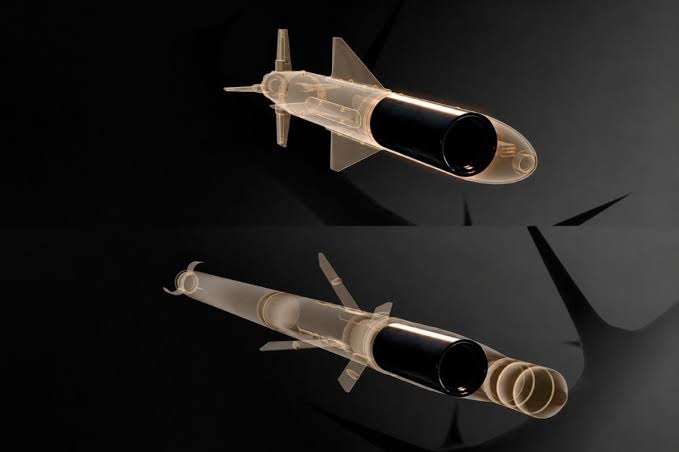
With the new radar, the aircraft is expected to better utilize both the R-37M and the newer R-77M missile. The R-77M incorporates an active phased array antenna (APAA) seeker and a dual-pulse rocket motor, providing an engagement range of around 200 kilometres. Enhanced radar performance is expected to improve target tracking and expand effective engagement envelopes, including no-escape zones.
These capabilities have gained operational relevance, as long-range air-to-air missiles have been actively employed in the ongoing Russia-Ukraine conflict.
Role in Fleet Modernisation and Export Strategy
It remains unclear whether the new AESA radar is intended primarily for upgrading Su-35 aircraft in service with the Russian Aerospace Forces or for enhancing the platform’s competitiveness in export markets. Russia has previously developed radar systems specifically for export variants, such as the Zhuk-AE AESA radar for the MiG-35, which was not adopted domestically.
The development coincides with a significant expansion in Su-35 exports. Deliveries of 18 aircraft to Algeria began in February 2025. Leaked Russian government documents have indicated plans to supply 48 Su-35 fighters to the Iranian Air Force between 2026 and 2028, along with six aircraft to Ethiopia. These agreements would bring total exports to 96 fighters.
The aircraft is also expected to be offered to North Korea as part of broader efforts to offset the costs of Russian defence procurements from that country. It remains uncertain whether North Korea would opt for the upgraded Su-35 or prioritise acquisition of the more advanced Su-57.
——— End of Article ———