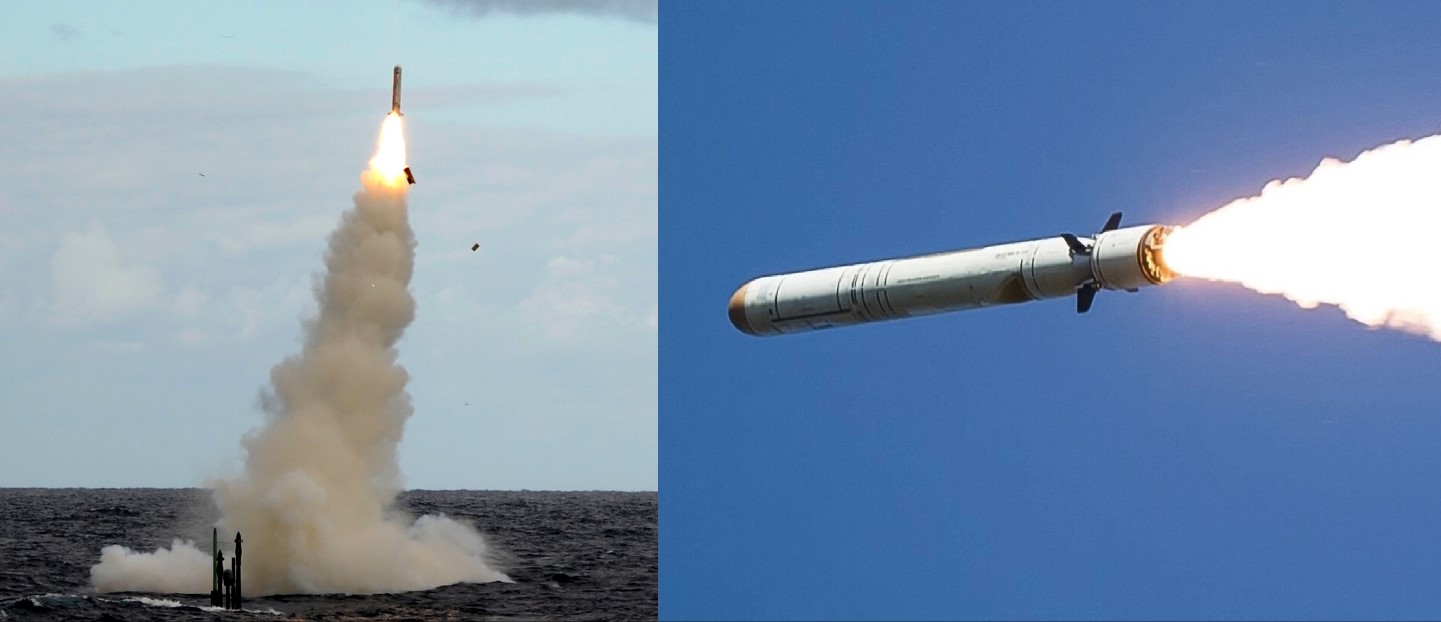
Russia has quietly revived a proposal to arm Indian Navy submarines with long-range Kalibr land-attack cruise missiles that can be fired from standard 533 mm torpedo tubes, offering New Delhi a deep-strike option of up to 1,500 km without having to redesign its existing underwater fleet. Indian defence media report that Moscow has recently re-pitched the package as an interim solution while India’s own submarine-launched cruise missile (SLCM) project is still several years away from frontline service.
At the heart of the proposal is the 3M14 Kalibr family (exported as Club-S / Kalibr-PL), a sea-launched cruise missile that Russia has used extensively for precision land-attack strikes in Syria and Ukraine. The land-attack variants are credited in open sources with ranges between 1,500 and 2,500 km, carrying a conventional or nuclear warhead of up to 500 kg.
Crucially for India, the Kalibr system is designed to launch from existing 533 mm tubes, rather than dedicated vertical launch (VLS) cells, allowing it to be integrated on current and future boats with minimal structural changes. Russian analysts and officials have repeatedly highlighted this “plug-in” compatibility as a key selling point for navies that operate legacy submarines but want long-range land-attack capability.
Fits Straight Into India’s Torpedo Tubes
The revived offer is aimed squarely at India’s mixed submarine fleet:
-
The Sindhughosh-class (Kilo) boats already carry Russian Klub-S (3M-54E) anti-ship cruise missiles, fired from six 533 mm torpedo tubes that can also launch heavyweight torpedoes.
-
The Kalvari-class (Scorpene) submarines likewise field six 533 mm tubes and currently rely mainly on torpedoes and SM39 Exocet anti-ship missiles, whose range is limited to around 50–70 km.
By design, the Kalibr-PL/Club-S family can be fired from these same 533 mm tubes, giving even diesel-electric boats the ability to strike targets deep inside Pakistan or along the Chinese coastline while remaining in safe waters of the Arabian Sea or Bay of Bengal. Russian media and experts have described Kalibr as offering a “menu” of anti-ship, land-attack and even anti-submarine variants that share a common launch interface.
The proposal also dovetails with an already-announced project: an upgraded Akula-class nuclear attack submarine leased to India (often referred to as Chakra III) is expected to arrive around 2028, armed with long-range 3M14K Kalibr missiles rated at 1,500–2,000 km. That boat would give India its first nuclear-powered platform with true sea-based conventional deep-strike capability; Moscow now appears keen to extend a similar reach to India’s conventional submarine arm.
A Second Track: India Already Buying Shorter-Range Kalibr
The renewed long-range offer comes as India is already a Kalibr customer at the shorter end of the spectrum. In early 2025, New Delhi signed a contract with Moscow for Kalibr-PL anti-ship cruise missiles for its Kilo-class fleet, a deal framed as a way to strengthen maritime deterrence in the Indian Ocean Region.
Those missiles give the Sindhughosh boats a potent anti-surface punch out to roughly a few hundred kilometres. The new Russian pitch is to add a true land-attack component—effectively converting India’s older submarines from purely sea-denial platforms into strategic conventional strike assets.
If accepted, the package would likely include:
-
3M14 Kalibr land-attack missiles for torpedo-tube launch
-
Software and fire-control integration with Indian combat systems
-
Training, spares and potential upgrade options for future Indian-built submarines
Indian analysts note that familiarity with Russian weapons, logistics and training pipelines on the Kilo class would ease the integration curve, though sanctions and payment issues remain a concern.
BrahMos, Nirbhay and the “Capability Gap”
Russia’s move comes against the backdrop of a complex missile ecosystem in which BrahMos and DRDO’s Nirbhay-based SLCM are already on the table.
-
BrahMos is a supersonic, ramjet-powered cruise missile jointly developed by India and Russia, with current ship- and land-based variants pushing ranges of 800–900 km and speeds of Mach 3. A submarine-launched version has been successfully test-fired from an underwater pontoon, but has not yet been deployed widely on Indian submarines.
-
The submarine version is generally associated with future vertical-launch-capable submarines under programmes like Project 75(I), rather than retrofits for existing 533 mm-tube boats.
Parallel to this, DRDO is developing an indigenous SLCM based on the Nirbhay platform, explicitly designed to launch from standard 533 mm torpedo tubes with a projected range of 1,000–1,500 km. The missile has already undergone successful tests from an underwater pontoon, including a 402 km trial in November 2024, but integration on actual submarines and full user trials mean it is unlikely to be operational before around 2030.
That multi-year gap has opened space for foreign vendors. A recent Indian defence forum analysis notes that Europe’s MBDA has offered its Naval Cruise Missile (NCM/MdCN) and Russia has pushed Kalibr as competing off-the-shelf solutions to equip the upcoming P-75(I) fleet from day one, while the indigenous SLCM matures.
In that context, the revived Kalibr offer is being read in New Delhi as:
-
A way to plug the capability gap between now and the early 2030s
-
A lever for Russia to retain its position in India’s undersea weapons market amid growing European competition
-
A hedge for the Indian Navy, which has signalled it does not want to commission new submarines without a credible land-attack missile onboard from the start
Strategic Impact: From Sea Denial to Deep Strike
If India were to accept the renewed Russian package and deploy 1,500 km-range Kalibr missiles across even a portion of its submarine fleet, the strategic implications would be significant:
-
From the northern Arabian Sea, Indian boats could hold at risk virtually all major military and industrial centres in Pakistan and parts of western China.
-
From the Bay of Bengal, they could threaten targets across Myanmar and China’s Yunnan/Tibet region, while staying under the cover of India’s own air and naval assets.
-
Combined with India’s ballistic K-4 and future K-6 submarine-launched missiles—primarily nuclear deterrent systems—Kalibr would add a conventional, precision-strike layer to the sea-based arsenal.
Supporters of the Russian offer argue that Kalibr is combat-proven, modular and immediately available, and that the Indian Navy already operates related systems on its Kilos and surface ships, lowering integration risk.
Sceptics, however, point to:
-
Exposure to sanctions and supply-chain disruptions tied to Russia’s ongoing confrontation with the West
-
The risk of locking in foreign dependence just as India is trying to build an indigenous SLCM and extend the range of BrahMos
-
Budgetary trade-offs at a time when the Navy is also funding new submarines, a carrier programme and next-generation destroyers
Decision Point for New Delhi
For now, the revived Kalibr proposal remains at the level of defence-industrial outreach and staff-level assessments; there has been no official announcement from India’s Ministry of Defence confirming acceptance or rejection of the offer.
The choice before New Delhi is not simply between Kalibr vs BrahMos vs Nirbhay, but between:
-
Immediate, foreign-sourced deep-strike capability from Russia
-
A European alternative in the form of MBDA’s NCM
-
Or a slower but sovereign route centred on DRDO’s Nirbhay-derived SLCM and extended-range BrahMos variants
Whichever way India leans, Russia’s renewed Kalibr pitch underlines a simple reality: as the Indo-Pacific becomes more contested and rivals field their own long-range cruise missiles, the Indian Navy no longer sees submarines as just hunters and sea-denial platforms, but as stealthy launchpads for theatre-wide precision strike.
——— End of Article ———