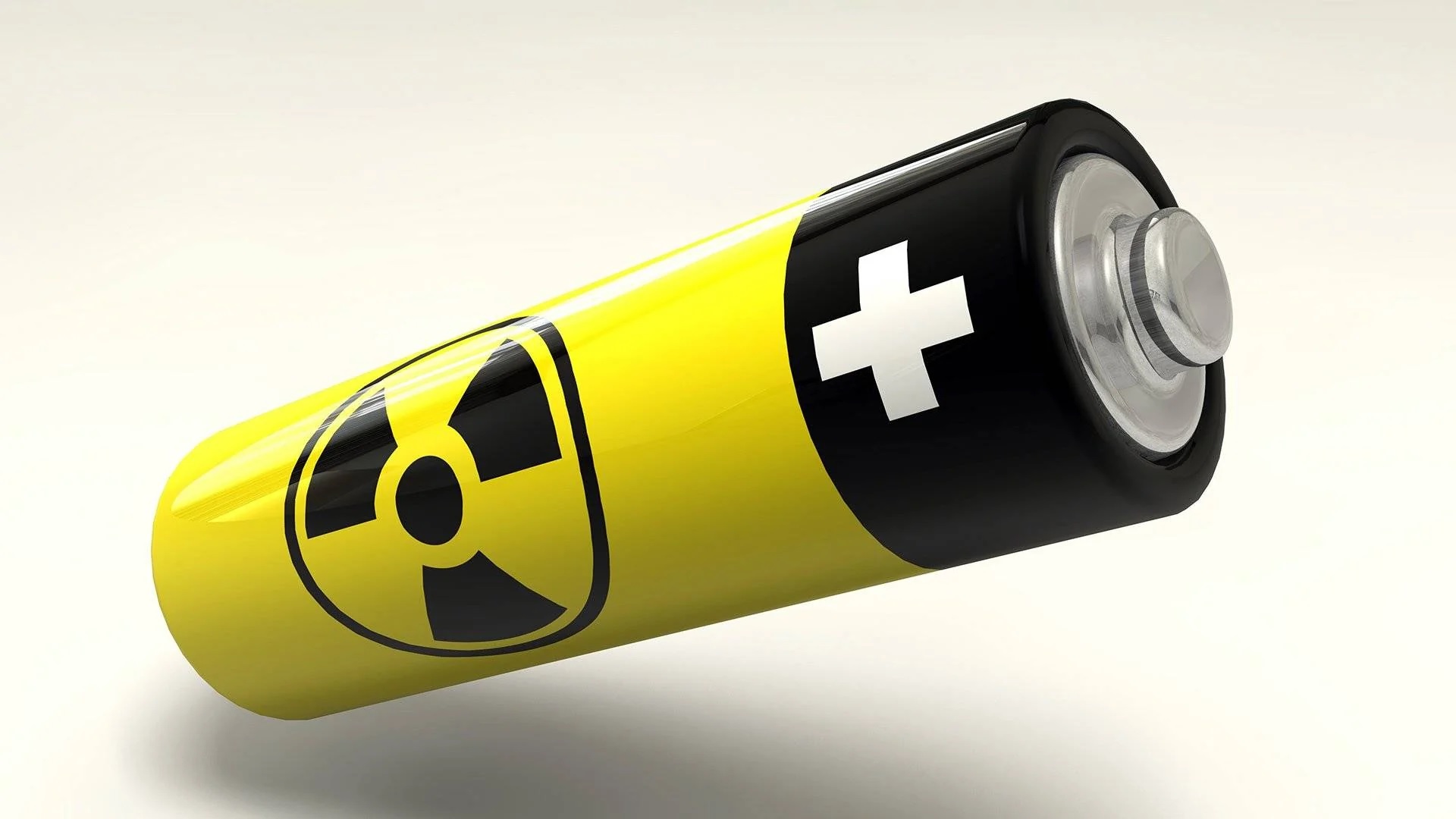
TOMSK, Russia — March 31, 2026 : Researchers at Tomsk Polytechnic University have initiated pilot-scale production of miniature nuclear batteries based on betavoltaic technology, marking a step forward in long-duration energy systems for medical and specialized technological applications. The development is being carried out in parallel with smart interface technologies, including systems designed to support mind-controlled prosthetic devices.
The university confirmed that the current pilot batch represents an early-stage production effort, with plans to expand output in the coming year to meet expected demand for reliable, maintenance-free power sources in niche sectors.
Technology Overview and Working Principle
The newly developed batteries operate on the principle of betavoltaics, a method that converts radiation from radioactive decay directly into electricity. The core energy source is Nickel-63, an artificially produced isotope that undergoes beta decay.
As Nickel-63 decays, it emits low-energy beta particles (electrons). These particles interact with a semiconductor converter—constructed using materials such as silicon or diamond microchannel structures—generating electron-hole pairs. This interaction produces a continuous electric current without the need for chemical reactions or recharging.
Nickel-63 has a half-life of approximately 100 years, enabling the battery to provide a stable energy output for up to 50 years or more. The system is designed as a layered structure, where thin films of the isotope (around two microns thick) are combined with semiconductor diodes. Earlier prototypes developed in Russia incorporated Schottky barrier diamond diodes (about 10 microns thick), arranged in stacked configurations alongside nickel foil. Alternative designs have used silicon p-i-n semiconductor structures or electroplated Nickel-63 layers.
The isotope itself is produced by irradiating nickel-62 in a nuclear reactor, followed by an enrichment process. Previous project frameworks have identified the IRT-T research reactor at Tomsk Polytechnic University as a potential production source.
Size, Efficiency, and Safety Characteristics
The architectural design of the betavoltaic cell enables a compact form factor, with the battery being approximately 30 times smaller than conventional lithium-ion batteries while maintaining a high energy density relative to its volume.
Despite being described as a “nuclear” battery, the system is classified as safe for close-proximity use. The beta radiation emitted by Nickel-63 is low in energy and does not include gamma radiation, meaning it lacks significant penetration capability. All emitted radiation is fully absorbed within the battery’s internal structure and encapsulated housing, preventing external exposure or environmental contamination.
Performance metrics from earlier research indicate power densities of approximately 10 microwatts per cubic centimeter, suitable for low-power electronic devices. Specific energy levels in optimized designs have reached around 3,300 milliwatt-hours per gram, which is significantly higher than conventional electrochemical batteries of comparable size.
Applications in Medicine, Space, and Remote Systems
The primary focus of the current pilot batch is the healthcare sector. The batteries are intended to power advanced medical implants, including neurological devices, cardiac pacemakers, and bio-stimulants. Their long operational life and reliability make them particularly suitable for integration into mind-controlled prosthetic systems, where uninterrupted power supply is critical for neural interface functionality.
Beyond medical use, the technology is applicable in aerospace and remote infrastructure. Potential deployments include powering microelectronics in satellites and deep-space missions, as well as autonomous sensors operating in extreme environments such as Arctic regions or deep-water monitoring systems, where routine maintenance or battery replacement is not feasible.
Cost Constraints and Production Challenges
A significant limitation affecting large-scale commercialization is the high cost of producing Nickel-63. The isotope does not occur naturally and must be manufactured through a multi-stage process, involving isotope separation via centrifugation followed by irradiation in a nuclear reactor.
Due to this complex production chain, the cost of Nickel-63 is estimated at approximately $4,000 per gram. While researchers have optimized semiconductor components to reduce overall system costs, the expense of the radioactive material remains a key barrier to broader adoption beyond specialized applications.
Future Development and Scaling Plans
The pilot production phase is intended to validate manufacturing processes and performance characteristics under practical conditions. Researchers at Tomsk Polytechnic University plan to focus next on improving conversion efficiency, refining battery architecture, and exploring methods to scale production.
The development builds on longstanding Russian research into Nickel-63-based betavoltaic systems and aligns with efforts to create long-duration power solutions for environments where conventional batteries are impractical. Further technical specifications for the current pilot batch have not yet been disclosed.
——— End of Article ———