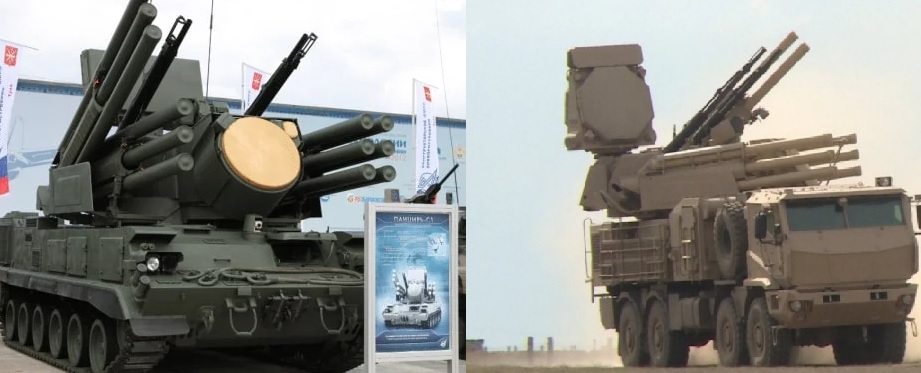
Kyiv / Moscow : A newly modernized Russian air-defense system sighted in the war zone is reshaping assumptions about the survivability of some of the West’s most advanced strike weapons. The Pantsir-S1M, an upgraded version of Russia’s long-serving short-range air-defense platform, has begun appearing near high-value military sites, signaling what analysts describe as a significant leap in Moscow’s layered air-defense strategy.
Originally designed as a point-defense system to protect bases and strategic assets from aircraft, drones, and cruise missiles, the Pantsir has now evolved into something far more ambitious. The S1M variant effectively pushes the platform into the lower tier of medium-range air defense, narrowing the gap with much costlier systems such as the Patriot PAC-3 while remaining highly mobile and comparatively inexpensive.
A New Missile Arsenal
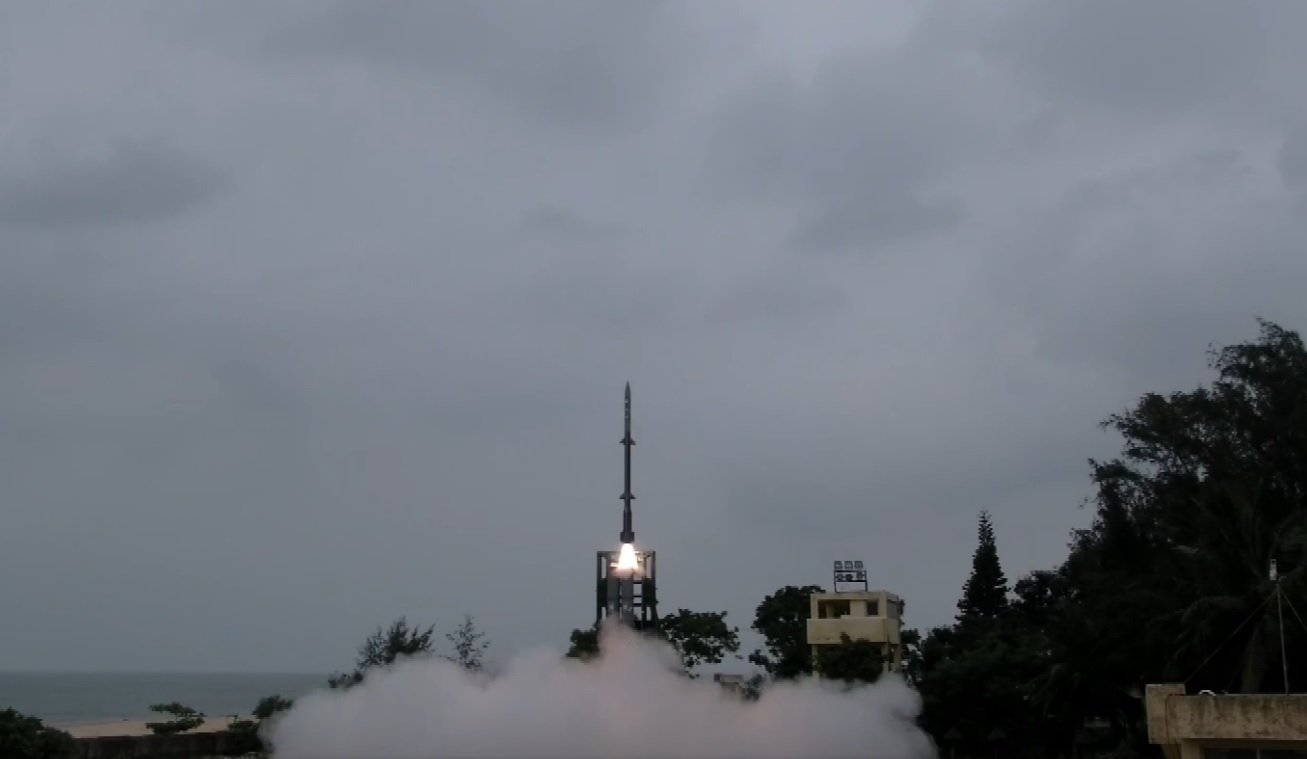
At the core of the upgrade is a radically expanded missile loadout. While the system still employs the standard 57E6 surface-to-air missiles, it now fields the new 57E6M interceptor, a hypervelocity missile capable of reaching speeds approaching Mach 5. With an engagement range exceeding 35 kilometers, the missile doubles the effective reach of earlier Pantsir variants.
This extended engagement envelope allows the Pantsir-S1M to counter threats that previously lay outside its defensive bubble, including high-speed ballistic rockets and low-flying cruise missiles. Russian sources claim the interceptor uses a kinetic hit-to-kill warhead, relying on direct impact rather than proximity detonation, a design philosophy associated with high-end Western missile defenses.
Radar and Sensor Leap
Equally important is the overhaul of sensors and fire-control systems. The Pantsir-S1M is equipped with a significantly more powerful radar, reportedly delivering roughly double the output of earlier versions. This upgrade extends detection ranges and improves target discrimination in cluttered and contested environments.
According to available data, the new radar can detect fighter-sized aircraft, including Western-supplied F-16 Fighting Falcons, from distances of up to 60 kilometers. Enhanced electro-optical tracking, combined with upgraded fire-control software, further improves performance against small, fast, and low-observable targets such as drones and cruise missiles.
Improved Performance Against Western Weapons
The modernization appears tailored to counter the weapons that have most strained Russian defenses during the conflict. Performance against guided rockets, including those fired by HIMARS launchers, is reported to have doubled. The effective intercept range against such targets has increased from around 8 kilometers to more than 13 kilometers, providing defenders with critical additional reaction time.
Perhaps most striking is the system’s new maximum target speed rating of approximately 2,000 meters per second. This places it close to the capabilities of the Patriot PAC-3, rated at around 2,200 meters per second, despite the vast disparity in cost, complexity, and logistical footprint between the two systems.
Networked and Hardened
The Pantsir-S1M is also designed to operate as part of a networked air-defense architecture. When linked with higher-tier systems and external sensors, it can receive off-board targeting data, enabling earlier engagements and coordinated defense against saturation attacks.
Upgrades to electronic-warfare resistance are another key feature. Enhanced anti-jamming systems are intended to protect both radar operations and missile guidance links against electronic countermeasures, an increasingly decisive factor as both sides escalate their use of EW tactics.
Strategic Implications
The appearance of the Pantsir-S1M in active combat zones underscores Russia’s effort to harden critical infrastructure against long-range Western munitions. In theory, a networked Pantsir-S1M could challenge a broad spectrum of threats, from Storm Shadow cruise missiles and ATACMS ballistic rockets to mass drone swarms designed to overwhelm defenses.
While no air-defense system is invulnerable, the modernization significantly complicates strike planning for Ukraine and its partners. Each additional defensive layer increases the cost, coordination requirements, and risk of successful attacks, forcing adversaries to expend more resources or accept higher attrition.
As the conflict continues to evolve, the Pantsir-S1M highlights a broader trend: the rapid adaptation of air-defense systems to counter precision-guided weapons that once enjoyed near-free access to the battlefield. Whether the upgraded system can consistently deliver on its promised performance under sustained combat pressure remains an open question, but its arrival marks a notable escalation in the technological contest for control of Ukraine’s skies.
——— End of Article ———