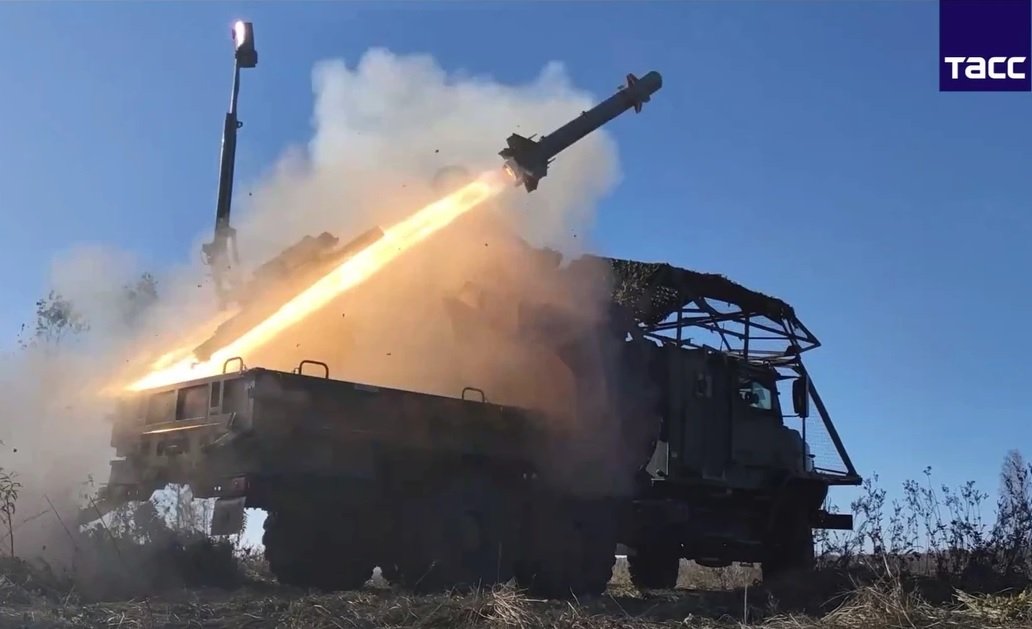
CHEBARKUL, Chelyabinsk Region, Russia — Russia has demonstrated a new ground-based launcher, designated Izdeliye 347 or Product 347, firing a modified LMUR light multipurpose guided missile during the Tsentr-2026 strategic military exercise. According to Russia’s Defense Ministry, the system struck simulated enemy artillery positions at the Chebarkul training range in the Chelyabinsk region. Aerial reconnaissance first identified the targets and provided their coordinates.
The ministry reported on October 2 that the truck-mounted launcher could engage stationary and moving targets at ranges of up to 20 kilometres. Tsentr-2026 ran from September 28 to October 3, 2026, involving more than 47,000 personnel across multiple training areas and the Caspian Sea.
Truck-Mounted Launcher Configuration
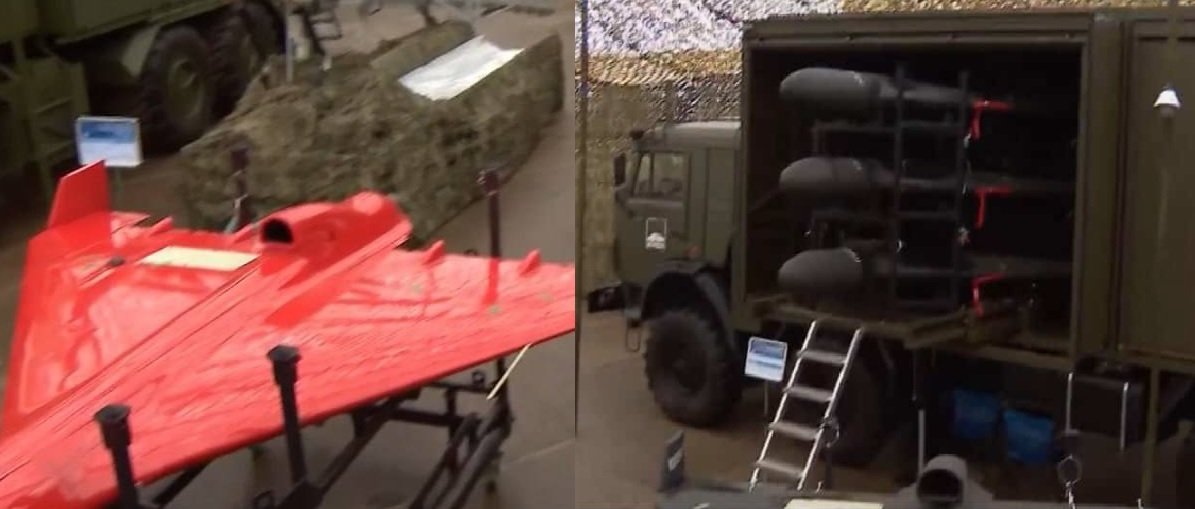
Video footage shows the system installed on an armoured Ural 6x6 truck, with some Russian reports identifying the chassis as the Ural-63706. The rear section carries two missiles, while a mast-mounted antenna supports the data link with the missile in flight. During one recorded demonstration, a missile was launched at a distance of 13.9 kilometres and landed several metres from the designated target in an open field.
The Defense Ministry has not confirmed the exact truck model, the manufacturer of the complete launcher, its full missile capacity or a timeline for entry into service.
LMUR Missile Specifications and Guidance
The LMUR, also known as Izdeliye 305 or Kh-39, was developed by the KBM design bureau in Kolomna, part of Rostec’s High Precision Systems holding. Originally designed for helicopter launch, it is used by Russian Mi-28NM and Ka-52M attack helicopters and specialised Mi-8 variants.
The missile weighs approximately 105 kilograms, carries a 25-kilogram high-explosive fragmentation warhead, measures 1.945 metres in length and has a diameter of 200 millimetres. It uses a solid-fuel motor, reaches speeds of up to approximately 230 metres per second and typically flies at altitudes of 100–600 metres.
The standard variant has a stated range of 14.5 kilometres, while longer-range versions have reportedly exceeded 25 kilometres. The modified ground-launched version demonstrated during Tsentr-2026 has a reported range of up to 20 kilometres.
Its guidance system combines inertial navigation and satellite corrections during mid-course flight. A thermal-imaging seeker and two-way data link provide the operator with video from the missile’s perspective, allowing adjustments to the aim point during the final phase. The launching platform does not need a direct line of sight to the target when firing.
Ground-Based Role and Earlier Development
Mounting the LMUR on a truck gives Russian ground forces a mobile precision-strike option without requiring an attack helicopter to carry out each engagement. The concept is comparable in some respects to Israel’s Spike NLOS missile system, which can engage targets beyond the launcher’s direct line of sight.
Russia previously explored a ground-launched LMUR under the Baikal project, reportedly based on an armoured tracked vehicle similar in concept to the Khrizantema-S anti-tank system. That proposal was also intended to engage slow-moving, low-flying aircraft, but its outcome remains undisclosed.
Izdeliye 347 instead uses a wheeled truck platform. Although its demonstration confirms the use of a ground-based LMUR launcher during the exercise, Russia has not publicly confirmed its formal acceptance into service, serial production plans or future deployment schedule.
——— End of Article ———