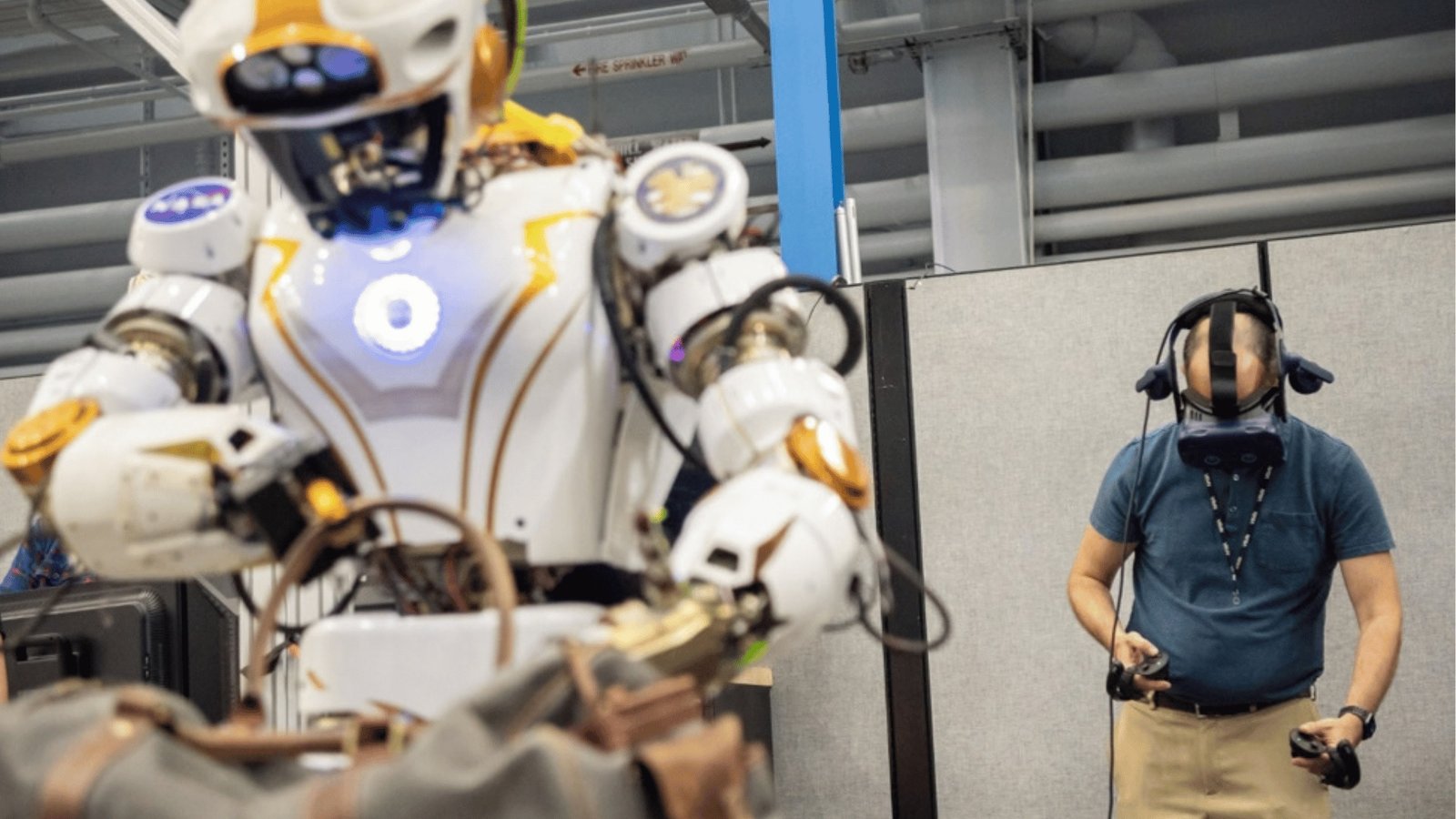
HOUSTON — NASA’s 16-member Dexterous Robotics Team at the Johnson Space Center in Houston is developing humanoid robots to support astronauts during future Moon and Mars missions. The robots are designed to perform human-like tasks, assist with maintenance and reduce risks to crews during long-duration space exploration.
The team is part of NASA’s Robotic Systems Technology Branch, which also develops unmanned planetary rovers. Its work builds on earlier projects, including Robonaut 2, which conducted technology demonstrations aboard the International Space Station for seven years, and Valkyrie, NASA’s first bipedal humanoid robot.
Standing 6 feet 2 inches tall and weighing approximately 300 pounds (136 kilograms), Valkyrie remains a key part of the programme.
“It’s really about the human elements — either working in environments designed for humans or working alongside humans. That’s our niche,” said Shaun Azimi, lead of the Dexterous Robotics Team.
Robots to Support Astronauts
NASA aims to make human exploration safer and more sustainable, rather than replace astronauts with robots. Humanoid systems could assist with logistics, maintenance, equipment inspections and scientific activities, including hazardous tasks such as inspecting equipment outside spacecraft and cleaning solar panels.
The team's near-term focus is developing technologies for a sustained human presence on the lunar surface, including future lunar base plans. These technologies could also support crewed missions to Mars.
Testing at NASA’s iMETRO Facility
NASA tests robotic systems at the Integrated Mobile Evaluation Testbed for Robotics Operations (iMETRO) at Johnson Space Center. The facility is available to NASA programmes and external partners and includes open-source software, simulation tools, spacecraft and habitat mockups, different robots and an outdoor rock yard. Engineers can test complete robots or individual hardware and software components.
According to Azimi, the facility helps developers understand actual operational requirements and connects robotics engineers with teams designing lunar habitats and rovers. The collaboration can identify design improvements, such as larger handles and better lighting, that help robots and astronauts interact with equipment.
In one demonstration, a team from PickNik Inc. tested software that enabled a robotic arm to recognise a spacecraft hatch, turn its latch, grasp the handle, open the door and transfer cargo bags. A NASA intern also developed software using a commercial robotic arm and camera to inspect and maintain a cold stowage freezer similar to those used on the International Space Station.
Valkyrie has also been used in demonstrations involving remote handling of objects, including a packed duffel bag.
Partnerships With Industry
NASA is working with companies to evaluate robotic technologies in challenging environments on Earth before considering their use in space.
The agency has partnered with Australian energy company Woodside to explore using Valkyrie for hazardous tasks in the oil and gas industry. These activities provide engineers with information about robot performance in demanding and unpredictable conditions.
NASA is also collaborating with Texas-based robotics company Apptronik to study its commercially developed Apollo humanoid robot. The work aims to identify capability gaps and determine where additional research and investment are needed to adapt robotic systems for space.
The Dexterous Robotics Team combines research and practical engineering, with members experienced in electronics, mechanics, software, simulations and analysis. Its work is organised mainly into mechatronics and software groups, with substantial collaboration between them.
Preparing for Future Exploration
NASA is also collaborating with other agency organisations on an upcoming challenge inviting public ideas for technology solutions related to Mars exploration.
Humanoid robots could eventually help astronauts move cargo, maintain equipment and perform other tasks in lunar habitats. By developing machines that can operate in environments designed for humans, NASA hopes to reduce operational risks and support longer-duration missions.
The programme builds on NASA’s previous humanoid robotics research and contributes to the development of technologies for sustained lunar exploration and potential future crewed missions to Mars.
——— End of Article ———