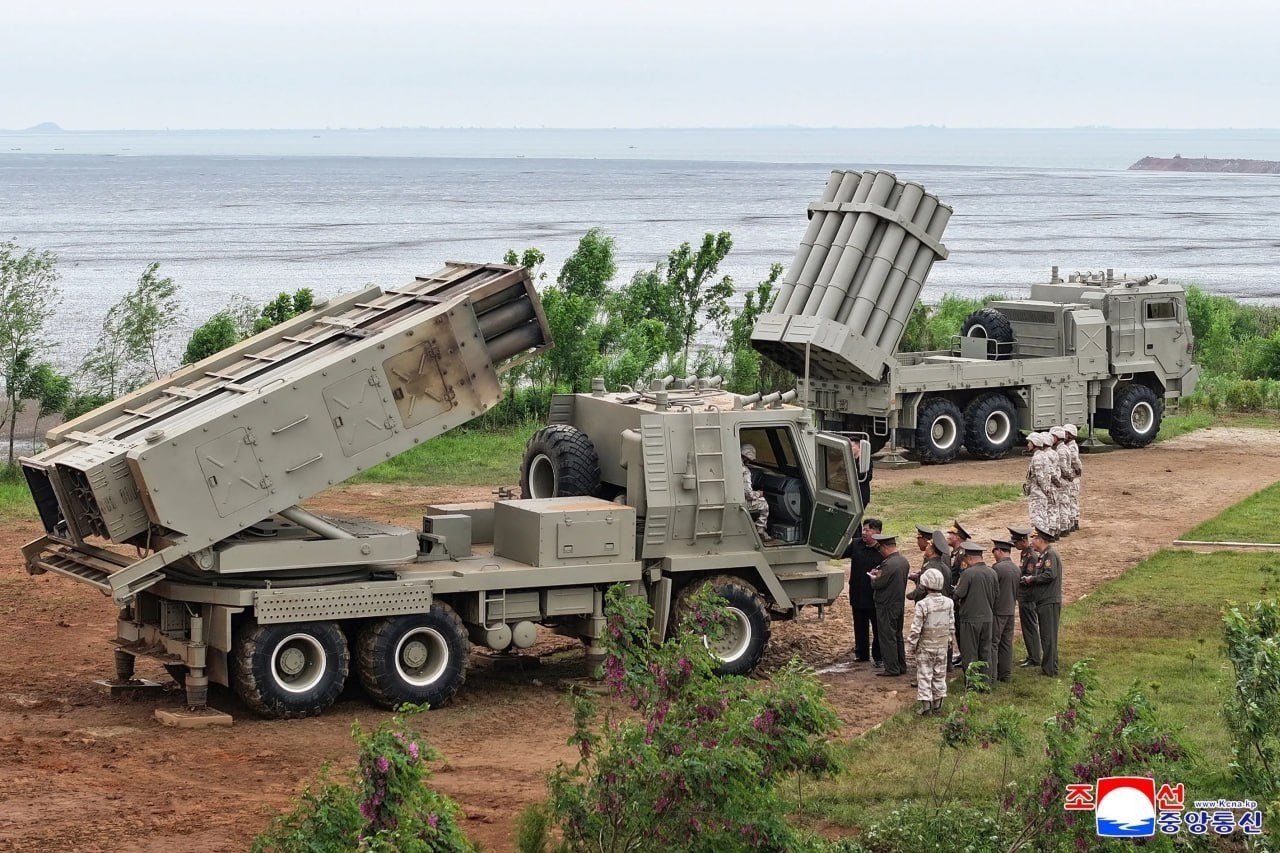
SEOUL, — North Korea announced on Saturday that it had test-fired an intermediate-range strategic missile equipped with artificial intelligence (AI) technology, claiming it can change its flight trajectory at low altitudes. Leader Kim Jong Un personally oversaw the firing drill, according to the Korean Central News Agency (KCNA).
North Korea said the missile demonstrated a “wave-like trajectory mode” designed to make tracking and interception more difficult. Its Missile Administration reportedly informed Kim that the missile could use at least four different flight trajectory modes depending on its mission and target.
South Korea’s Joint Chiefs of Staff reported detecting the launch from the Wonsan area on North Korea’s east coast. The missile travelled more than 700 kilometres before landing in the sea. Japan’s Defense Ministry reported a flight distance of approximately 680 kilometres and said it fell outside Japan’s exclusive economic zone.
Kim Yo Jong, Kim Jong Un’s sister and a senior ruling-party official, claimed that South Korean and Japanese tracking systems failed to follow the missile after it began performing evasive manoeuvres. She also argued that the two countries should acknowledge its speed. North Korea claimed that the technology would be difficult for adversaries to counter, while Kim Jong Un reportedly said comparable technology would remain unavailable to other countries for several years. These claims have not been independently verified.
Experts Question Missile Capabilities
Hong Sung-pyo, a senior researcher at the Seoul-based Korea Institute for Military Affairs, cautioned against accepting Pyongyang’s claims at face value. He noted that missiles capable of manoeuvring during their terminal flight phase can be difficult to intercept, but such manoeuvres do not guarantee perfect accuracy.
Some defence analysts have suggested that Russian military support could be contributing to North Korea’s missile development, potentially linked to North Korean troop deployments supporting Russia’s war in Ukraine. However, the specific role of Russian assistance in this missile’s development remains unconfirmed.
The U.S. military’s Pacific Command said it was consulting closely with regional allies and that the launch posed no immediate threat to U.S. personnel, territory or allies. It also reaffirmed its defence commitments.
Test Follows Rising Border Tensions
The missile test came amid worsening relations between North and South Korea following landmine explosions in the Demilitarized Zone (DMZ) on September 21 that seriously injured South Korean soldiers. South Korea and the U.S.-led United Nations Command attributed the blasts to newly planted North Korean mines, which they said violated the 1950–53 armistice agreement. North Korea denied responsibility.
Seoul demanded an apology and called on Pyongyang to stop strengthening its border defences, including installing anti-tank barriers and additional landmines. On Friday, Kim Yo Jong dismissed South Korea’s demands as “utterly pathetic” and warned of retaliation if South Korean forces fired on North Korean troops working near the border.
The tensions follow Kim Jong Un’s decision earlier this year to abandon the long-standing goal of reconciliation and designate South Korea as a permanent adversary.
North Korea has conducted missile tests on more than 10 occasions so far in 2026, according to the supplied reports. South Korea, the United States and Japan continue to share information and maintain their defence readiness. South Korea’s military had not immediately commented on North Korea’s specific claims about the missile’s AI capabilities.
The missile’s actual manoeuvring performance, tracking resistance and potential impact on existing missile-defence systems remain to be independently established.
——— End of Article ———