QAMISHLI / MOSCOW : Russia has begun a partial withdrawal of its military forces from Syria, marking a significant contraction of Moscow’s long-standing footprint in the country and signaling what analysts describe as a decisive turning point in the Kremlin’s decade-long intervention in the Middle East.
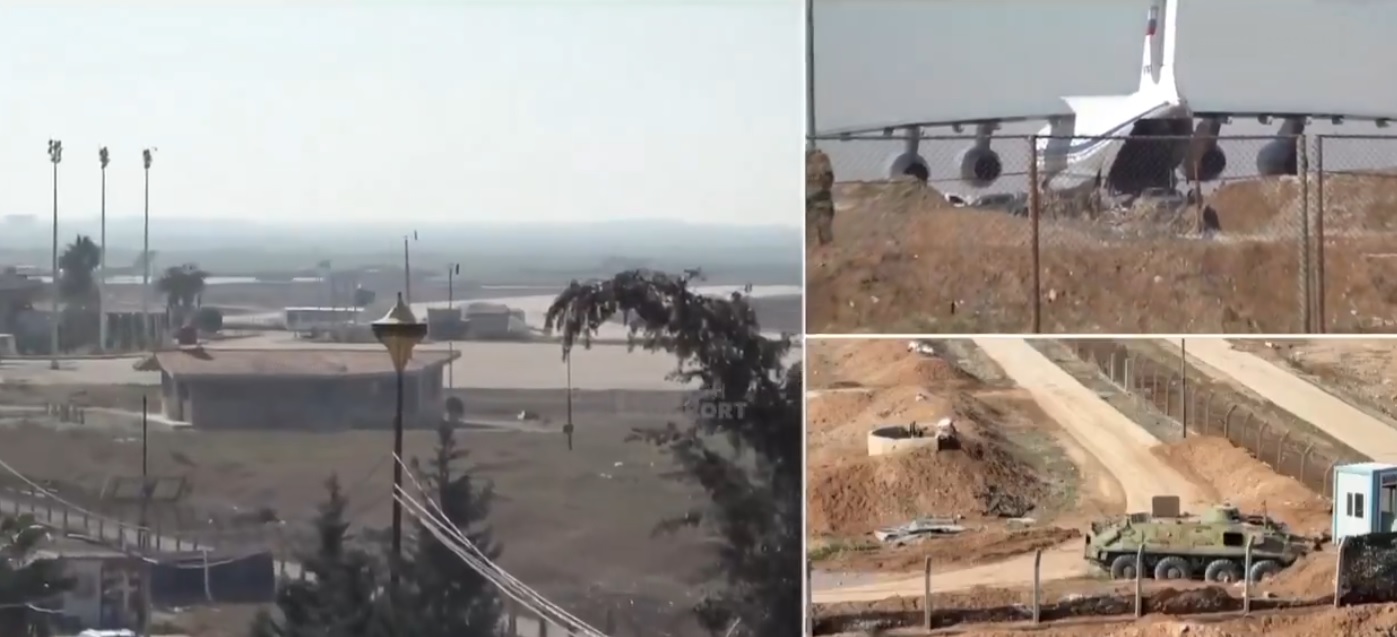
Footage aired by the Kurdish-run K24 television channel shows Russian forces evacuating the helicopter airfield in Qamishli, a strategic city in northeastern Syria near the Turkish border. The images provide rare visual confirmation of a drawdown that has been widely rumored in recent months but not previously documented so clearly.
Evacuation Footage Shows Heavy Equipment Leaving
The broadcast shows military vehicles and equipment being loaded onto an Il-76 transport aircraft, a workhorse of Russia’s strategic airlift capability. In one of the most striking sequences, a Mi-8 transport helicopter is seen prepared for evacuation, its rotor blades removed to allow it to be flown out inside the cargo aircraft.
According to regional sources cited by the broadcaster, additional fighter aircraft, helicopters, and support hardware are also being moved out of northeastern Syria or relocated to remaining Russian facilities elsewhere in the country. The operation appears methodical but urgent, suggesting a deliberate effort to wind down operations rather than a routine rotation of forces.
Qamishli Base Abandoned
Until now, the Qamishli facility had been one of three Russian military sites in Syria. Its apparent abandonment represents a major reduction in Moscow’s operational reach, particularly in the strategic northeast, a region long contested by Syrian government forces, Kurdish groups, and regional powers.
If confirmed, the withdrawal would leave Russia with only two military footholds in Syria. The most important of these is Khmeimim Air Base in Latakia province on the Mediterranean coast, which serves as Russia’s primary air hub and command center. Russia also maintains a naval logistics facility at Tartus, its only Mediterranean port and a critical symbol of its naval ambitions beyond the Black Sea.
End of a Decade-Long Intervention
Russia intervened militarily in Syria in 2015, deploying air power and military advisers to support President Bashar al-Assad during the civil war. The intervention reshaped the conflict and restored Moscow as a central power broker in the Middle East, giving the Kremlin leverage over Damascus and a strategic presence near NATO’s southern flank.
However, analysts now say that Russia’s regional influence has steadily eroded under the pressure of prolonged war costs, shifting regional dynamics, and Moscow’s military commitments elsewhere. The drawdown from Qamishli is widely seen as the clearest indication yet that President Vladimir Putin’s Syria campaign is entering its final phase.
Some observers describe the withdrawal as the “logical and disastrous end” of a ten-year military adventure, arguing that Russia no longer has the political leverage or resources to sustain a broad presence across Syria. Control over northeastern territories has increasingly shifted toward Damascus and local actors, reducing Moscow’s strategic justification for remaining in places like Qamishli.
Focus Shifts to Coastal Strongholds
Russian units previously stationed in the northeast are believed to be redeploying either to Khmeimim or back to Russia itself. Concentrating forces along the Mediterranean coast would allow Moscow to preserve a reduced but defensible presence, focused on air and naval access rather than territorial influence.
For regional powers and Western governments, the withdrawal underscores a broader recalibration of Russia’s global posture. Once a decisive military actor shaping outcomes across Syria, Moscow now appears to be retrenching, its ambitions constrained and its influence increasingly localized.
While Russian officials have not publicly commented on the footage, the images from Qamishli offer compelling evidence that one of the Kremlin’s most visible foreign military ventures is quietly being dismantled — base by base, aircraft by aircraft.
——— End of Article ———