WALLOPS ISLAND, Va. : Rocket Lab Corporation has announced that it will conduct a dedicated hypersonic test mission for the U.S. Department of Defense’s Defense Innovation Unit (DIU) no earlier than late February 2026. The mission, formally named “Cassowary Vex,” will launch from Launch Complex 2 at the Virginia Spaceport Authority’s Mid-Atlantic Regional Spaceport on Wallops Island, Virginia.
The operation will use Rocket Lab’s HASTE (Hypersonic Accelerator Suborbital Test Electron) launch vehicle, a modified suborbital configuration of the company’s Electron rocket. Rocket Lab has informally referred to the mission as “That’s Not A Knife,” referencing the Australian origin of the primary payload.
Payload and International Collaboration
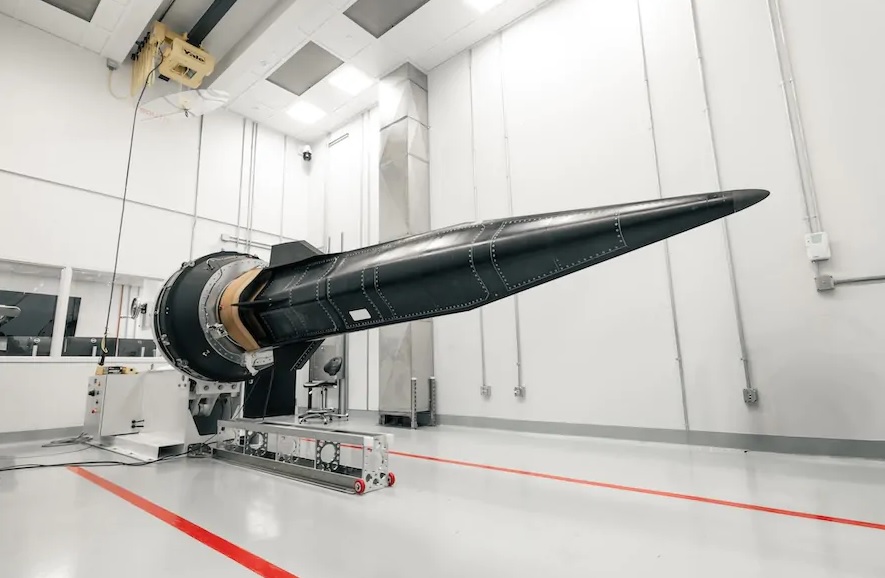
The mission will carry the DART AE vehicle, a scramjet-powered hypersonic aircraft developed by Australian aerospace engineering firm Hypersonix Launch Systems. The DART AE is designed as a technology demonstrator focused on non-ballistic hypersonic flight.
Under the mission profile, the HASTE rocket will accelerate the DART AE to speeds exceeding Mach 5 before deploying it to conduct its independent flight sequence. The objective is to evaluate performance characteristics associated with scramjet propulsion and sustained hypersonic flight outside of traditional ballistic trajectories.
The collaboration combines Australian-developed hypersonic vehicle technology with U.S.-based commercial launch capabilities, reflecting allied defense cooperation in advanced aerospace systems.
HASTE Vehicle Capabilities
HASTE is designed to provide responsive and repeatable suborbital launch services tailored for hypersonic testing. According to Rocket Lab, the platform supports test conditions at speeds of up to Mach 20. The system enables detailed evaluation of thermal protection systems, aerodynamic performance, guidance, and propulsion technologies under operational flight conditions.
The vehicle is marketed as a commercial solution aimed at increasing access to high-cadence hypersonic test opportunities. Rocket Lab has positioned HASTE as addressing limitations in availability and cost that have historically affected hypersonic development programs.
“Cassowary Vex” will mark Rocket Lab’s fourth hypersonic test mission within a six-month period, indicating an increased operational tempo for the company’s suborbital launch services.
Alignment with DIU’s HyCAT Initiative
The mission supports the DIU’s “Hypersonic and High-Cadence Airborne Testing Capabilities” (HyCAT) project, which emphasizes the integration of commercial launch systems into Department of Defense hypersonic development efforts. The HyCAT initiative seeks to accelerate testing timelines by leveraging commercial aerospace providers rather than relying exclusively on traditional government-managed programs.
Rocket Lab has stated that enabling frequent, lower-cost hypersonic testing is a priority for the Department of Defense and its allied partners. Increased test cadence is intended to facilitate faster iteration and validation of emerging hypersonic systems.
Recent Testing Background
The upcoming February 2026 launch follows multiple suborbital missions conducted by Rocket Lab during late 2025 using the HASTE configuration. Those missions supported national security objectives and validated the platform’s suitability for high-speed flight test applications.
With the scheduled launch from Wallops Island, “Cassowary Vex” will further expand the operational use of commercial suborbital launch vehicles in defense-focused hypersonic research and testing programs.
——— End of Article ———