DÜSSELDORF, GERMANY — April 1, 2026 : German defense manufacturer Rheinmetall has announced a major expansion of its production capacity for gun-based air defense systems, aiming to manufacture up to 400 units annually by 2027. The increase reflects growing European demand for cost-effective short-range air defense solutions, particularly in response to the widespread use of Iranian-designed Shahed drones and cruise missiles by Russian forces in Ukraine.
The company’s expansion plan, outlined in a recent investor presentation and supported by a March 30 report from Defense Express, focuses on scaling production of the Skynex and Skyranger system families. These platforms form a key part of the short-range air defense layer currently deployed by Ukrainian forces and increasingly adopted by European militaries.
Production Expansion and Industrial Scale-Up
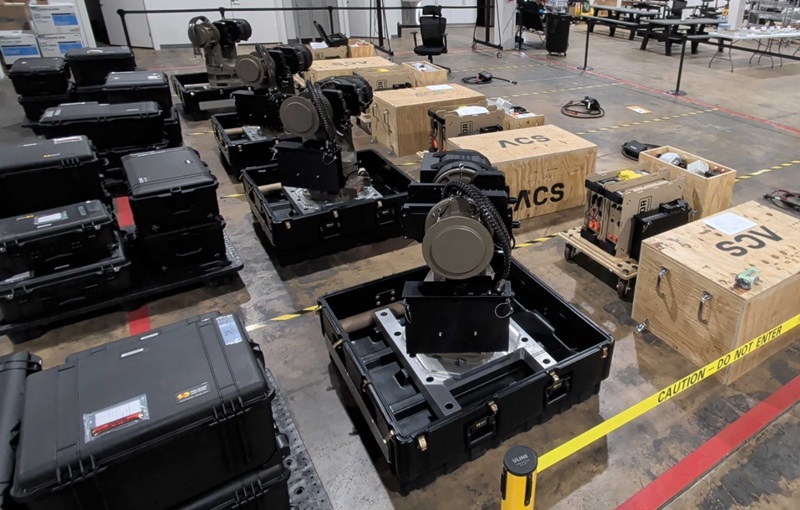
Rheinmetall’s target production rate of up to 400 systems per year translates to approximately eight systems per week. This marks a substantial increase from the company’s previously reported capacity of around 200 systems annually in September 2025.
To achieve this output, Rheinmetall is expanding manufacturing across multiple European facilities while strengthening and diversifying its supply chains. Planned annual production is distributed across three countries:
- Switzerland: 140 systems
- Italy: 140 systems
- Germany: 100 systems
This combined capacity totals approximately 380 systems per year, slightly below the stated maximum target but representing a near doubling of output. Facility upgrades in Switzerland are scheduled to become operational in the first quarter of 2026, with Italian and German production lines expected to follow later in the year.
System Capabilities and Operational Role
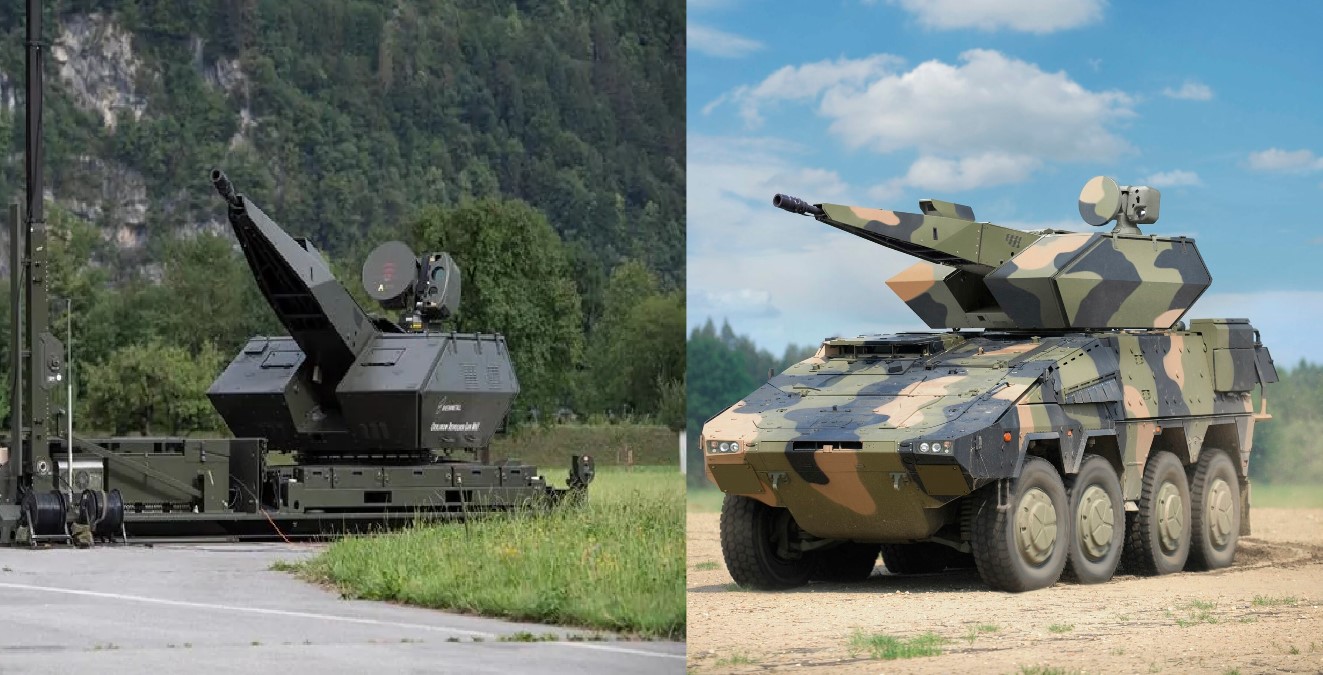
The Skynex and Skyranger systems are designed to counter low-cost aerial threats, including unmanned aerial systems and cruise missiles, using rapid-fire autocannons integrated with advanced sensor and targeting technologies.
Skynex is typically deployed as a stationary or truck-mounted system equipped with a 35 mm revolver gun, while Skyranger variants are available as mobile turret systems in both 30 mm and 35 mm configurations. Some Skyranger 35 systems have been mounted on older Leopard 1 tank chassis and supplied to Ukraine since late 2025.
Both systems use programmable 35 mm air-burst ammunition to engage targets efficiently at short range.
Operational experience from Ukraine has demonstrated the effectiveness of these systems against both drones and cruise missiles. Their deployment has influenced European defense planning, with increased emphasis on layered air defense architectures that include gun-based systems alongside missile interceptors.
Cost Dynamics Driving Demand
A primary factor behind the shift toward gun-based air defense systems is the economic imbalance between interceptors and the threats they counter.
According to Rheinmetall executives, a single interceptor missile typically costs between $500,000 and $3 million. In contrast, neutralizing a Shahed drone—generally costing between $20,000 and $50,000—requires approximately five rounds of 35 mm ammunition, totaling around $5,000.
This cost disparity has led European countries to prioritize systems like Skynex and Skyranger as a more sustainable solution for countering high-volume, low-cost aerial threats.
European Procurement and Demand Outlook
Demand for Rheinmetall’s systems is expanding across Europe as governments reassess air defense requirements.
Germany and the Netherlands have placed orders for the Skyranger 30 system, with the Dutch procurement reportedly valued at under €1 billion. Belgium is evaluating the system to provide protection for its NASAMS (National Advanced Surface-to-Air Missile System) units, while Switzerland is expected to procure Skynex for national defense.
Long-term requirements remain substantial. Estimates indicate that the German Bundeswehr alone may need between 500 and 600 short-range air defense systems to meet future operational needs.
Ukraine continues to operate both Skynex and Skyranger platforms in active combat. Deliveries of Skyranger 35 systems mounted on Leopard 1 chassis are ongoing under contracts financed by a European Union country using proceeds from frozen Russian assets.
Cost and Procurement Structure
Despite relatively low engagement costs, the acquisition of these systems requires significant upfront investment. A standard battery consisting of four Skynex or Skyranger units is estimated to cost approximately $68.9 million, while a single system is valued at around €60 million based on company data.
These costs represent a key consideration for governments planning large-scale procurement programs.
Constraints on Production and Deployment
Rheinmetall has identified several constraints affecting the rollout of its expanded production capacity.
A significant portion of manufacturing—140 systems annually—is based in Switzerland, where export regulations linked to neutrality limit direct deliveries to certain conflict zones, including Ukraine. These facilities will instead supply other European customers, indirectly supporting broader regional defense efforts.
Production timelines also remain a limiting factor. Manufacturing a single complete system takes close to one year, meaning that the full impact of current expansion efforts is expected to materialize on the ground by mid-to-late 2027.
Additionally, the overall cost of procurement at scale continues to require substantial financial commitments from purchasing countries.
Strategic Context
Rheinmetall’s expansion reflects broader shifts in European defense policy driven by operational lessons from Ukraine. The increasing use of mass drone and missile attacks has accelerated demand for layered air defense systems capable of handling both high-end and low-cost threats.
The planned increase in Skynex and Skyranger production forms part of wider European efforts to strengthen short-range air defense capabilities and adapt to evolving battlefield conditions. Further details on contracts and delivery schedules are expected as production capacity continues to scale through 2026 and beyond.
——— End of Article ———