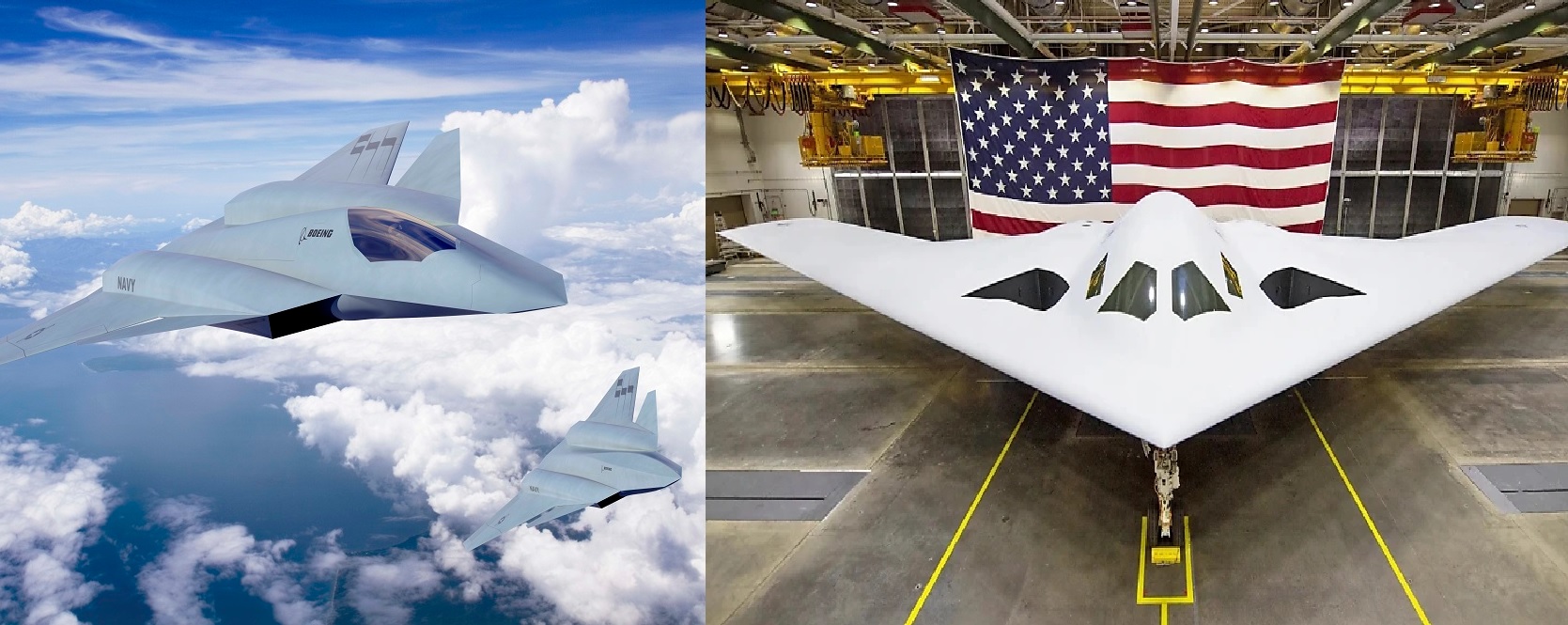
Arlington, Virginia : A new strategic assessment released by the Mitchell Institute for Aerospace Studies raises concerns that the U.S. Air Force’s current acquisition plans for its next-generation stealth aircraft do not provide the scale required for a prolonged, high-intensity conflict with China. The report argues that planned force levels for the B-21 Raider bomber and the future F-47 fighter fall short of what would be needed to sustain combat operations in the Indo-Pacific, particularly in a scenario involving the defense of Taiwan.
The study, titled Strategic Attack: Maintaining the Air Force’s Capacity to Deny Enemy Sanctuaries, was authored by defense analyst Heather Penney and retired U.S. Air Force Colonel Mark Gunzinger. It concludes that current procurement targets would enable limited, episodic strike operations rather than the sustained campaign required against a peer military power.
Emphasis on Denying Operational Sanctuaries
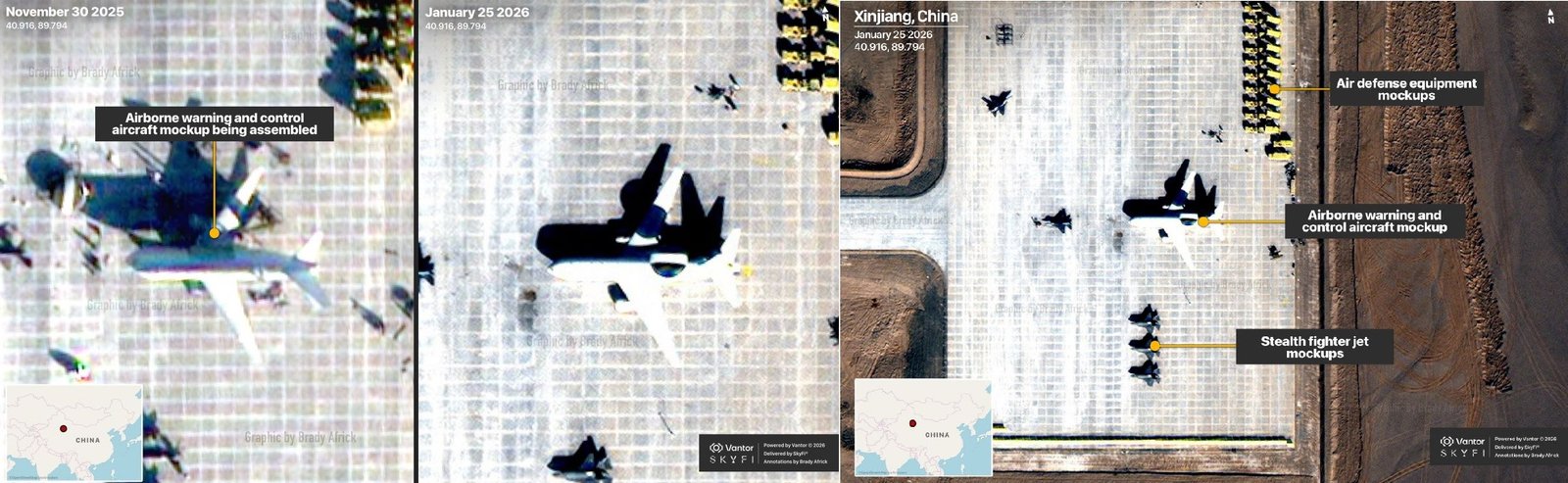
At the center of the assessment is the concept of “operational sanctuaries,” defined as rear-area locations within mainland China protected by layered air defenses and geographic distance from U.S. and allied bases. According to the report, these sanctuaries allow the People’s Liberation Army to conduct repeated missile and air attacks while remaining largely undisrupted.
The authors state that success in a peer-level conflict would depend on the U.S. Air Force’s ability to penetrate protected areas and hold at risk Chinese airbases, command-and-control nodes, missile forces, and logistics infrastructure. This requirement demands an “inside-out” operational approach, centered on stealth aircraft capable of operating for extended periods inside contested airspace.
Gap Between Planned and Required Force Size
The report identifies a clear gap between current Air Force plans and the force size required to conduct sustained operations while absorbing combat attrition. The Air Force has stated a requirement for at least 100 B-21 Raider bombers, while the assessment recommends a minimum of 200 aircraft. For the Next Generation Air Dominance (NGAD) program, designated as the F-47, the Air Force’s planning figure of about 185 fighters is compared with a recommended force of approximately 300 aircraft.
The authors note that existing targets may support limited strike missions, but not a long-duration campaign involving thousands of targets. Aircraft inventories must also account for nuclear deterrence requirements, homeland air defense, and losses from advanced Chinese air and missile defenses.
Limits of Stand-Off Strike Concepts
The assessment evaluates the increasing reliance on stand-off weapons, including long-range cruise and hypersonic missiles launched from outside defended airspace. While acknowledging their role, the report concludes that such systems cannot replace penetrating aircraft at scale.
Analysts cite the high cost per missile, often several million dollars each, as a constraint when large numbers of targets must be engaged. They also highlight the vulnerability of long-range kill chains, which depend on complex networks that can be disrupted by electronic warfare or cyber operations.
By contrast, the report emphasizes that stealth bombers such as the B-21 Raider can deliver large payloads of precision weapons per sortie and maintain a persistent operational presence, enabling repeated and adaptive strikes.
Near-Term Measures and Program Timelines
Acknowledging that expanding the stealth fleet would take many years, the report recommends near-term measures to preserve existing capacity. These include retaining all 19 B-2 Spirit bombers currently in service until sufficient B-21s are operational.
The authors also recommend accelerating procurement of the F-35 Lightning II to strengthen near-term penetrating strike and counter-air capability while the F-47 and B-21 programs continue to mature.
Cost Considerations and Strategic Risk
The report estimates that doubling procurement of the B-21 and F-47 fleets would require more than $100 billion in additional spending. While significant, the authors argue that the cost must be weighed against the strategic risk of entering a peer conflict without adequate capacity.
They conclude that without a larger penetrating force, the United States would struggle to close the thousands of kill chains needed to suppress enemy air defenses, disrupt command structures, and sustain operations in a conflict with China, particularly in a Taiwan contingency.
——— End of Article ———