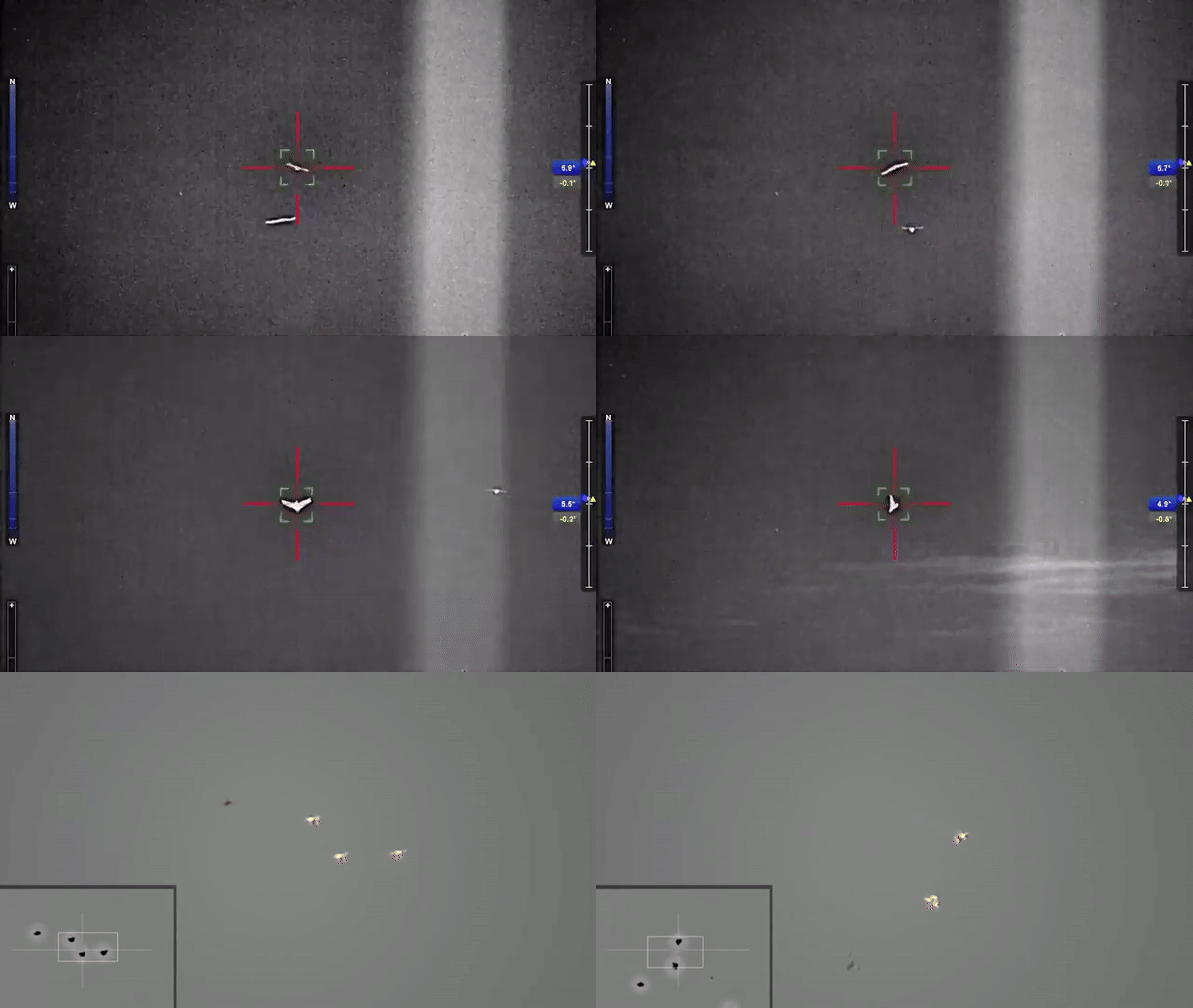
TUCSON, Ariz. : Raytheon, an RTX business, has successfully demonstrated its Coyote® Block 3 Non-Kinetic (NK) interceptor during a U.S. Army exercise held on February 11 at Yuma Proving Ground. The demonstration validated the system’s ability to counter multiple drone swarms using a high-power non-kinetic payload designed to disable unmanned aircraft without physical destruction.
The exercise focused on defending against “saturation-level” attacks, in which multiple unmanned aerial systems (UAS) approach a defended area simultaneously. According to the company, the Block 3 NK variant neutralized several drone swarms by employing directed energy, likely in the form of high-power microwave (HPM) or electromagnetic pulse (EMP) technology, to disrupt and disable onboard electronic components.
Non-Kinetic Engagement Approach
Unlike earlier kinetic interceptors that rely on explosive warheads or direct impact to destroy targets, the Coyote Block 3 replaces the explosive payload with a reusable electronic attack system. The interceptor emits a high-energy burst that interferes with drone circuitry, rendering targets inoperable without fragmentation or debris.
During the demonstration, the system engaged multiple drones simultaneously, illustrating its capacity for multi-target defeat within a single engagement window. The non-kinetic method allows the interceptor to neutralize threats without requiring physical contact.
Airframe and Operational Features
The Block 3 maintains the same high-performance airframe used in the earlier Block 2 configuration. While the previous version employed a kinetic warhead, the updated model integrates a reusable electronic payload while preserving aerodynamic performance and maneuverability.
The interceptor is designed with loitering capability, enabling it to remain airborne within a designated area until a threat is detected. Once engaged, the system can be recalled to a recovery station. Instead of being expended, the Block 3 is typically captured using a net-based recovery system, then refurbished and prepared for redeployment.
This reusability reduces the cost per intercept compared to single-use munitions, particularly when countering low-cost commercial or improvised drones. The absence of explosive fragmentation also supports operations in urban areas or near sensitive infrastructure, where minimizing collateral damage and debris is a priority.
Integration with U.S. Army LIDS Architecture
The Coyote Block 3 serves as a primary effector within the U.S. Army’s Low, Slow, Small-Unmanned Aircraft Integrated Defeat System (LIDS). During the February 11 exercise, it operated in coordination with the Ku-band Radio Frequency Sensor (KuRFS), a 360-degree radar system that provides continuous detection, tracking, and targeting data for incoming threats.
The integration between KuRFS and the Coyote interceptor allows for rapid identification and engagement of Group 1, 2, and 3 unmanned aircraft systems. These categories include small, low-flying drones that are often difficult to detect and increasingly used in swarm formations.
Tom Laliberty, president of Land & Air Defense Systems at Raytheon, stated that Coyote provides a cost-effective defensive option against both individual drones and coordinated swarms. He added that the company continues to invest in advancing Coyote’s operational capabilities to address evolving drone threats.
Contract and Strategic Context
The U.S. Army recently awarded RTX its largest counter-drone contract to date under the LIDS program. The contract reflects increased demand for scalable counter-UAS systems capable of addressing the growing use of unmanned aircraft in military and irregular warfare environments.
As drone threats become more numerous and technologically advanced, defense planners have highlighted the economic imbalance created by using high-cost missiles to defeat inexpensive unmanned platforms. The reusable design of the Coyote Block 3 aims to address this challenge by enabling multiple engagements with a single interceptor platform.
The February 11 demonstration at Yuma Proving Ground marks a step toward full-rate production and operational deployment of the Coyote Block 3 Non-Kinetic interceptor for U.S. forces and allied partners.
——— End of Article ———