TUCSON, Arizona : Raytheon, an RTX business, has completed a key ballistic test of its candidate interceptor for the U.S. Army’s Next Generation Short Range Interceptor (NGSRI) program, marking another step in the Army’s effort to replace the aging FIM-92 Stinger missile and modernize short-range air defense capabilities.
The company confirmed that the test validated the interceptor’s ability to detect and track unmanned aerial system (UAS) targets and to launch successfully from a man-portable configuration. The trial was conducted using Raytheon’s internal funding, with the objective of reducing technical risk, maturing the design, and collecting performance data ahead of upcoming Army-funded flight demonstrations.
Program Background and Army Requirement
The NGSRI program is the U.S. Army’s primary initiative to develop a next-generation man-portable air defense interceptor capable of countering a broad range of aerial threats. These include small and low-cost drones, larger unmanned systems, helicopters, fixed-wing aircraft, and cruise missiles operating in increasingly complex environments.
The Army intends NGSRI to replace the FIM-92 Stinger, which entered service in the early 1980s and has undergone multiple upgrades but faces growing limitations against modern threats. Operational experience in recent conflicts has highlighted the need for greater range, improved speed, enhanced seekers, and better performance against low-signature and maneuvering targets.
Ballistic Test Objectives and Results
According to Raytheon, the ballistic test focused on validating core interceptor functions rather than a full end-to-end engagement. Key objectives included confirming launch performance from a shoulder-fired system, verifying initial flight stability, and demonstrating target tracking against representative drone threats.
Data gathered during the test will be used to refine guidance, propulsion, and system integration elements before the start of government-sponsored flight testing. Raytheon stated that early company-funded trials are intended to accelerate the program timeline by identifying issues prior to formal Army evaluations.
Tom Laliberty, president of Land and Air Defense Systems at Raytheon, said the company’s approach is designed to align closely with Army requirements while maintaining affordability and scalability. He noted that repeated testing and data collection are central to meeting schedule milestones.
Propulsion Development and Industry Collaboration
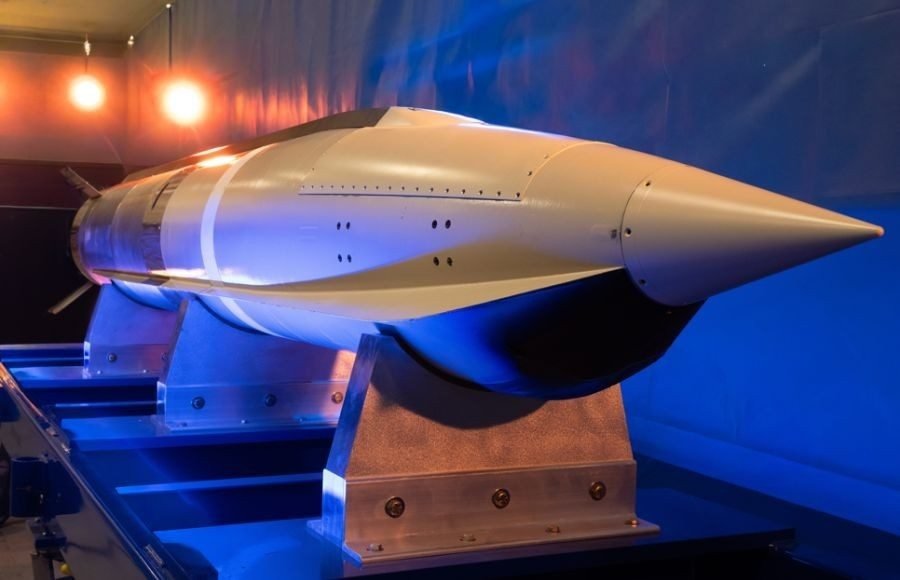
A major technical feature of Raytheon’s NGSRI candidate is its advanced propulsion system. In 2025, Raytheon collaborated with Northrop Grumman on the development and testing of advanced solid rocket motors using “Highly Loaded Grain” propellant technology.
This approach increases the proportion of energetic material within the motor, enabling longer burn times and higher total impulse compared to conventional solid rocket motors of similar size. Raytheon has stated that this allows the interceptor to achieve higher speeds and extended engagement ranges, addressing a key limitation of legacy man-portable air defense systems.
The propulsion tests conducted to date were intended to validate manufacturing repeatability, structural integrity, and performance consistency under operationally relevant conditions.
System Architecture and Integration
Raytheon has emphasized a modular system architecture for its NGSRI design. The interceptor and associated components are intended to be adaptable across multiple launch platforms, supporting both dismounted infantry use and integration with vehicle-mounted air defense systems.
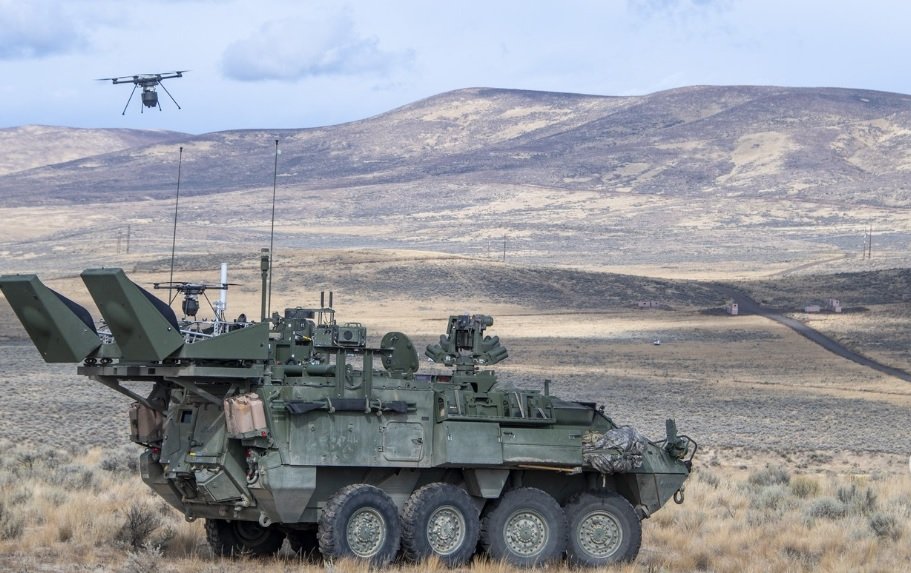
The company has indicated that its design can be integrated with the Army’s Maneuver Short-Range Air Defense (M-SHORAD) system, including the M-SHORAD configuration mounted on the Stryker platform. Modularity is also intended to simplify future upgrades to seekers, guidance electronics, and counter-countermeasure capabilities as threats evolve.
Manufacturing and Production Considerations
Raytheon stated that it is leveraging automated manufacturing processes developed across its missile production lines to support the NGSRI effort. These processes are designed to improve quality control, reduce unit costs, and enable rapid production scaling if the Army moves forward with procurement.
The company argues that this manufacturing approach is particularly important for short-range air defense systems, which may be required in large quantities due to the proliferation of low-cost aerial threats.
Program Outlook
The U.S. Army is expected to continue competitive evaluations of NGSRI candidates through a series of government-funded flight tests and system demonstrations. Raytheon stated that data from the latest ballistic test supports continued progress toward meeting Army performance requirements and schedule objectives.
The service aims to field an initial operational capability for NGSRI later in the decade, providing maneuver forces with a modernized, man-portable air defense capability designed for current and emerging threat environments.
——— End of Article ———