LISBON : The Portuguese Navy is set to receive the European Union’s first purpose-built drone carrier, the NRP D. João II, with delivery scheduled for late 2026. The vessel, formally designated as the Multifunctional Naval Platform, is being constructed by the Dutch shipbuilder Damen under a contract signed in Lisbon on November 24, 2023.
First EU-Built Drone Carrier Program
According to reporting by Euronews Portugal on January 29, 2026, the NRP D. João II represents the first ship commissioned by an EU member state that is designed from the outset to operate unmanned aerial, surface, and underwater systems as its primary mission. The program positions Portugal at the forefront of European naval adaptation to the expanding role of autonomous systems in maritime operations.
The ship is intended to support long-duration missions that combine maritime surveillance, scientific research, environmental monitoring, and civil protection, reflecting Portugal’s requirement to maintain a persistent maritime presence across one of the largest maritime areas under national jurisdiction in Europe.
Procurement Background and Construction Timeline
An initial competitive procurement procedure launched on June 24, 2022, concluded without bids on November 30, 2022, prompting a restructuring of the program. Following reprogramming, the overall budget was increased and the delivery timeline extended to mid-2026, later confirmed as late 2026.
Construction formally began with the first steel cut in October 2024 at Damen’s shipyard in Galați, Romania. The Portuguese Navy chose not to patent the ship’s concept, avoiding additional costs. After the contract award, this decision led to expressions of interest from other European navies examining similar capability requirements.
Cost and Funding Structure
The total cost of the NRP D. João II program is €132 million. Of this amount, €94.5 million is financed through the European Union Recovery and Resilience Plan, while the remaining €37.5 million is funded directly from Portugal’s state budget.
Design Philosophy and Modular Configuration
The NRP D. João II is designed as a modular multi-mission platform, capable of reconfiguration within approximately one week by exchanging mission systems and installed equipment. This approach allows rapid transition between scientific, civil protection, and security roles without structural modification to the hull.
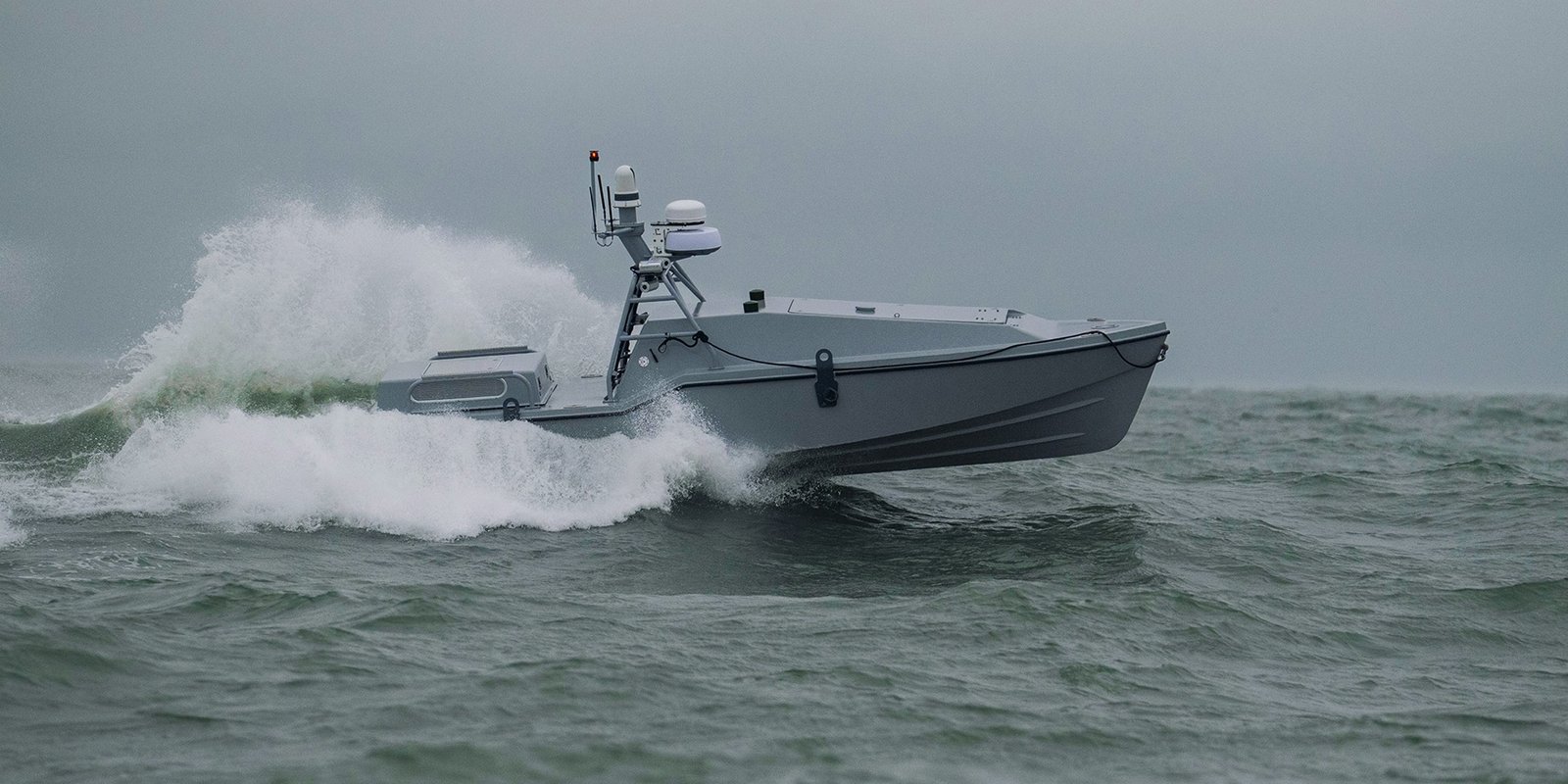
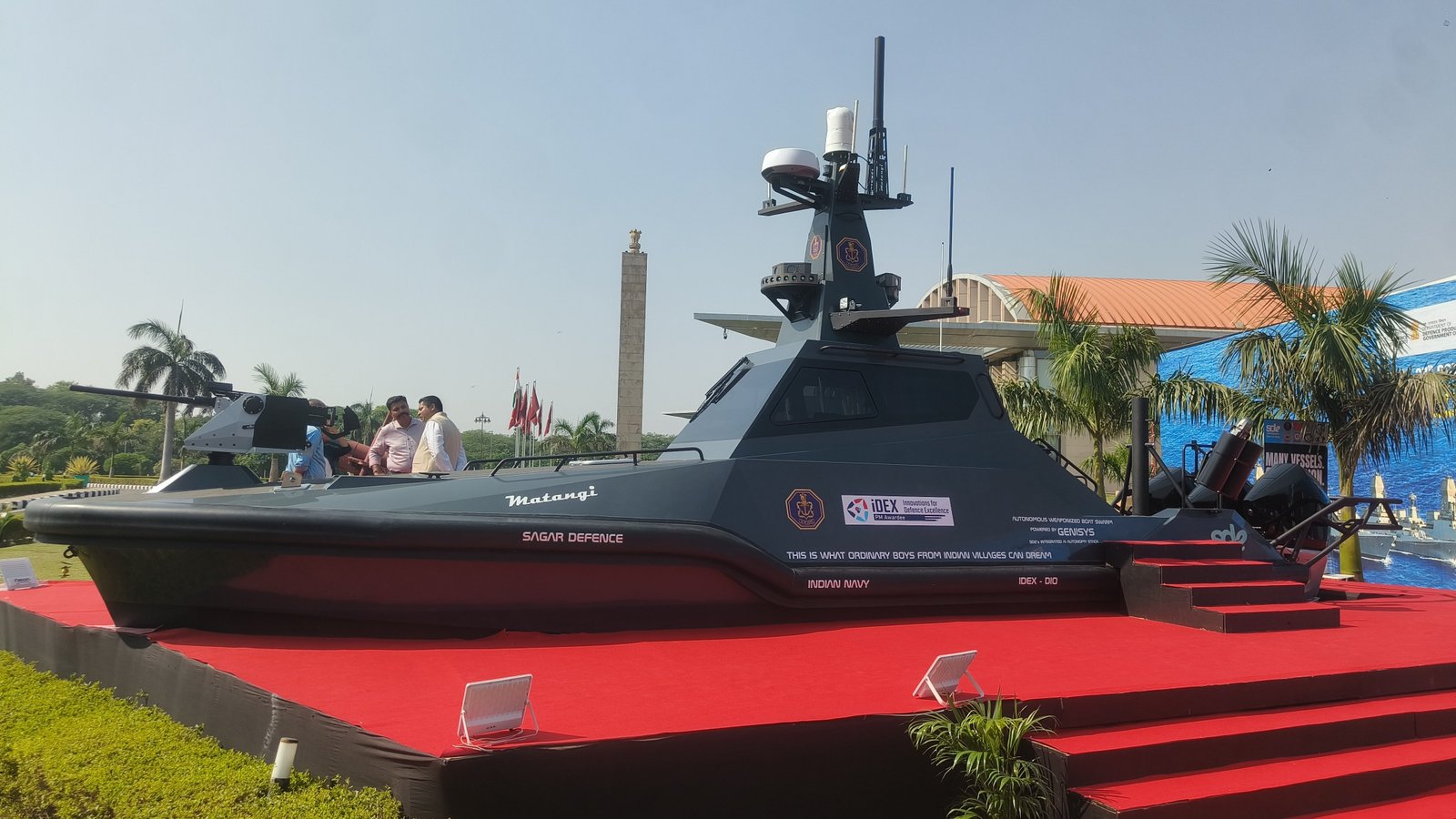
The ship is planned to operate unmanned aerial vehicles (UAVs), unmanned surface vehicles (USVs), and unmanned underwater vehicles (UUVs), while retaining the ability to conduct helicopter operations and provide logistical support. Its digital architecture incorporates high-performance computing, large-scale data processing, digital twin concepts, and artificial intelligence to support mission planning, execution, and data exploitation.
The vessel is also intended to function as a test and experimentation platform within Portugal’s broader maritime innovation ecosystem, including cooperation with the Zona Livre Tecnológica Infante D. Henrique in Tróia.
Dimensions, Propulsion, and Crew
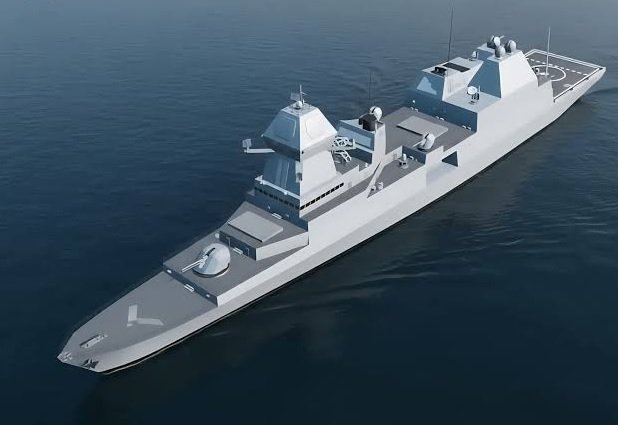
The ship has a length of 107.6 meters, a beam of 20 meters, and a displacement of approximately 7,000 tonnes. Propulsion is provided by two Tier III-compliant engines, enabling a maximum speed of about 15.5 knots.
In January 2025, Schottel was selected to supply the ship’s maneuvering systems, which include two EcoPeller SRE 560 azimuth thrusters and one TransverseThruster STT 3 FP.
The standard crew complement is 48 personnel, with accommodation for 42 additional specialists, including scientists and unmanned systems operators. In emergency scenarios, the vessel can temporarily host between 100 and 200 additional people.
Aviation, Unmanned Systems, and Payload Capacity
A continuous flight deck of approximately 94 meters supports the launch and recovery of aerial drones. Dedicated hangars provide space for drone assembly, preparation, and maintenance, as well as facilities sized for medium helicopters such as the NH90 or SH-60 and heavy helicopters including the EH-101.
For surface and subsurface operations, the ship includes specialized hangars, launch and recovery systems, and a stern ramp for unmanned surface and underwater vehicles, supported by advanced positioning and communications systems.
Payload capacity includes space for up to 18 standard 20-foot containers, configurable for laboratories, hyperbaric chambers, or hospital modules, along with 18 light vehicles, including ambulances, and up to 10 additional boats beyond the ship’s organic complement. Cargo handling is supported by a crane rated at 30 tonnes at a 14-meter reach.
The vessel will also operate the ROV Luso, a remotely operated vehicle capable of functioning at depths of up to 6,000 meters for seabed inspection and underwater intervention tasks.
Endurance and Mission Profiles
The NRP D. João II is designed for an endurance of up to 45 days, enabling prolonged deployments without nearby logistical support. Scientific mission profiles include oceanographic research, environmental and meteorological monitoring, and real-time data collection, supported by onboard laboratories and cooperation with universities and research institutions.
Civil protection missions include search and rescue operations, disaster response, humanitarian assistance, and the evacuation of civilians from high-risk or crisis areas.
Defense and Security Role
From a defense perspective, the vessel supports maritime surveillance, inspection, and control missions related to national sovereignty and the protection of critical infrastructure, including undersea cables. Unmanned aerial and surface systems are intended to provide persistent surveillance, communications relay, and data collection, while underwater systems support inspection, detection, and seabed mapping.
The ship’s development is linked to Portugal’s maritime responsibility area of approximately 4 million square kilometers, making it the largest coastal state in the European Union and the holder of the third-largest Exclusive Economic Zone (EEZ) in Europe, estimated at about 18 times the size of mainland Portugal.
Strategic Context and Data Architecture
Portuguese authorities have cited increased naval activity in the Atlantic as part of the operational context for the ship. Between 2022 and 2024, 143 Russian vessels were tracked along the Portuguese coast, with at least eight vessels detected in Portuguese waters in 2025, including submarines and specialized intelligence ships.
Data collected by the NRP D. João II is intended to support early detection of anomalous activity and contribute to countering hybrid threats, including sabotage of submerged infrastructure. Command and control of dispersed unmanned systems will rely on secure data links, redundancy, encryption, network segmentation, and the ability to operate in degraded or autonomous modes while maintaining human oversight.
The open-systems architecture is designed to allow future integration of emerging technologies, including artificial intelligence-based data processing, assisted or autonomous navigation, sensor fusion, and decision-support tools, without altering the ship’s core multi-mission role.
Program Origins and Naming
The concept for the NRP D. João II was developed during the tenure of Henrique Gouveia e Melo, former Chief of Staff of the Portuguese Navy and a declared candidate in Portugal’s 2026 presidential election. The contract signing ceremony was attended by then Prime Minister António Costa.
The ship is named after King João II, the 15th-century Portuguese monarch associated with the country’s Atlantic exploration era, reflecting the program’s emphasis on maritime presence, innovation, and long-range operations.
——— End of Article ———