BRUSSELS/WASHINGTON : The United States Department of Defense has formally cautioned the European Union against introducing binding “Buy European” provisions in its forthcoming revision of EU defense procurement rules, stating that Washington would consider reciprocal trade measures if American firms are excluded from European military contracts.
The warning was submitted as part of the U.S. government’s official contribution to a European Commission consultation on updating the EU’s 2009 defense procurement directive. The revision forms part of Brussels’ broader effort to strengthen the European defense industrial base and encourage greater intra-European sourcing of military equipment.
U.S. Objections to Preferential Procurement
In its submission, the Pentagon stated that it “strongly opposes” regulatory changes that would restrict U.S. defense companies from competing for contracts in EU member states. U.S. officials characterized a mandatory European preference clause as discriminatory and inconsistent with longstanding transatlantic defense cooperation.
The Defense Department argued that such measures would amount to protectionist and exclusionary policies that could significantly reduce American industry participation in European defense markets. U.S. officials further noted that major European defense firms currently benefit from access to the U.S. defense market without facing equivalent blanket restrictions.
The Pentagon emphasized that transatlantic defense trade has historically been underpinned by reciprocal market access arrangements and warned that altering that balance could affect broader industrial cooperation.
Possible U.S. Trade Response
Washington indicated that, should the EU proceed with a strict “Buy European” mandate, the United States could reassess existing defense trade arrangements.
At present, 19 of the 27 EU member states maintain reciprocity agreements with the United States that grant exemptions from standard “Buy American” requirements for certain defense procurements. These waivers enable eligible European companies to compete for U.S. Department of Defense contracts under defined conditions.
According to the U.S. submission, revoking or narrowing these waivers is one potential response under consideration. If implemented, European defense firms could face significantly tighter access to Pentagon contracts, potentially limiting participation to case-by-case approvals tied to NATO interoperability requirements.
Such a move would affect European companies that currently supply components, systems, and services to U.S. defense programs.
Transatlantic Procurement Imbalance
The dispute arises amid longstanding U.S. calls for European allies to increase defense spending and assume greater responsibility for the continent’s conventional defense posture. European defense budgets have expanded in recent years, particularly following the war in Eastern Europe.
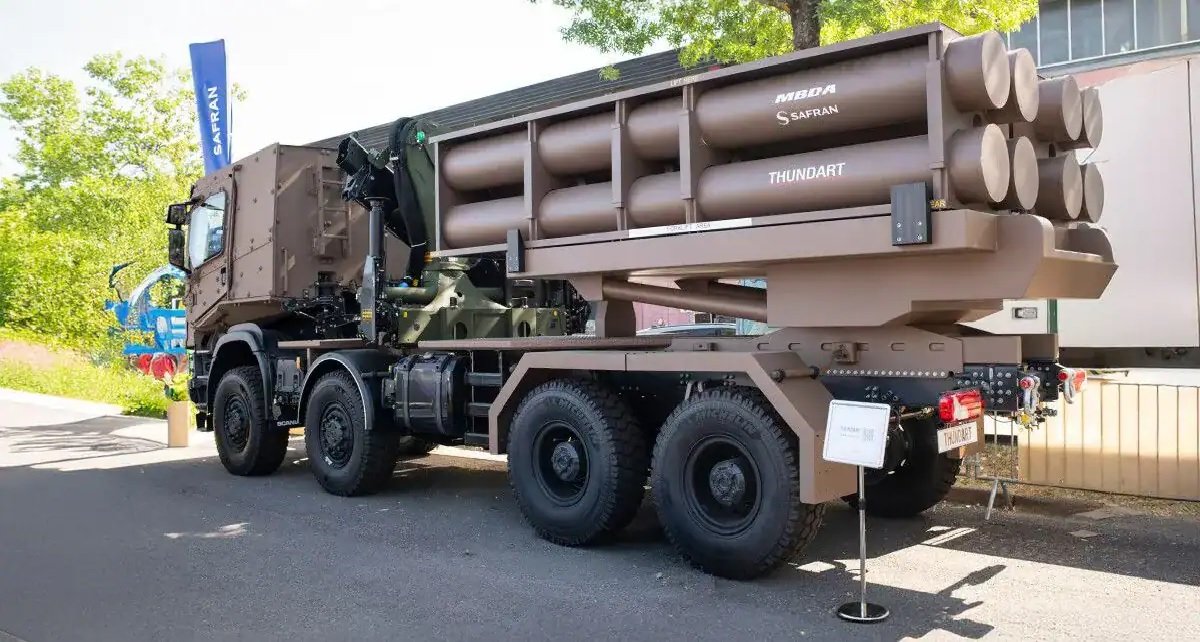
Available data indicates that nearly two-thirds of weapons imported by EU member states are produced in the United States, reflecting Europe’s reliance on U.S. platforms, munitions, and advanced defense technologies.
U.S. officials have maintained that increased European defense expenditure should remain open to competitive transatlantic sourcing, while European policymakers argue that continued dependence on external suppliers limits industrial resilience and supply security.
EU Drive for Industrial Consolidation
The European Commission’s planned update to the 2009 directive forms part of a broader policy effort to strengthen the European Defense Technological and Industrial Base.
In response to evolving security conditions and supply chain vulnerabilities, EU institutions have advanced initiatives designed to encourage joint procurement, coordinated capability development, and greater use of European-made components.
Policy options under discussion include minimum European content thresholds for certain jointly funded programs, expanded common procurement mechanisms, and financial incentives for member states that source equipment from within the EU.
European policymakers state that such measures are intended to consolidate a fragmented defense industry, increase production capacity, secure supply chains, and reduce external dependence while maintaining interoperability with allied systems.
——— End of Article ———