The United States Department of Defense has fast-tracked a $328.5 million foreign military sales contract with Lockheed Martin, approving the delivery of 55 Legion Infrared Search and Track (IRST) Enhanced Sensor pods to Taiwan’s F-16 fighter fleet. The deal has been classified by the Pentagon as an “urgent operational requirement,” underscoring growing concerns over the changing air combat balance in the Taiwan Strait.
According to official contract disclosures, work will be carried out at Lockheed Martin’s Orlando, Florida facility, with deliveries and integration extending through June 30, 2031. An initial $157.3 million has already been obligated, signaling immediate execution. The approval follows closely after December 2025’s $11.1 billion U.S. arms package for Taiwan, the largest such package in recent years.
What Taiwan Is Receiving: Legion Pod And IRST21 Stealth-Tracking Technology
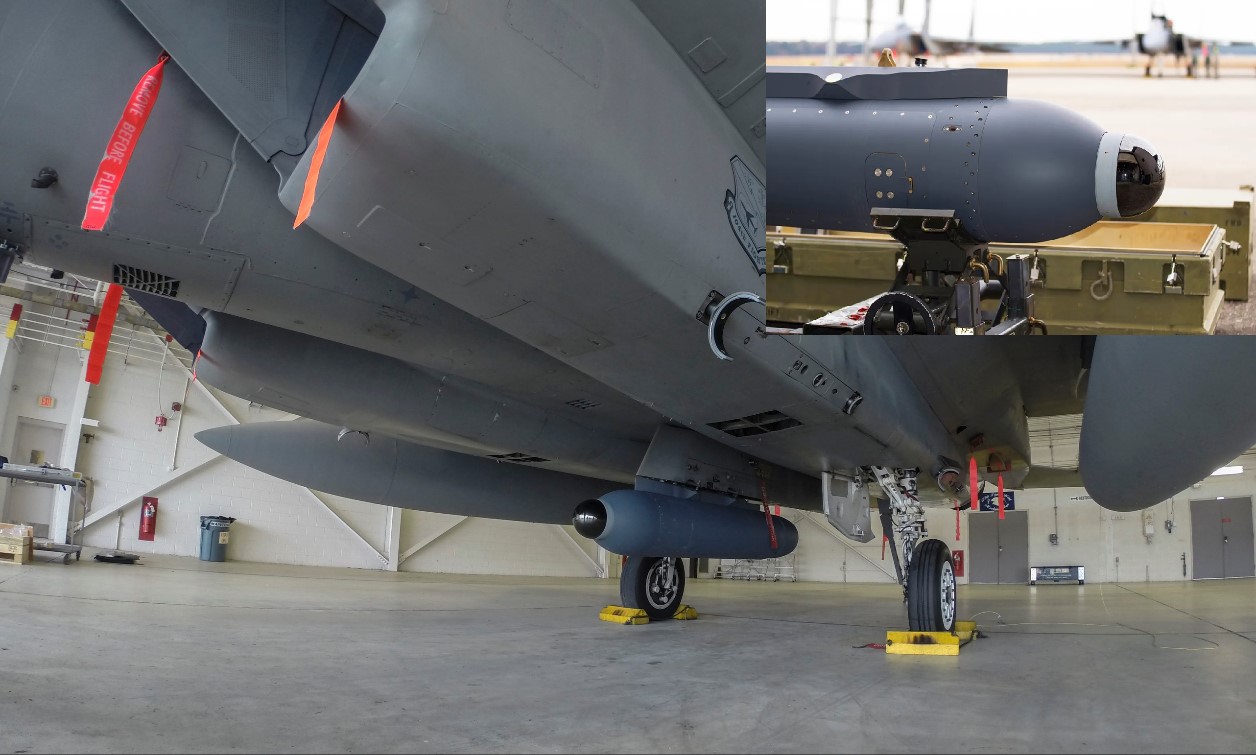
At the core of the agreement is Lockheed Martin’s Legion Pod, an externally mounted sensor system built around the IRST21 infrared sensor. Unlike traditional radar, IRST systems are passive, meaning they do not emit signals that can be detected, jammed, or targeted by enemy forces. Instead, they track aircraft by detecting infrared heat signatures, engine exhaust plumes, and subtle thermal contrasts in the atmosphere.
This capability is particularly relevant against low-observable stealth aircraft, whose designs are optimized to evade radar detection but cannot fully conceal heat emissions. The IRST21 is marketed as providing long-range, weapon-quality tracking, enabling pilots to detect, follow, and engage targets even in heavy electronic warfare environments.
The Legion Pod is already operational on U.S. Air Force F-15C fighters, where it has reached Initial Operational Capability, and has completed flight testing on the F-16 platform, making it compatible with Taiwan’s upgraded F-16V fleet.
How U.S. Fighters Detect Stealth Aircraft Today
The sale to Taiwan mirrors a broader shift in U.S. air combat doctrine, where infrared sensing and sensor fusion complement radar to counter stealth threats.
On U.S. Navy F/A-18E/F Super Hornets, the IRST21 Block II system is deployed in a centerline pod configuration, allowing passive long-range detection of airborne threats. Meanwhile, fifth-generation aircraft rely on embedded infrared networks rather than pods.
The F-35 Lightning II, for example, employs the Electro-Optical Targeting System (EOTS) for long-range air-to-air and air-to-ground detection, while its Distributed Aperture System (DAS) uses six infrared sensors to provide 360-degree situational awareness, missile warning, and aircraft tracking. These systems demonstrate how infrared sensing has become central to counter-stealth operations, particularly when integrated through secure data links and cooperative tracking between multiple aircraft.
Why This Matters For Taiwan Against China
For Taiwan, the acquisition directly addresses a growing challenge posed by the People’s Liberation Army Air Force (PLAAF), which has increasingly deployed advanced aircraft such as the J-20 stealth fighter around the island.
The addition of IRST-equipped F-16s significantly enhances Taiwan’s ability to detect and track stealth aircraft without revealing its own position. This improves survivability during high-intensity operations, especially in scenarios involving electronic jamming, cyber warfare, or pre-emptive missile strikes on ground-based radar systems.
Operationally, IRST gives Taiwan greater flexibility. Fighters can conduct silent patrols, cue weapons using passive tracks, and share target data across networks linking airborne and ground-based sensors. Even if stealth aircraft remain difficult to lock onto at long range, forcing them to operate under the assumption of detection complicates Chinese mission planning, affects flight profiles, and reduces the confidence of surprise.
While IRST systems are affected by weather, cloud cover, and atmospheric conditions, defense analysts widely view them as a critical force multiplier for fourth-generation fighters facing modern stealth threats.
Strategic Timing After December’s $11.1 Billion Arms Package
The timing of the fast-tracked contract is politically significant. The December 2025 $11.1 billion U.S. arms package triggered strong condemnation from Beijing, followed by large-scale Chinese military exercises simulating blockade and strike operations around Taiwan.
By accelerating delivery of stealth-detection sensors, Washington is signaling a focus on immediate battlefield relevance, prioritizing systems that directly impact early-phase air superiority and survivability rather than long-term force expansion alone.
Looking Ahead
With deliveries scheduled through 2031, the Legion Pod program represents a multi-year enhancement of Taiwan’s air combat capabilities rather than a one-time upgrade. Combined with ongoing F-16V modernization, expanded missile inventories, and deeper U.S.–Taiwan defense cooperation, the IRST deal adds another layer to Taiwan’s evolving anti-access and air denial strategy.
As competition over air dominance intensifies in the Indo-Pacific, the ability to see without being seen is becoming just as decisive as speed or firepower—and Taiwan is now moving rapidly to close that gap.
——— End of Article ———