WASHINGTON, : The U.S. Department of Defense has awarded Oshkosh Defense a $16.9 million contract modification for the delivery of additional Remotely Operated Ground Unit for Expeditionary Fires (ROGUE-Fires) carriers, expanding the U.S. Marine Corps’ Navy Marine Expeditionary Ship Interdiction System (NMESIS) inventory. The award supports the Marine Corps’ transition toward distributed maritime strike operations under its Expeditionary Advanced Base Operations (EABO) framework.
The modification, issued as a hybrid firm-fixed-price and cost-plus-fixed-fee delivery order, covers procurement of hardware as well as continued systems integration activities. The firm-fixed-price portion funds vehicle production, while the cost-plus-fixed-fee component supports engineering updates, software development, and integration of command-and-control interfaces into broader naval targeting networks.
Integration Within Joint Kill Chain Architecture
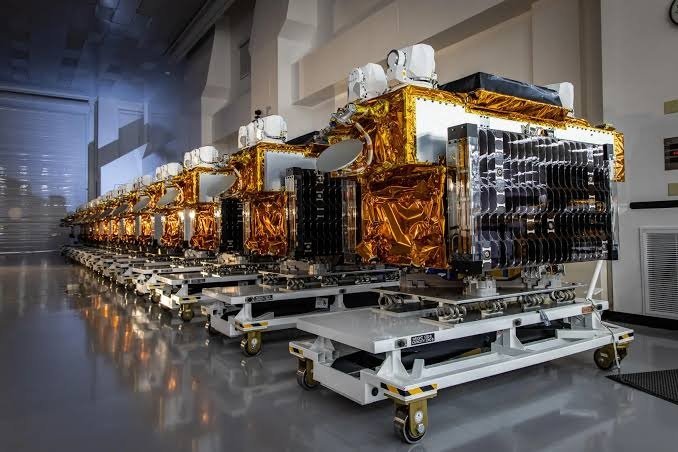
The NMESIS capability is designed to function as part of a larger joint kill chain architecture linking Marine Corps and Navy sensors and shooters. Through integration with space-based and airborne intelligence, surveillance, and reconnaissance (ISR) assets, NMESIS launchers can receive targeting data without requiring organic radar emissions at forward positions. This networked approach enables remote cueing of missile launches while limiting the exposure of deployed Marine personnel.
The hybrid contracting structure allows continued refinement of system interfaces, digital communications security, and interoperability with joint force targeting systems. The integration effort ensures compatibility with naval command-and-control frameworks and evolving data-sharing architectures across the services.
Platform Configuration: ROGUE-Fires Carrier
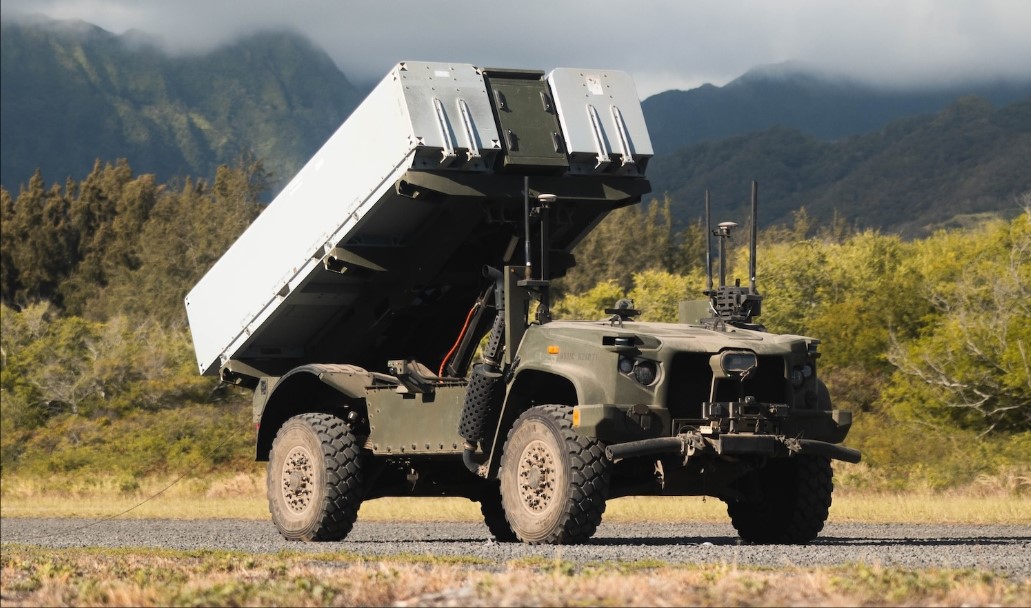
The ROGUE-Fires carrier is built on the chassis of the U.S. Marine Corps Joint Light Tactical Vehicle (JLTV), adapted into an unmanned configuration. The crew compartment is removed entirely to accommodate missile launcher components and autonomous control systems.
The platform retains the JLTV’s high-mobility independent suspension, off-road performance characteristics, and payload capacity. It employs drive-by-wire controls, secure communications links, and autonomous navigation systems. Operational modes include remote teleoperation and leader-follower functionality, enabling a single control element to manage multiple vehicles from a standoff location.
By leveraging the mature JLTV architecture, the Marine Corps reduces developmental risk and sustains the tactical wheeled vehicle industrial base. The approach also accelerates fielding timelines by adapting an existing production platform rather than introducing a new vehicle design.
Missile System: Naval Strike Missile
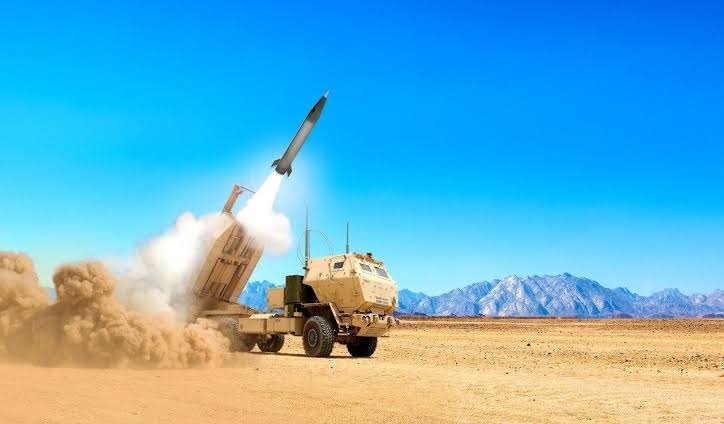
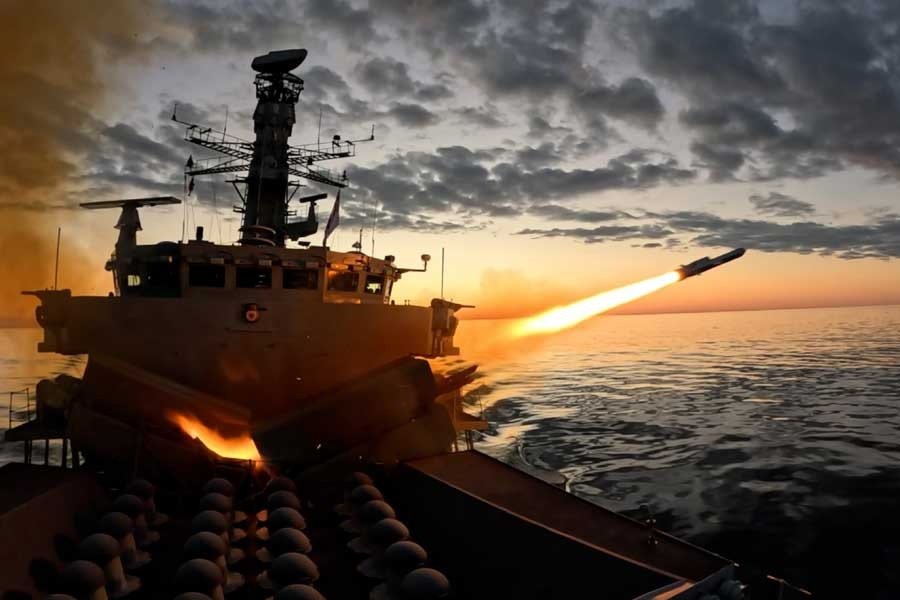
Each NMESIS launcher carries two ready-to-fire Naval Strike Missiles (NSM). The missile is produced by Kongsberg Defence & Aerospace in partnership with Raytheon.
The NSM is a sea-skimming cruise missile capable of engaging maritime targets at ranges exceeding 100 nautical miles (approximately 185 kilometers). It features an imaging infrared (IIR) seeker for terminal guidance and target discrimination. The missile operates passively during its approach phase, avoiding radio-frequency emissions that could trigger conventional electronic warning systems. Its low-altitude flight profile is designed to reduce radar detection and improve survivability in contested environments.
Force Structure and Procurement Objectives
Current Marine Corps procurement plans call for fielding a total of 261 NMESIS launchers by 2030. Once fully operational, these systems will be organized into 14 medium-range missile batteries.
Three batteries are designated for assignment to Marine Littoral Regiments (MLRs) operating in the Pacific theater. The remaining 11 batteries will be based in the continental United States and aligned with rotational Marine Expeditionary Unit (MEU) deployments, enabling flexible force projection and global response options.
The additional ROGUE-Fires carriers funded under the February 20 contract modification contribute to this broader force design objective, incrementally expanding the service’s distributed anti-ship strike inventory.
Operational Role in Distributed Maritime Operations
NMESIS supports the Marine Corps’ EABO concept by enabling dispersed, shore-based anti-ship capabilities. The unmanned nature of the ROGUE-Fires carrier allows rapid displacement after missile launch, reducing vulnerability to counter-battery fire and persistent ISR tracking.
Deployed across austere coastal terrain, islands, and expeditionary forward bases, the system enables Marine units to establish temporary firing positions without maintaining a continuous physical presence at the launcher site. This approach increases survivability while maintaining strike capacity.
Strategic Context
The expansion of NMESIS aligns with U.S. sea denial objectives, particularly in the Indo-Pacific region. Land-based, mobile anti-ship systems provide a lower-cost complement to naval surface combatants while complicating adversary maritime planning. By dispersing missile launchers across multiple locations, the Marine Corps imposes additional surveillance and targeting burdens on potential adversaries.
From an acquisition perspective, the February 2026 modification indicates continued transition of NMESIS from experimentation to sustained procurement. The contract supports both production continuity at Oshkosh Defense and incremental technical maturation of the system’s networked targeting capabilities, reinforcing its role within the Marine Corps’ long-term modernization strategy.
——— End of Article ———