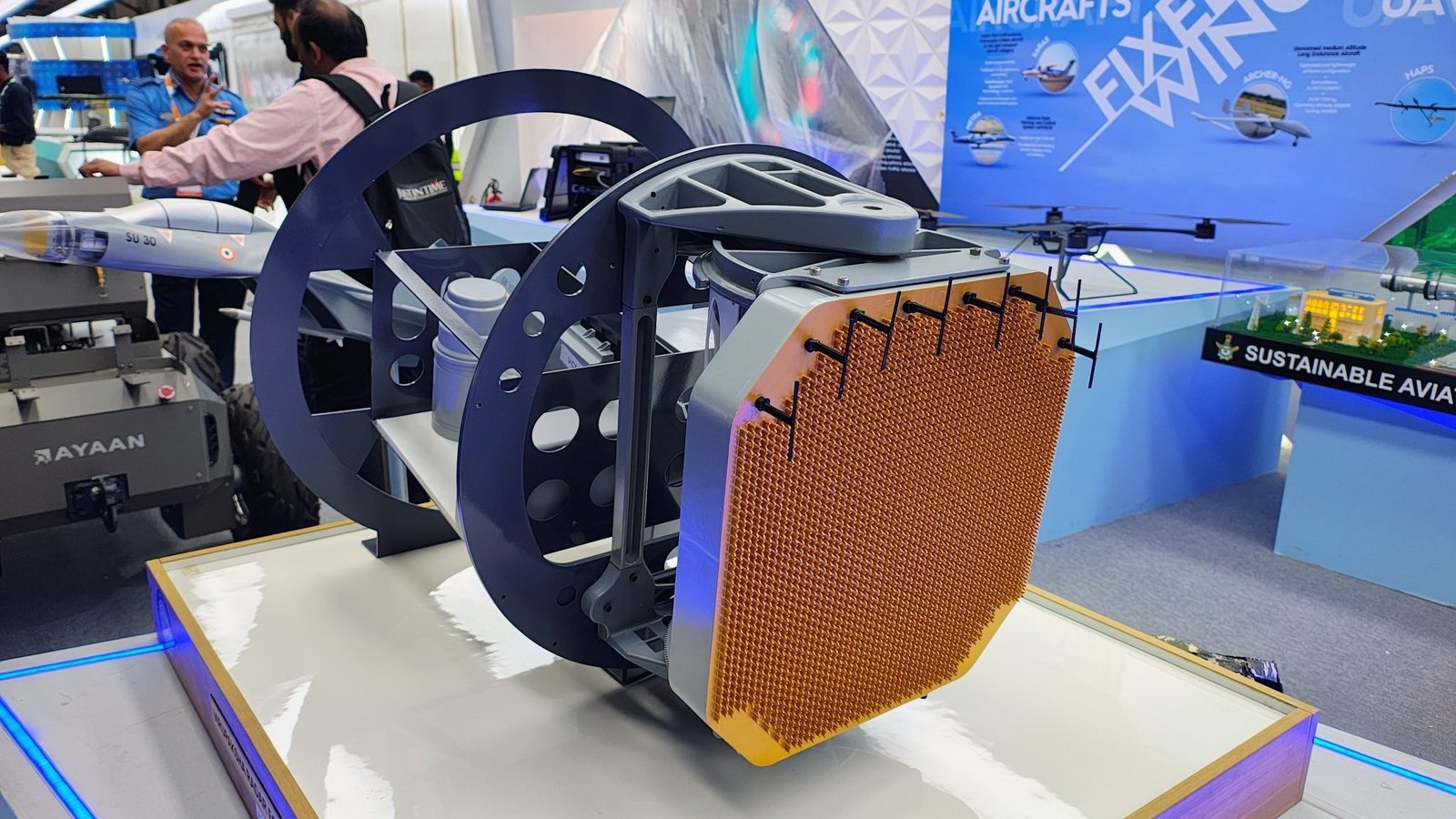
HYDERABAD — Astra Microwave Products Limited has delivered the Active Antenna Array Unit (AAAU) for the first prototype of India's indigenous Virupaksha AESA radar to the Defence Research and Development Organisation (DRDO). The delivery marks an important step in the development of the radar for the Indian Air Force's Su-30MKI Super Sukhoi upgrade programme.
Developed by DRDO's Electronics and Radar Development Establishment (LRDE), Virupaksha is a Gallium Nitride (GaN)-based Active Electronically Scanned Array (AESA) radar designed to replace the Su-30MKI's existing Russian-origin N011M Bars radar.
The radar features approximately 2,400 transmit/receive (T/R) modules within a 950 mm antenna. GaN technology provides higher power output and improved thermal efficiency, supporting better radar performance and resistance to electronic interference. The system is designed for multiple-target tracking and operations in challenging electronic warfare environments.
Firmware Integration and Testing
Following the hardware delivery, firmware and software integration is under way. Astra Microwave's management has indicated that DRDO could be in a position to commission the radar next year, subject to progress in integration and testing. Further qualification and flight trials will be required before operational deployment.
Parallel Progress on UTTAM AESA Radar
Astra Microwave is also supporting the indigenous UTTAM AESA radar programme for the HAL Tejas Mk1A. In July 2026, the company received a ₹2,205.23 crore contract from Hindustan Aeronautics Limited (HAL) for 122 Active Antenna Array Units and 121 interface frames. The contract includes GST and has an execution period of five years.
The Virupaksha delivery and UTTAM production programme highlight Astra Microwave's growing role in India's indigenous airborne radar development. Further progress on Virupaksha will depend on successful integration, qualification and flight testing.
——— End of Article ———