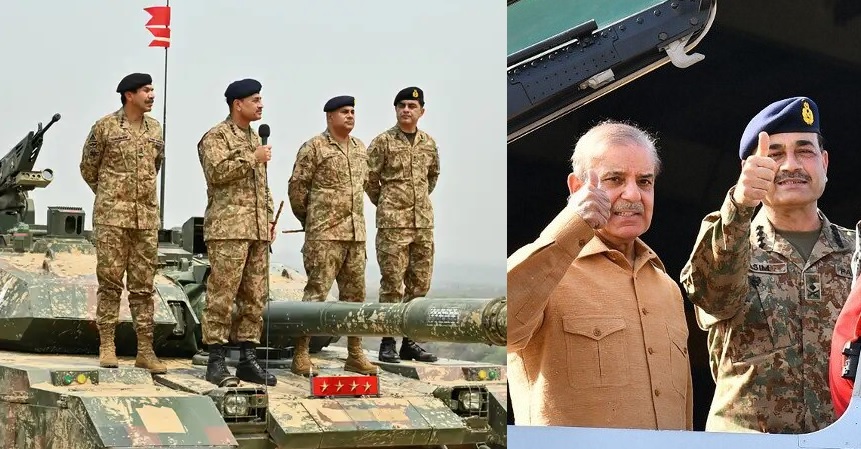
Pakistan’s Economic Coordination Committee (ECC) has approved a supplementary defence budget of PKR 50 billion—a major injection of funds aimed at boosting border security, strengthening naval infrastructure, and safeguarding critical assets linked to the China-Pakistan Economic Corridor (CPEC). The approval came during a meeting chaired by Finance Minister Muhammad Aurangzeb, marking yet another year where defence spending has risen outside the formal national budget.
A Large Off-Budget Boost for the Military
Of the newly approved funds, PKR 39 billion has been assigned to the Pakistan Army and PKR 11 billion to the Pakistan Navy. The Navy’s portion will be used to upgrade two major naval bases, enhancing maritime logistics, surveillance systems, and coastal defence capabilities in the Arabian Sea—particularly around Gwadar Port, a strategic CPEC hub.
This comes in addition to Pakistan’s existing regular defence budget of PKR 2,550 billion for FY 2025-26, indicating a growing trend of defence expenditures being made outside the official allocations. Last year, the ECC similarly approved PKR 45 billion in off-budget defence spending.
CPEC Security Takes Centre Stage
Security of the CPEC route—heavily targeted by Baloch insurgents and other militant networks—remains a priority. As part of the supplementary spending:
-
PKR 19 billion has been allocated to the Special Security Division South, a 19% increase from last year.
-
PKR 8 billion goes to the Special Security Division North.
-
PKR 2 billion is directed toward border fencing, surveillance, and anti-infiltration measures along the volatile Afghanistan and Iran borders.
These forces, built specifically for CPEC protection, have steadily expanded as attacks on Chinese personnel and infrastructure continue.
Internal Security Reinforcements
The ECC has also approved:
-
PKR 9.9 billion as internal security duty allowance for Army personnel
-
PKR 150 million for the Pakistan Air Force
-
PKR 841.6 million for the Interior Ministry to reinforce civil armed forces battling insurgency and smuggling
Officials maintain that such spending is necessary due to persistent militant threats and cross-border instability.
Critics Highlight Economic Crisis and Civilian Suffering
The announcement has sparked renewed criticism inside Pakistan, where inflation, unemployment, and poverty remain at alarming levels. Pakistan is still negotiating and requesting fresh loans from the IMF and friendly nations, highlighting the financial strain on the country.
Despite this, defence spending continues to rise:
-
Public healthcare and education remain severely underfunded
-
Millions struggle with food insecurity
-
Salaries and pensions for civilians lag far behind inflation
Economic analysts and political observers argue that Pakistan’s military establishment—not its elected government—continues to dominate national decision-making, prioritizing defence expansion over social welfare. For decades, no civilian government has been able to function without the approval of the Pakistan Army, which maintains strong influence over political, economic, and foreign policies.
Moreover, Pakistan’s top military generals are widely believed to be among the wealthiest army elites in the world, owning vast real estate portfolios, business stakes, and defence-linked enterprises. Critics claim that this entrenched wealth and power structure creates little incentive for the military to redirect funds toward citizen welfare.
Civil society activists argue that while ordinary Pakistanis are struggling with high prices, unemployment, and energy shortages, the state continues to “always have money for the military—but never for the people.”
Heightened Tensions With India
This surge in military spending comes at a moment of sharper rhetoric from New Delhi. India’s Chief of Army Staff, General Upendra Dwivedi, recently warned that India is fully prepared for multi-domain warfare and emphasized that “dialogue and terrorism cannot coexist.” He stressed that India will deal firmly with both terror groups and the states that support them—widely interpreted as a reference to Pakistan.
A Region Preparing for Multiple Contingencies
Pakistan’s renewed defence investment underscores its strategic priorities: securing CPEC, reinforcing borders with Iran and Afghanistan, and upgrading naval and surveillance infrastructure. Meanwhile, India’s assertive military modernization continues, contributing to an environment where both nations are rapidly expanding capabilities despite economic pressures on their populations.
The contrast remains stark: even as Pakistan seeks loans to avoid financial collapse, billions continue to flow toward the military, reaffirming once again which institution truly controls the country’s direction.
——— End of Article ———