QUETTA : A large-scale, coordinated insurgent operation across Pakistan’s southwestern province of Balochistan has sharply escalated the security situation, with militants targeting police stations, prisons, financial institutions and transport routes in multiple districts, according to official statements, local administrators and security sources.
The offensive, launched in the early hours of Saturday, January 31, has been claimed by the Baloch Liberation Army (BLA), which said the attacks were carried out under an operation it named “Herof” (Storm). Authorities say the assaults unfolded almost simultaneously in at least a dozen locations, creating significant operational pressure on provincial security forces.
Simultaneous Attacks Across the Province
Security officials confirmed that coordinated attacks were reported from Quetta, Gwadar, Mastung, Nushki, Kalat, and Turbat, among other areas. Targets included police posts, Frontier Corps installations, government offices, highways and urban checkpoints.
In Gwadar, home to strategic port facilities linked to the China-Pakistan Economic Corridor, officials reported multiple explosions and exchanges of fire between militants and security personnel. Mobile and internet services were partially suspended in several districts, including Quetta and Gwadar, as authorities sought to limit the spread of information and coordinate responses.
Prison Break And Administrative Disruption
One of the most serious incidents occurred in Mastung, where armed attackers stormed the district jail. Provincial officials said more than 30 inmates were freed during the assault after guards were overwhelmed. Several nearby government buildings and police facilities were also damaged or temporarily abandoned during the fighting. By midday, security forces had re-established positions around key installations, though search operations were continuing.
A senior local administrator, speaking on condition of anonymity, said reinforcements were delayed due to the scale and simultaneity of the attacks, adding that roads linking several districts had been temporarily blocked by the militants.
Situation in Quetta
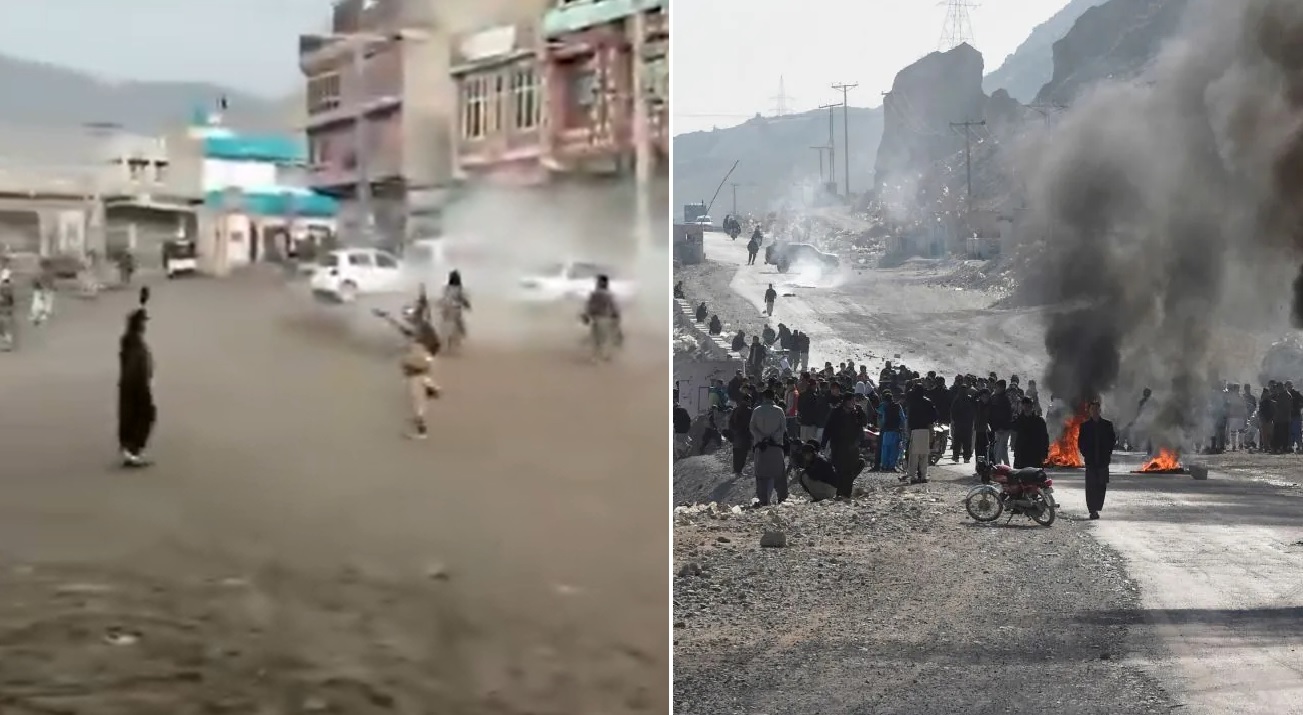
In Quetta, the provincial capital, authorities described a volatile but fluid security environment. Officials acknowledged that some police stations and Frontier Corps posts were briefly overrun in outlying neighborhoods. Videos circulating on social media showed armed men moving through certain areas, though officials said the footage did not represent the situation across the entire city.
Local residents reported incidents of looting at abandoned government premises during the confusion. Provincial officials said additional police and paramilitary units were deployed later in the day to restore order and secure administrative buildings.
Attacks on Financial Institutions
Security and banking sources confirmed that several bank branches were targeted during the unrest. Among them was Faisal Bank, along with at least four other financial institutions in Quetta and nearby towns. Initial assessments indicated that cash was taken from vaults and ATMs, though authorities said the total amount involved was still being verified.
In a statement released through its media channels, the BLA claimed responsibility for the seizures, describing them as funding for its operations. Government officials rejected the group’s justification and said investigations were under way with the State Bank of Pakistan and commercial lenders.
Casualties And Competing Claims
Official figures released by provincial authorities indicate that between 10 and 15 members of the security forces were killed in the attacks, including a senior police officer. Several others were injured. Officials also confirmed that a deputy commissioner and a senior police officer were briefly taken hostage during the initial phase of the operation; their status was not fully clarified by late evening.
The military’s media wing said clearance operations were launched in multiple districts, claiming that at least 37 militants were killed during subsequent engagements. The BLA, in its own statements, disputed those figures and claimed to have inflicted heavy losses on security forces, including the destruction of military vehicles. Independent verification of either side’s claims was not possible.
Federal And Military Response
In Islamabad, Interior Minister Mohsin Naqvi confirmed the deaths of security personnel and said federal authorities were in constant contact with the Balochistan government and military commanders. He stated that operations were ongoing to restore full control and ensure the safety of civilians.
Sources within the provincial administration said the Pakistan Army’s 12 Corps, responsible for operations in Balochistan, was coordinating reinforcements and aerial surveillance, though the initial response was slowed by the widespread nature of the attacks and the targeting of transport routes.
Broader Security Implications
Analysts say the scale and coordination of the operation mark a significant escalation compared with previous insurgent actions in the province, which have typically involved isolated attacks on convoys or infrastructure. The temporary overrunning of prisons, police stations and banks, they note, highlights vulnerabilities in urban security and raises questions about intelligence gaps.
The provincial government said a comprehensive security review was under way and that additional measures would be announced after operations conclude. For now, authorities maintain that control is being reasserted district by district, even as tensions remain high across large parts of Balochistan.
——— End of Article ———