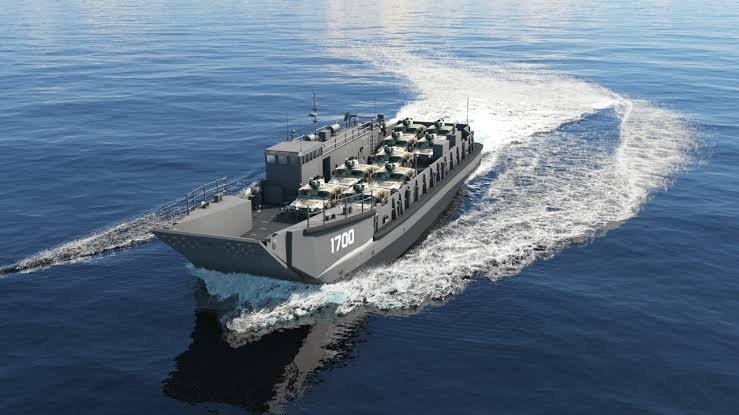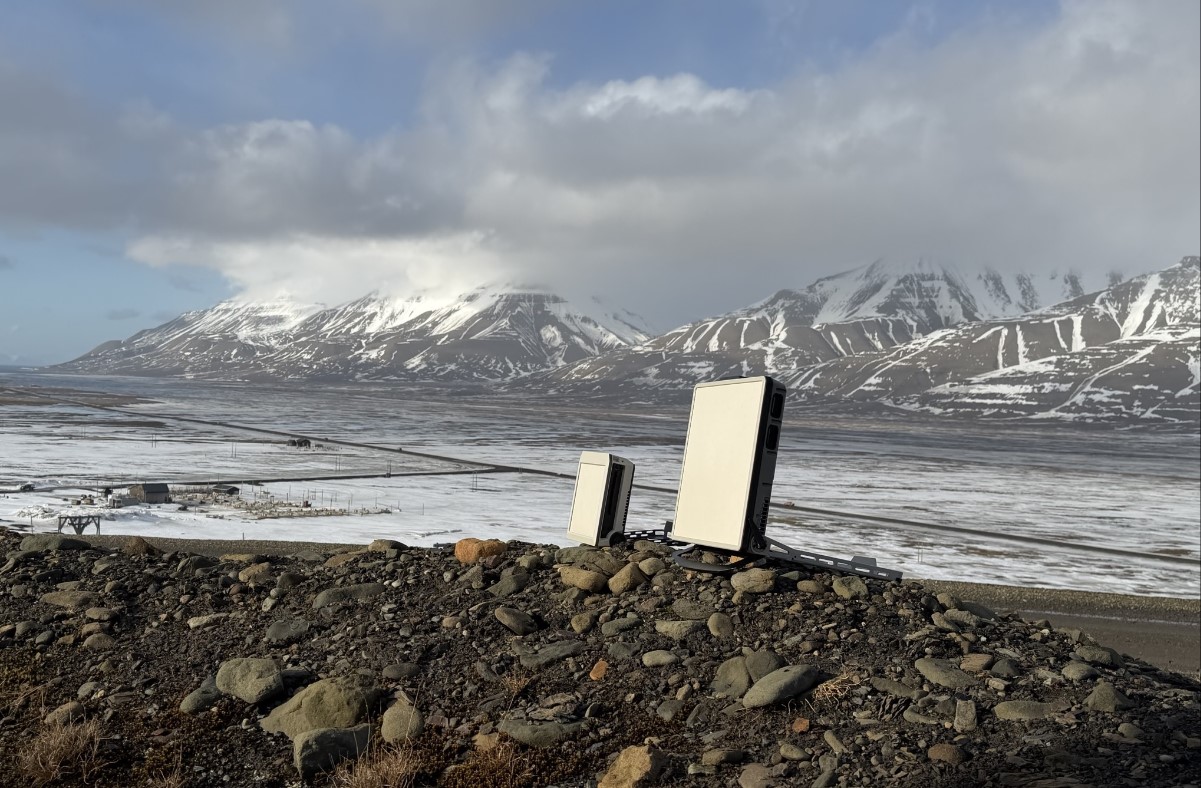
STOCKHOLM — Swedish satellite communications company Ovzon has completed three High North Expeditions during 2025 and 2026, validating the performance of its Ovzon 3 satellite and mobile satellite terminals nearly 1,300 kilometers (800 miles) inside the Arctic Circle. The tests demonstrated reliable satellite communications in extreme northern environments on both land and at sea.
The Arctic has become an increasingly important region for the Nordic countries, Europe, the United States, Canada, and NATO due to its growing strategic and operational significance. To evaluate the capabilities of its satellite network in these demanding conditions, Ovzon carried out a series of progressively more challenging expeditions beyond the coverage range typically associated with many geostationary satellite systems.
During the expeditions, the company tested the Ovzon 3 satellite together with its Ovzon T6 and Ovzon T7 mobile satellite terminals across multiple operational scenarios. According to Ovzon, the trials confirmed consistent functionality and high-speed connectivity at extreme northern latitudes, where satellite communications often become more difficult because of satellite viewing angles and harsh environmental conditions.
The testing showed that the satellite system maintained reliable communications throughout the expeditions, supporting operations in remote Arctic locations where conventional satellite services can face limitations.
Tom Hopkins, Chief Operating Officer at Ovzon, said each expedition extended the company's operational reach farther into the Arctic while providing additional confidence in the satellite's capabilities.
"Each expedition has taken us further north and given us greater confidence in what Ovzon 3 can do in the Arctic. The results speak for themselves – reliable, high-speed connectivity at latitudes where most satellite systems simply cannot deliver. This is exactly what NATO forces operating in the High North need. We intend to keep pushing the boundaries," Hopkins said.
Ovzon Chief Executive Officer Per Norén said the company views the Arctic as an important long-term operational focus.
"The Arctic matters – strategically, operationally, and for Ovzon as a company. What we have demonstrated across these three expeditions is not just that our technology works here, but that we are committed to the High North for the long term. We see significant demand from NATO nations for resilient communications in this region, and we are ready to deliver," Norén said.
Ovzon's satellite communications offering is provided through its SATCOM-as-a-Service platform, which combines high-throughput satellite capacity, mobile satellite terminals, gateway services, and operational support. The services are designed for customers that require secure, reliable, and mobile communications, including defense, national security, and public safety organizations.
The company's Ovzon T6 terminal is a rugged, laptop-sized broadband system, while the Ovzon T7 is an ultra-small, lightweight terminal designed for low-power operation. According to the company, both terminals performed successfully during the Arctic expeditions under demanding environmental conditions.
The latest testing builds on earlier demonstrations, including a December 2024 trial that showed low-latency control of unmanned platforms using the Ovzon 3 satellite, as well as a 2025 overland expedition conducted more than 480 kilometers (300 miles) inside the Arctic Circle.
Commercial operations for the Ovzon 3 satellite began in July 2024. Ovzon is headquartered in Sweden, operates offices in both Sweden and the United States, and is listed on Nasdaq Stockholm.
The completion of the three High North Expeditions provides additional operational validation of the Ovzon 3 satellite system and its mobile terminals for communications in remote Arctic environments, where NATO members continue to increase their focus on resilient connectivity and operations.
——— End of Article ———