OSLO, Norway, June 29, 2026 — Norway has quietly supplied Ukraine with more than 100,000 N7 anti-tank drone munitions manufactured by Norwegian defense company Nammo, with the weapons having been in operational use by Ukrainian forces since at least early 2025. The large-scale transfer remained undisclosed for more than a year before being officially confirmed during the Eurosatory 2026 defense exhibition in Paris.
Nammo representatives confirmed that a "six-digit quantity" of N7 anti-armor drone warheads had been delivered to Ukraine and integrated into its expanding fleet of unmanned aerial systems. The disclosure was first reported by Janes and later covered by Defence Express.
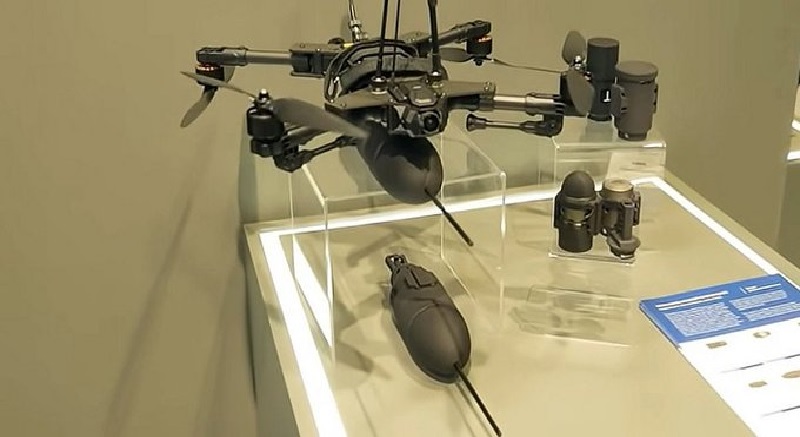
The N7 is a lightweight 1.5-kilogram shaped-charge munition specifically developed for drone-based operations. It can be deployed either as a bomb dropped from multirotor drones or integrated as the warhead of First-Person View (FPV) attack drones, providing flexibility across different unmanned combat platforms.
Despite its compact size, the N7 is designed to engage heavily armored targets. According to Nammo, the munition uses a copper conical liner shaped-charge design capable of penetrating up to 450 millimeters of rolled homogeneous armor, allowing it to destroy armored vehicles, military equipment, and fortified defensive positions.
One of the munition's notable features is its electronically controlled fuze system, which enables drone operators to remotely place the warhead into a safe mode. If a mission is aborted or no suitable target is identified, the drone can return with the munition still attached without detonation, reducing the risk of accidental explosions and allowing the payload to be reused.
Although the N7 was officially unveiled to the public during SOF Week in the United States in May 2025, deliveries to Ukraine had already begun before its public debut. Ukrainian forces have reportedly employed the munition extensively in combat operations throughout 2025.
During Eurosatory 2026, Nammo presented combat footage demonstrating the N7's battlefield performance. The video showed a Ukrainian drone dropping an N7 munition onto a Russian BM-21 Grad multiple launch rocket system. According to the company, the precision strike ignited one of the launcher's rockets, which subsequently penetrated the vehicle's cab and rendered the system inoperable.
Nammo also displayed the N7 integrated with the Croatian-developed Orca MRM2-10 FPV drone during the exhibition, highlighting the munition's compatibility with a wide range of unmanned aerial platforms. This flexibility allows operators to employ the warhead across various drone types already in service with the Ukrainian military.
The transfer forms part of Norway's broader military assistance program for Ukraine. Oslo has continued to provide advanced defense support, including funding for long-range ammunition, maintenance assistance for Ukraine's F-16 fighter aircraft, and deliveries of NASAMS air defense systems.
Norway has also expanded its investment in unmanned warfare capabilities. The Norwegian government recently allocated 1.2 billion Norwegian kroner (approximately $127 million) to support the development and procurement of maritime surface drones for Ukraine. The initiative includes joint production between Norwegian and Ukrainian defense industries and is intended to strengthen Ukraine's ability to employ cost-effective unmanned systems in maritime operations.
The disclosure of the N7 deliveries highlights the increasing role of specialized drone munitions in modern warfare. Lightweight precision warheads designed specifically for unmanned aerial systems have become an important component of battlefield operations, enabling small drones to engage armored vehicles and other high-value targets with greater effectiveness while maintaining relatively low operating costs.
Neither Norwegian authorities nor Nammo disclosed the exact delivery schedule or the total number of munitions supplied beyond confirming that Ukraine had received a six-figure quantity of the N7 drone warheads.
——— End of Article ———