National Harbor, Maryland : In a sweeping effort to future-proof the most sensitive pillar of America’s nuclear deterrent, Northrop Grumman and the U.S. Air Force are pressing ahead with development of the LGM-35A Sentinel, a next-generation Intercontinental Ballistic Missile (ICBM) system intended to safeguard U.S. strategic stability well into the latter half of the 21st century.
Unveiled amid heightened global nuclear competition, the Sentinel program represents the largest modernization of the U.S. land-based nuclear force since the Cold War. Company and Air Force officials describe it as a once-in-a-generation undertaking that blends cutting-edge missile technology with a vast reconstruction of the nation’s nuclear launch infrastructure.
At the center of the program is a deterrence philosophy Northrop Grumman has increasingly emphasized in public messaging.
“Peace through strength is defined by a fighting force so powerful it deters enemies before they strike,” the company said in a statement. “We’re partnering with the U.S. Air Force to design, test and build Sentinel—the most powerful Intercontinental Ballistic Missile system in the world.”
Replacing a Cold War Mainstay
The Sentinel is designed to replace the LGM-30G Minuteman III, which has formed the backbone of America’s land-based nuclear deterrent since 1970. While the Minuteman has undergone multiple life-extension programs, Air Force officials have long warned that its analog architecture and aging infrastructure are reaching the limits of sustainability.
By contrast, the Sentinel is being built from the ground up with a fully digital backbone and a Modular Open Systems Architecture (MOSA), allowing components to be upgraded over time without redesigning the entire system. Defense officials say this approach is essential to ensuring the missile remains viable against emerging threats through at least 2075.
“This is not a simple missile swap,” a senior Northrop Grumman program official said. “It’s a comprehensive transformation of how the ground-based strategic deterrent is built, operated, secured and sustained.”
Capabilities and Design
The LGM-35A Sentinel is expected to have a range exceeding 6,000 miles, enabling it to reach targets across the globe in roughly 30 minutes. It will carry the W87-1 thermonuclear warhead, a modernized weapon that replaces the older W78 and incorporates enhanced safety, security and command-authorization features.
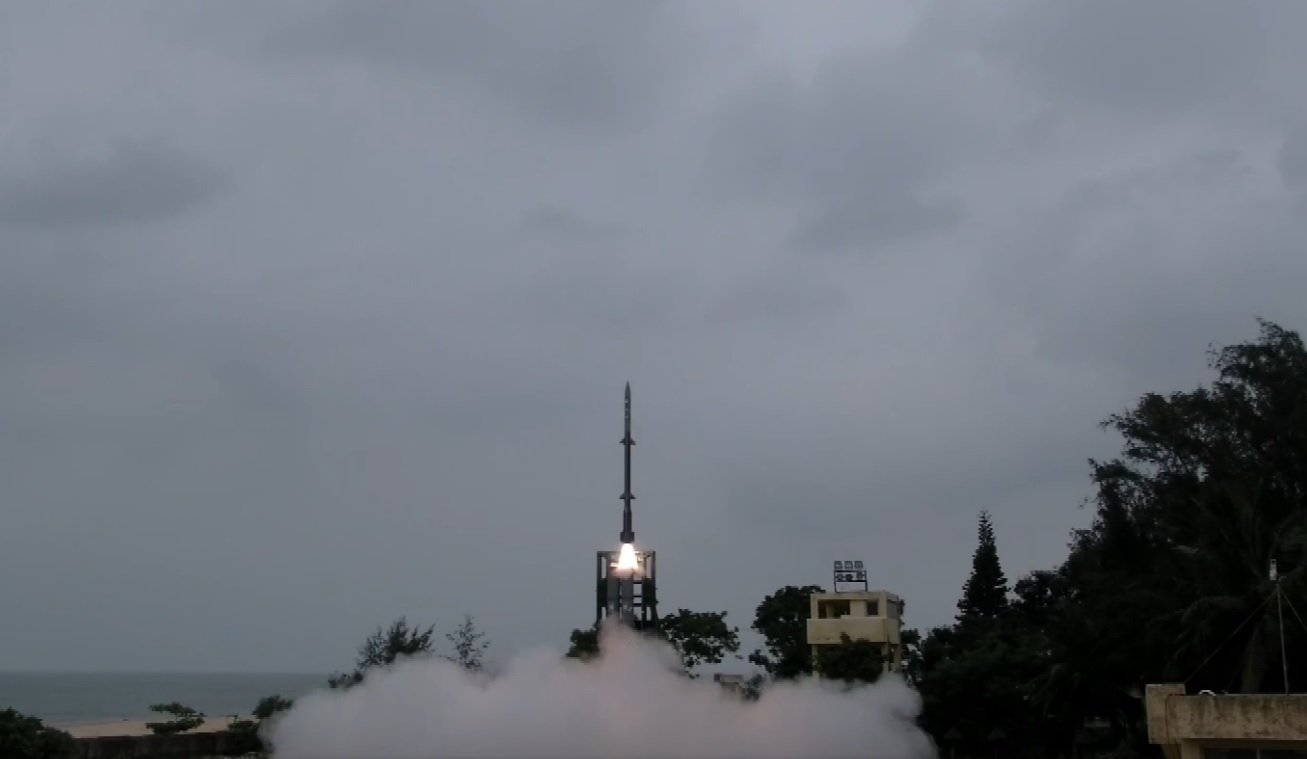
Propulsion is provided by a three-stage solid-fuel rocket motor. Recent static-fire tests of the first and second stages, conducted at test facilities in Utah, have been cited by the Air Force as major technical milestones demonstrating progress toward operational readiness.
Unlike legacy systems, the Sentinel is being designed to integrate seamlessly with modern command-and-control networks, cyber defenses, and space-based warning systems, ensuring continuous presidential control under even the most extreme conditions.
A Nationwide Infrastructure Overhaul
The most daunting aspect of the Sentinel program lies underground.
Beyond the missile itself, the project involves modernizing or rebuilding approximately 450 missile silos and more than 600 launch control facilities spread across Wyoming, Montana, North Dakota, Nebraska and Colorado. Thousands of miles of new fiber-optic cabling are being laid to replace decades-old copper lines, creating hardened, high-speed communications links between national command authorities and launch crews.
Defense officials have described the effort as the most complex construction and infrastructure program in Department of Defense history, rivaling major civilian public-works projects in scale and cost.
That complexity has come at a price. In 2024, the Air Force formally notified Congress that the Sentinel program had breached cost thresholds under the Nunn-McCurdy Act, with projected expenses rising by more than 37 percent. The increase was attributed largely to underestimated costs associated with rebuilding 1960s-era silos and upgrading legacy launch facilities.
Despite the overrun, the Pentagon recertified the program, arguing that no viable alternative exists to replacing the Minuteman III and that abandoning the effort would pose unacceptable risks to national security.
Deterrence in a Changing Nuclear Landscape
The push to deploy Sentinel comes as U.S. defense planners confront a rapidly evolving nuclear environment. Russia continues to modernize its strategic forces, while China is expanding its nuclear arsenal at an unprecedented pace, pushing the world toward what analysts describe as a “three-party” nuclear balance.
Leaders at Air Force Global Strike Command argue that a modern, credible land-based missile force remains essential to preventing miscalculation.
“The purpose of Sentinel is not to make nuclear war more likely,” said Gen. Thomas Bussiere, commander of Air Force Global Strike Command. “Its purpose is the opposite—to ensure that no adversary ever believes a first strike could succeed. That certainty is what preserves peace.”
If current schedules hold, the Sentinel is expected to begin replacing Minuteman III missiles later this decade, gradually assuming full operational status across the U.S. missile fields. Once deployed, it will form the land-based leg of the nuclear triad alongside ballistic missile submarines and strategic bombers, anchoring U.S. deterrence strategy for the next 50 years.
For Northrop Grumman and the U.S. Air Force, the message is clear: in an era of renewed great-power rivalry, the United States is betting that peace will continue to rest on strength—measured not just in firepower, but in credibility, resilience and technological endurance.
——— End of Article ———