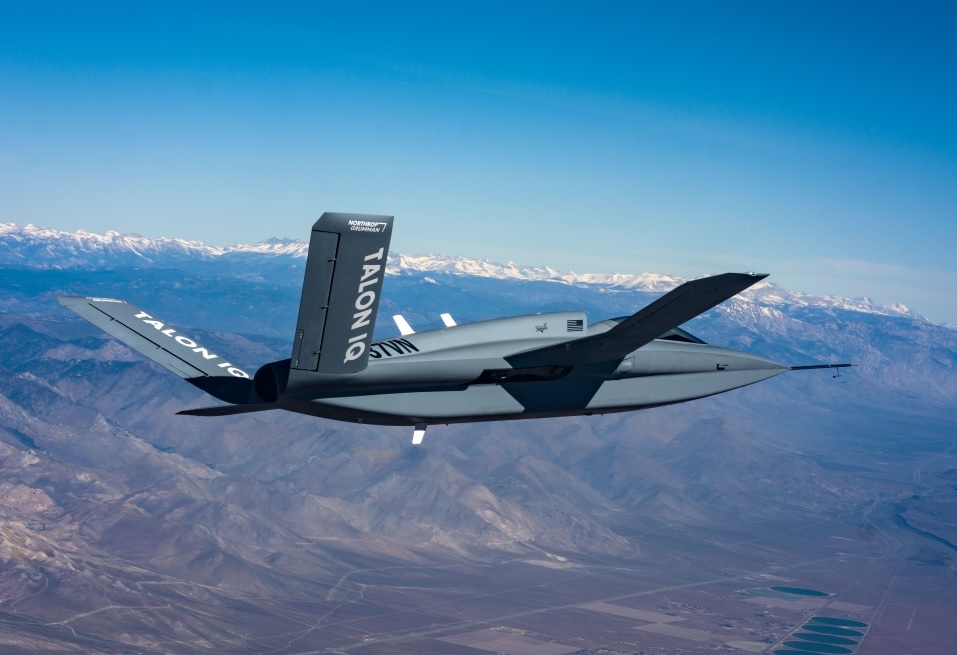
MOJAVE, California — March 20, 2026 : Northrop Grumman has successfully conducted a flight test integrating third-party mission autonomy software from Shield AI onto its Talon IQ unmanned aircraft, marking a key step in the development of open-architecture autonomous combat systems.
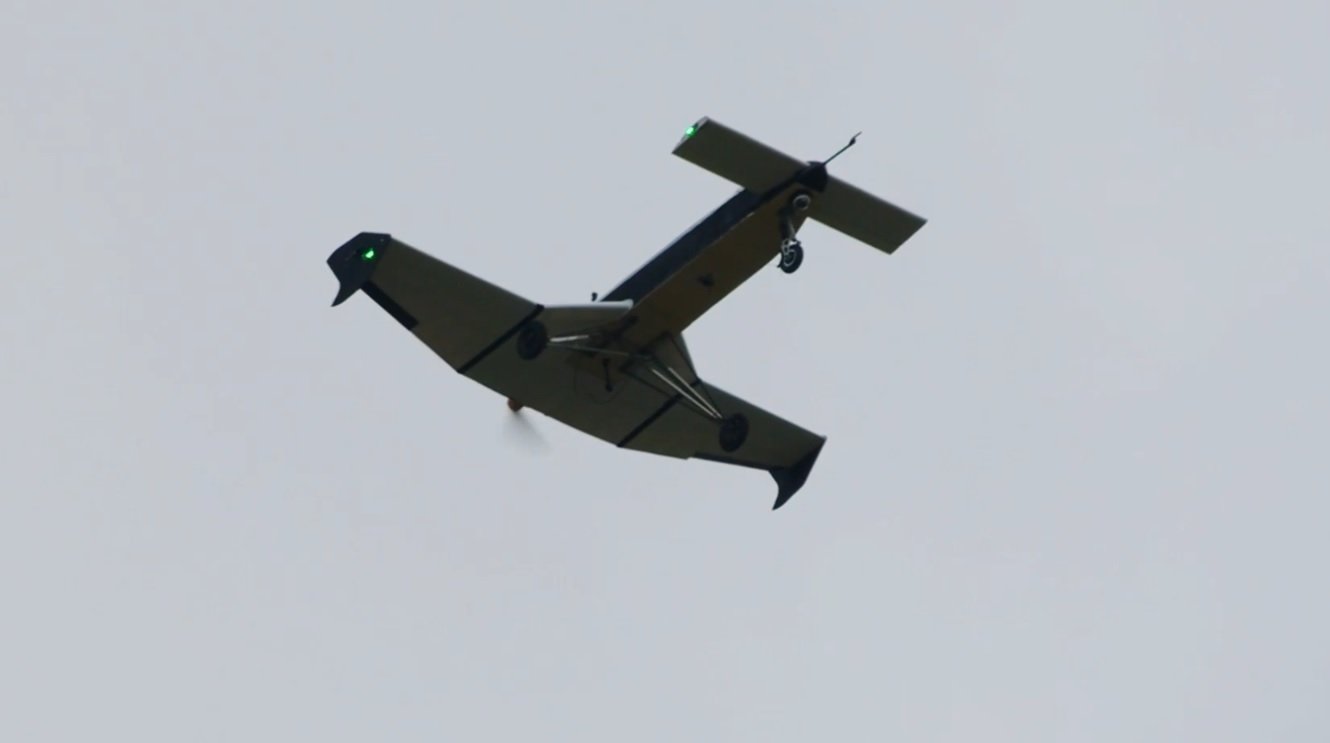
The test flight, carried out on March 19 over Mojave, California, involved the deployment of Shield AI’s Hivemind autonomy software to execute combat air patrol and target engagement maneuvers. The demonstration represents the first instance of a third-party autonomy solution being integrated into Northrop Grumman’s open-architecture ecosystem.
Flight Demonstration and Autonomy Handover
During the sortie, Hivemind controlled mission-level behaviors, directing the aircraft through operational profiles before transferring control mid-flight to Northrop Grumman’s Prism autonomy system. The seamless in-flight transition between two independent autonomy stacks demonstrated real-time interoperability under operational conditions.
This capability aligns with the U.S. Air Force’s Autonomy Government Reference Architecture (A-GRA), which defines standards for modular, interoperable autonomy systems. The architecture is intended to enable rapid integration of software from multiple vendors while avoiding long-term dependency on a single provider.
A key technical outcome of the test was the speed of integration. According to Shield AI, the Hivemind system progressed from hardware-in-the-loop laboratory validation to live flight in a single day. This rapid transition highlights the potential for accelerated deployment cycles and reduced integration timelines under A-GRA-compliant frameworks.
Open Architecture and Software Interoperability
The Talon IQ platform is built around Northrop Grumman’s Prism mission autonomy software, which incorporates more than 500,000 autonomous flight hours of operational data. The system provides an open-access environment designed to allow third-party developers to integrate autonomy solutions onto a common hardware platform.
This modular architecture enables software interchangeability, allowing mission systems to be updated independently of the airframe. The approach is intended to reduce costs, shorten development timelines, and provide flexibility in adopting new capabilities as they become available.
Airframe Design and Performance Characteristics
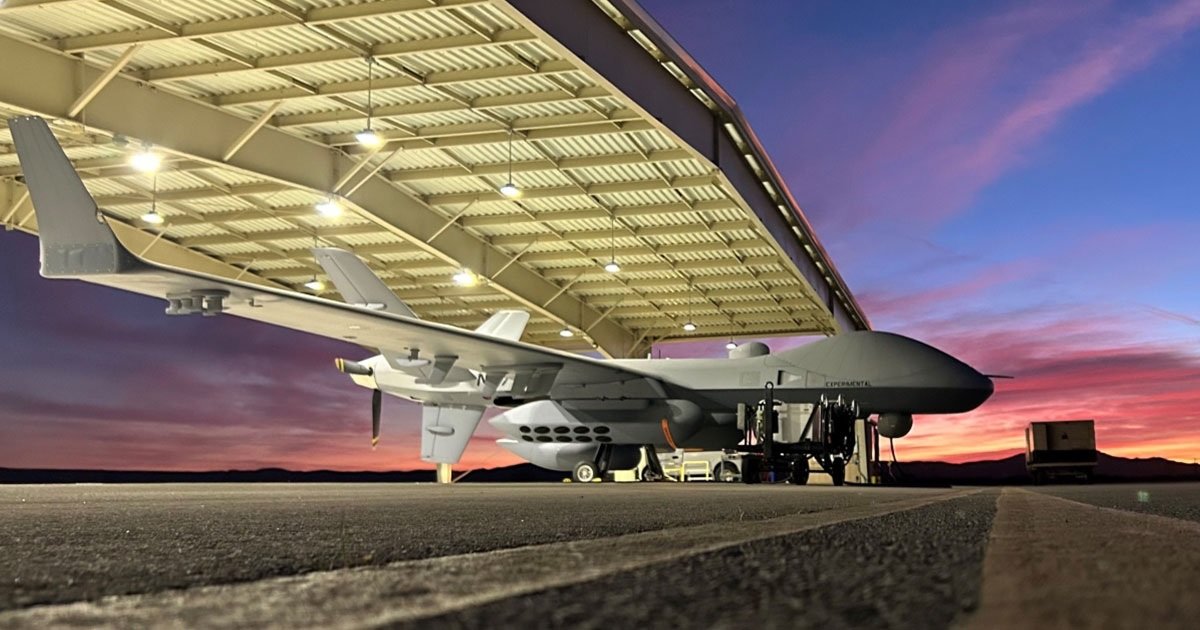
The Talon IQ is based on Scaled Composites’ Model 437 airframe, which is designed as a tactically relevant testbed for low-cost, attritable combat aircraft concepts.
The aircraft measures 41 feet in length with a 41-foot wingspan and has a maximum takeoff weight of 10,000 pounds. It is powered by a single Pratt & Whitney PW535 turbofan engine, generating approximately 3,400 pounds of thrust.
Projected performance characteristics include a range of approximately 3,000 nautical miles, an endurance of up to six hours, and a payload capacity of up to 2,000 pounds. These specifications position the platform within a size and capability range relevant to operational combat roles rather than purely experimental systems.
Weapons Integration and Payload Capacity
The Model 437-based Talon IQ incorporates an internal payload bay measuring approximately 145 by 36 by 16 inches. The bay is designed to accommodate up to two AIM-120 Advanced Medium-Range Air-to-Air Missiles (AMRAAM), along with alternative payloads such as electronic warfare systems or mission-specific equipment.
The AIM-120 AMRAAM is an all-weather, beyond-visual-range missile that uses inertial guidance, midcourse updates, and an active radar seeker for terminal engagement. While the Talon IQ’s two-missile capacity does not match that of crewed fighter aircraft, it enables the platform to function in roles such as forward escort, distributed sensor node, or outer-layer engagement asset in coordinated air operations.
No live weapons were released during the March 19 test flight.
Mission Autonomy Capabilities
The integration of Hivemind introduces mission-level autonomy to the Talon IQ platform. Unlike traditional autopilot systems, which manage flight stability and navigation, mission autonomy enables the aircraft to make decisions related to positioning, threat prioritization, and engagement execution.
Shield AI describes Hivemind as a platform-agnostic, A-GRA-compliant autonomy stack capable of sensing, decision-making, and action without continuous human input. The system is designed to operate in communications-degraded or contested environments, including scenarios involving electronic warfare and GPS denial.
Its functional scope includes rerouting around dynamic obstacles, coordinating with other unmanned or crewed systems, and adapting to changing mission conditions. The software is being developed for a range of mission sets, including integrated air defense penetration, SCUD hunting, zone reconnaissance, counter-air operations, beyond-visual-range strike, maritime domain awareness, and contested communications environments.
Program Context and Strategic Relevance
The Talon IQ platform is part of Northrop Grumman’s Project Talon portfolio, which includes the YFQ-48A Talon Blue variant. This system is designed as a modular, cost-effective autonomous wingman with reduced part count to support faster manufacturing and scalability.
The development aligns with the U.S. Air Force’s Collaborative Combat Aircraft (CCA) program, which aims to field autonomous aircraft capable of operating alongside crewed fighters. The program emphasizes modularity, interoperability, and the separation of aircraft platforms from autonomy software providers.
The March 19 flight did not involve a production contract but demonstrated key capabilities, including interchangeable AI pilot integration, real-time autonomy handover, and execution of combat-relevant flight profiles on a tactically sized aircraft.
Advancing Manned-Unmanned Teaming Concepts
The successful integration and flight test indicate progress toward operational deployment of autonomous aircraft capable of carrying internal weapons, performing coordinated combat air patrol missions, and integrating into broader networked force structures.
By enabling multiple autonomy providers to operate on a common platform, the demonstrated architecture supports future concepts such as distributed missile capacity, forward sensor deployment, escort roles, and resilient manned-unmanned teaming formations.
The test represents a step toward scalable, software-defined air combat systems, where mission capabilities can be updated rapidly without requiring redesign of the underlying aircraft platform.
——— End of Article ———