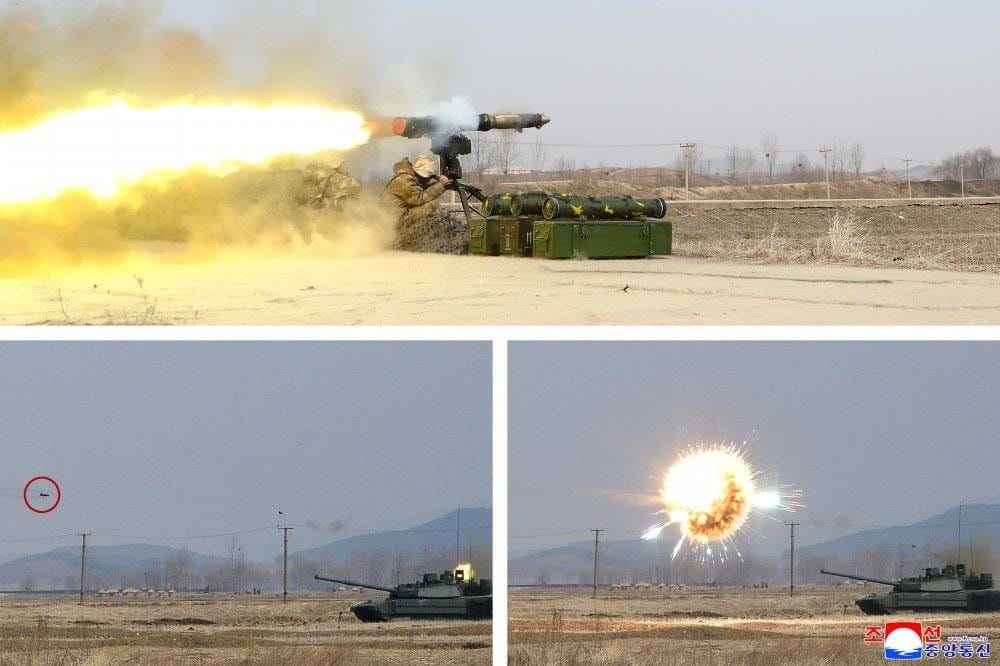
PYONGYANG — March 29, 2026 : North Korea has conducted a coordinated series of military evaluations involving a next-generation main battle tank, an upgraded solid-fuel missile engine, and special operations forces, underscoring Pyongyang’s continued focus on advancing both conventional and strategic capabilities under its current five-year defense development plan.
The developments were confirmed by the Korean Central News Agency (KCNA), which reported that leader Kim Jong Un personally supervised the activities at multiple defense facilities, including the Armored Weapons Institute of the Academy of Defense Sciences in Pyongyang.
Tank Evaluation Focuses on Active Protection System Performance
The primary component of the March 29 activities was a performance evaluation of a “new-type” main battle tank equipped with an advanced Active Protection System (APS). The test was designed to assess the vehicle’s survivability against modern anti-armor threats approaching simultaneously from multiple directions and elevations.
According to KCNA, the APS demonstrated what it described as a “perfect defensive function,” achieving a claimed 100 percent interception probability under simulated combat conditions. The system was tested against a wide range of threats, reflecting current battlefield environments where armored platforms face layered and multi-domain attacks.
State media imagery showed the tank intercepting:
-
Vehicle-launched loitering munitions
-
Shoulder-fired rocket-propelled grenades (RPGs)
-
Top-attack anti-tank missiles
-
Tripod-mounted anti-tank guided missiles resembling Kornet-class systems
-
Small unmanned aerial vehicles, including FPV and kamikaze-style drones
The engagement sequences emphasized interception in the final moments before impact, indicating a hard-kill APS configuration designed to neutralize incoming threats at close range.
Following the demonstration, Kim Jong Un stated that the system is capable of destroying “almost all existing anti-tank means” and said the test validated the tank’s performance through practical evaluation. He also reiterated that the platform is unmatched globally in its class, according to KCNA.
Platform Identified as Chonma-2 Series by Analysts
While North Korean authorities did not disclose the official designation of the tank, external defense analysts assess that the vehicle corresponds to the Chonma-2 series, also referred to as M2020 or M2024 variants.
The platform represents a departure from earlier North Korean armored designs, incorporating features associated with contemporary third-generation main battle tanks. Visible characteristics include:
-
Integrated APS architecture: Four turret-mounted radar antennas paired with two interceptor launcher units, each carrying multiple ready-to-fire countermeasures
-
Supplemental protection: Explosive reactive armor (ERA) modules installed on hull sides and the turret roof
-
Rear defense measures: Anti-cumulative bar or cage armor protecting the engine compartment and turret rear against tandem warheads and drone attacks
The inclusion of roof protection and APS coverage against top-attack threats reflects adaptation to evolving battlefield risks, particularly from loitering munitions and elevated attack profiles observed in recent conflicts.
The March 29 evaluation follows an earlier live-fire combined arms exercise conducted on March 19, 2026, at Pyongyang Training Base No. 60 under the Capital Defense Corps. That drill involved coordinated infantry and tank operations, including simulated drone attack scenarios and assessments of both offensive and defensive capabilities of the same tank family.
Solid-Fuel Engine Test Signals Strategic Missile Progress
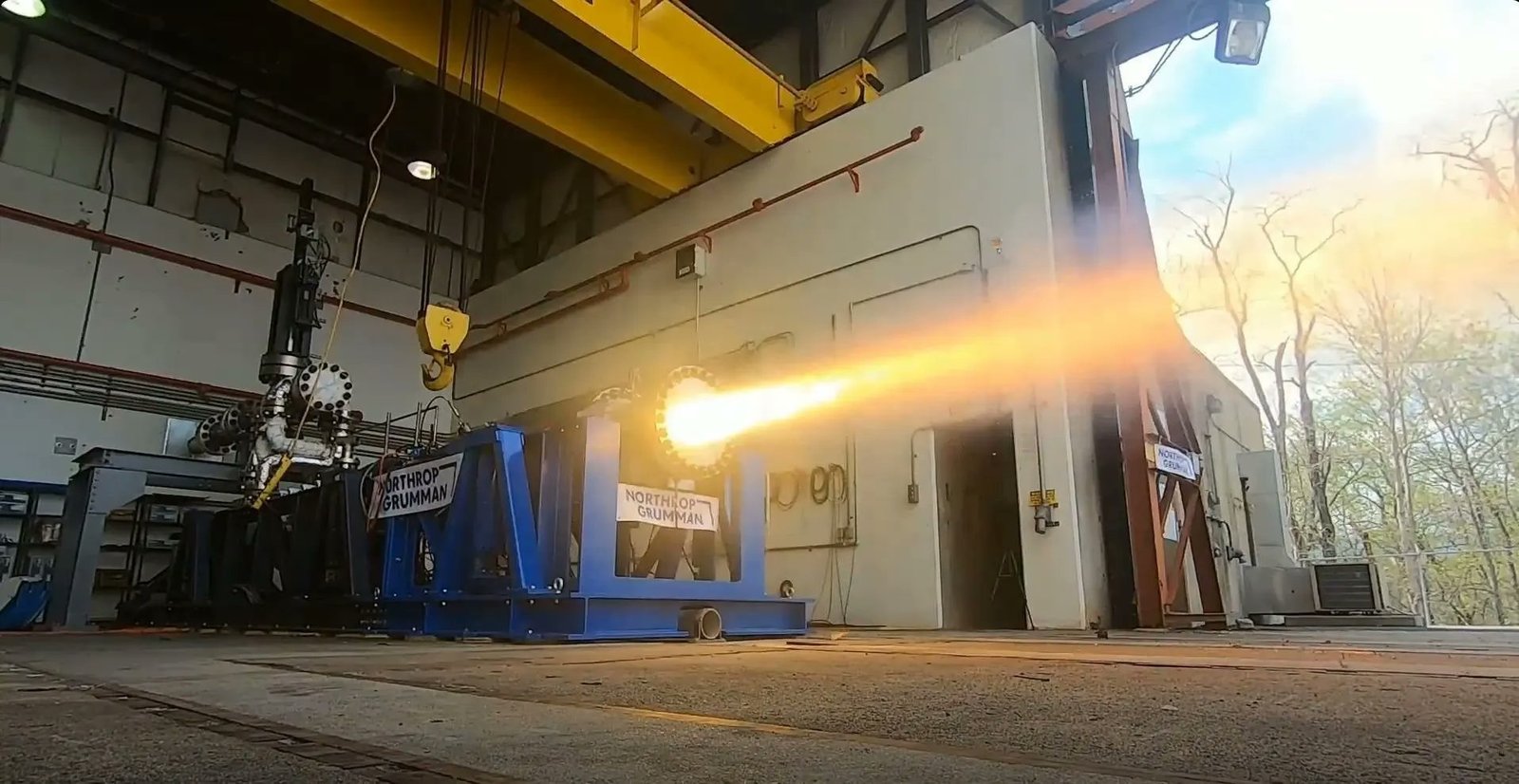
In parallel with the armored vehicle evaluation, KCNA reported that Kim Jong Un supervised a ground jet test of a newly developed high-thrust solid-fuel missile engine, highlighting continued investment in strategic weapons systems.
The engine, constructed using carbon-fiber composite materials, produced a maximum thrust of approximately 2,500 kilonewtons (kN). This marks a 26 percent increase over the 1,971 kN engine tested in September 2025.
Defense analysts assess that the engine is likely intended for integration into the Hwasong-20 intercontinental ballistic missile (ICBM), which remains under development. Solid-fuel propulsion systems are considered a priority for North Korea due to their operational advantages, including reduced launch preparation time and improved survivability compared to liquid-fueled systems.
Special Operations Forces Inspection and Reorganization Directive
Alongside equipment testing, Kim Jong Un also visited a special operations training base, where he observed small-unit tactical exercises. According to KCNA, he issued directives to accelerate the reorganization of North Korea’s special operations forces to align with modern combat requirements.
The inspection formed part of a broader review of military readiness, linking force structure adjustments with advancements in both conventional and strategic systems.
Integrated Modernization Across Conventional and Strategic Domains
The March 29 activities collectively illustrate North Korea’s parallel development approach, combining upgrades to armored ground forces with continued progress in missile technology and force readiness.
KCNA described the tank evaluation as a multi-aspect assessment aimed at verifying operational dependability in environments characterized by overlapping threats from guided missiles, drones, and loitering munitions. However, detailed technical specifications of the APS—such as sensor capabilities, interceptor types, and production status—were not disclosed, and the reported interception performance has not been independently verified.
Together with the earlier March 19 exercise, the latest tests indicate an ongoing effort by Pyongyang to refine the Chonma-2 tank platform while simultaneously advancing next-generation strategic systems, reflecting a structured implementation of its current defense modernization plan.
——— End of Article ———