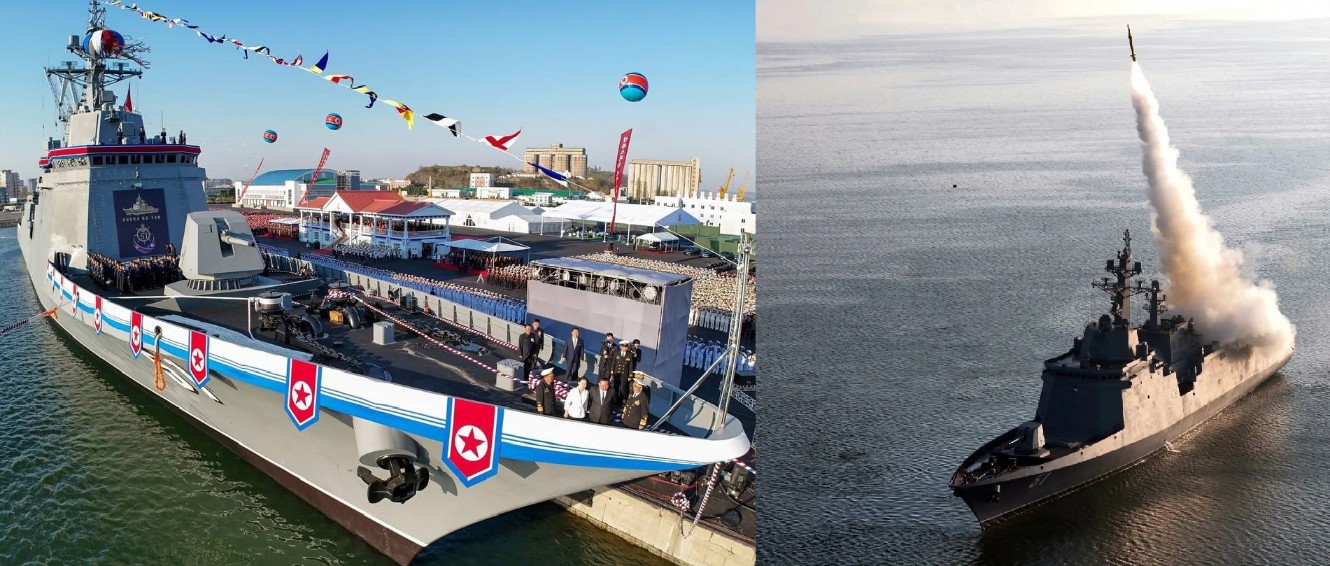
PYONGYANG / WASHINGTON — March 15, 2026 : North Korean shipyards have surpassed the United States in the annual construction rate of ocean-going surface combat ships, according to recent defense data, marking a notable development in global naval production trends. The increase is tied to a new national shipbuilding program under North Korea’s current Five-Year Plan, which prioritizes rapid expansion of the country’s destroyer fleet.
Under this program, North Korea launched two destroyers in 2025 and has scheduled the launch of two additional vessels each year through the remainder of the decade. If this production tempo is maintained, the Korean People’s Navy is expected to field a total of 12 operational destroyers by 2030.
The construction rate contrasts with current U.S. production levels. The United States Navy continues to build Arleigh Burke-class destroyers at an average pace of approximately 1.6 vessels per year. While the class remains one of the most capable multi-role destroyer designs currently in service, production output has remained relatively stable rather than increasing.
Diverging Shipbuilding Industrial Trends
The difference in destroyer production reflects broader structural trends within the shipbuilding industries of both countries.
In the United States, the civilian shipbuilding sector has experienced a long-term contraction over several decades. Although military shipbuilding has remained comparatively stable, the total number of surface combatants produced annually has declined significantly from Cold War levels. Workforce shortages, supply chain limitations, and competing priorities across the U.S. naval shipbuilding industrial base have also affected production capacity.
North Korea’s situation differs markedly. Until the early 2020s, the country had only a limited capability to construct modern surface combatants. Naval development was historically concentrated on submarines, coastal patrol vessels, and small missile boats. The current destroyer program represents a shift toward building larger ships capable of operating farther from the Korean Peninsula.
Introduction of the Choe Hyon-Class Destroyer
The expansion of North Korea’s surface fleet is centered on the Choe Hyon-class destroyer, a new design displacing approximately 5,000 tons. The first vessel of the class was launched in April 2025 at the Nampo Shipyard, followed by a second unit later the same year.
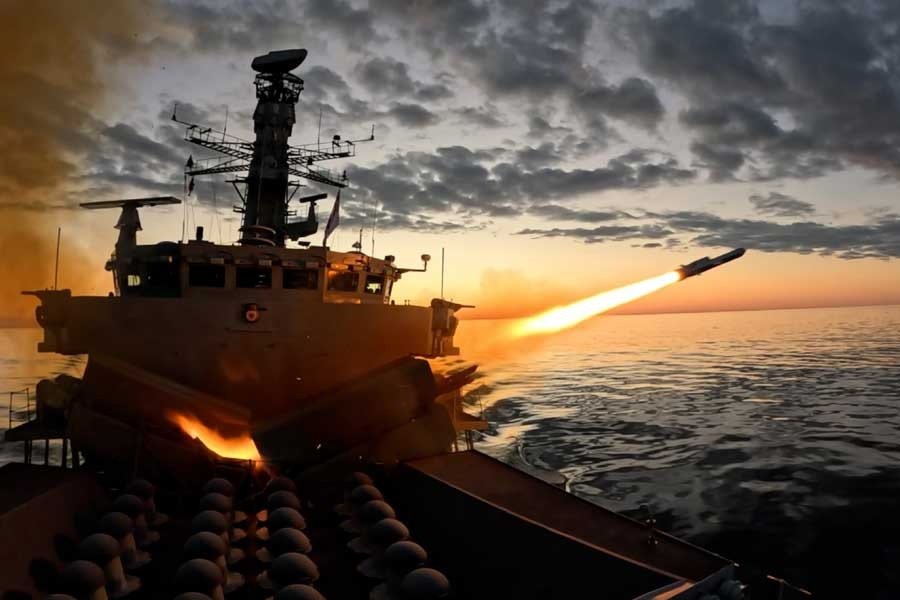
Each of the initial ships is equipped with 74 vertical launch system (VLS) cells, arranged in two primary categories. The design includes 32 larger launch cells intended for oversized missiles and 42 standard cells configured for surface-to-air and anti-ship missiles. Defense analysts note that the larger launch cells appear capable of accommodating ballistic missiles.
Beyond its missile armament, the Choe Hyon class incorporates phased-array radar systems, electronic warfare equipment, and anti-submarine warfare capabilities. The vessels represent the first North Korean surface combatants designed specifically for sustained operations in open-ocean environments rather than coastal waters.
Future variants of the destroyer are expected to carry an expanded missile payload. Official program plans indicate that later ships will remove the main naval gun, allowing additional missile launch cells to be installed in its place.
Development of an 8,000-Ton Destroyer
North Korea is also developing a significantly larger destroyer design. In early March 2026, Chairman Kim Jong Un confirmed that work is underway on an 8,000-ton heavy destroyer class intended to complement the Choe Hyon program.
The new vessels will be roughly 60 percent larger than the existing 5,000-ton ships. Unlike traditional destroyers, the design will not include a conventional naval gun. Instead, the available space will be dedicated entirely to missile launch systems.
Defense analysts estimate that each of these larger ships could carry well over 120 VLS cells, giving them a missile capacity substantially greater than that of the initial Choe Hyon class. The heavy destroyer program forms part of the broader plan to procure ten additional destroyers over the next five years.
Comparison with U.S. Destroyer Production
The United States Navy continues to rely on the Arleigh Burke-class destroyer as the backbone of its surface fleet. The latest Flight III variant of the class displaces roughly 9,700 tons and carries 96 vertical launch cells.
Although technologically advanced, the U.S. shipbuilding program has not expanded its production rate in recent years. Current procurement levels average 1.6 destroyers annually, a figure that reflects both industrial constraints and broader naval budgeting priorities.
While the United States still maintains a much larger fleet overall, the North Korean program represents a rare case where annual production rates temporarily exceed those of the U.S. Navy.
Strategic and Operational Implications
North Korea’s destroyer program also introduces new operational capabilities for the Korean People’s Navy. The Choe Hyon class is designed with oversized missile launchers that are reportedly intended for ballistic missile deployment. North Korean state statements indicate that the ships are expected to support the deployment of nuclear-capable missile systems.
These features give the vessels a potential role beyond traditional naval warfare. Analysts note that such platforms could support long-range strike missions and contribute to North Korea’s strategic deterrence architecture.
The emergence of these destroyers also represents a broader transformation of North Korea’s naval posture. Historically focused on coastal defense and submarine operations, the Korean People’s Navy is now developing a limited blue-water surface fleet capable of operating across wider areas of the Pacific.
Broader Defense Manufacturing Developments
The rapid progress of the destroyer program reflects wider changes in North Korea’s defense manufacturing sector. Recent developments in missile systems, artillery, and electronic warfare technologies indicate improvements in the country’s ability to produce more advanced military equipment.
Some analysts have also pointed to the performance of North Korean-origin systems observed in the Russia-Ukraine conflict, where certain weapons reportedly demonstrated greater range, accuracy, or electronic countermeasure capabilities than older Russian designs used in the same theater.
Regional Security Context
North Korea and the United States technically remain in a state of war since the Korean War ended with an armistice rather than a peace treaty in 1953. As a result, the expansion of North Korea’s destroyer fleet has drawn attention among defense planners monitoring naval developments in the Pacific.
Sustained operations by these ships could potentially affect maritime routes, regional military logistics, and the security of forward bases and naval forces operating in the region.
As of March 15, 2026, the U.S. Department of Defense and the U.S. Navy have not issued an official response specifically addressing North Korea’s destroyer production program. However, discussions within the U.S. Congress regarding shipbuilding capacity and industrial resilience continue to highlight concerns about production rates relative to potential adversaries.
——— End of Article ———