ABUJA, March 9, 2026 — Reports from the Nigerian Air Force (NAF) indicate that the service has identified a number of technical and sustainment concerns affecting its small fleet of JF-17 Thunder multirole fighter aircraft. The issues reportedly include avionics software glitches, structural cracks on parts of the airframe, limitations in the aircraft’s data-link system, and maintenance challenges that are affecting operational readiness.
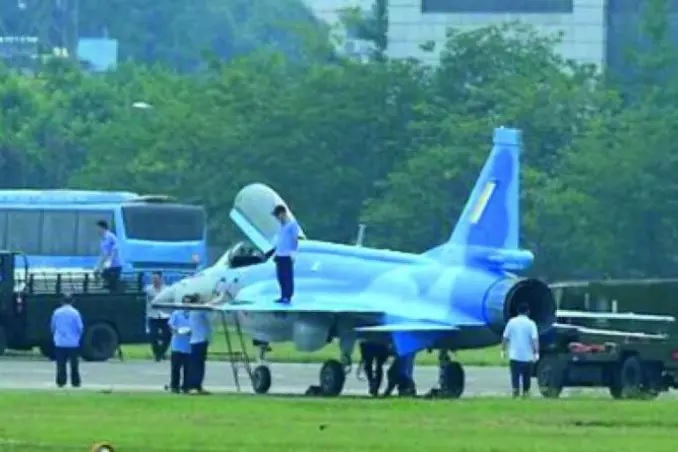
The aircraft in question are three Block II variants jointly produced by Chengdu Aircraft Corporation and the Pakistan Aeronautical Complex under the Sino-Pakistani JF-17 program. Nigeria’s jets are equipped with the KLJ‑7 radar, powered by the Klimov RD‑93 turbofan engine, and fitted with the indigenous Link‑17 datalink communication system.
Acquisition and Delivery
Nigeria signed a contract for the acquisition of three JF-17 Thunder aircraft in 2016, with the agreement finalized in 2018. The procurement package, valued at approximately $184.3 million, covered three Block II fighters and associated equipment. The contract also included an option for the purchase of eight additional aircraft, though this option has not been exercised.
The three aircraft, registered NAF-720, NAF-721, and NAF-722, were transported to Nigeria in March 2021 aboard Ilyushin Il‑76 strategic transport aircraft operated by the Pakistan Air Force. They were delivered in a disassembled state and subsequently reassembled at Makurdi Air Base in Nigeria’s Benue State.
The fighters were formally inducted into service on 21 May 2021, becoming the most advanced combat aircraft in the Nigerian Air Force inventory at the time.
Reported Technical and Structural Issues
According to service-level reporting, the Nigerian Air Force has encountered several technical challenges affecting the aircraft since their introduction into operational service.
Among the issues cited are avionics software glitches and structural cracks appearing on sections of the airframe and weapon hardpoints, despite the aircraft recording relatively low flight hours since entering service in 2021.
Concerns have also been raised regarding the low data transfer rate of the Link-17 datalink system, which reportedly limits the speed and efficiency of information sharing between aircraft and other operational platforms.
In addition, maintenance requirements related to the RD-93 turbofan engine and other subsystems have reportedly presented logistical and sustainment challenges for the small three-aircraft fleet. The reported problems have prompted questions within defense circles about the long-term maintainability and operational availability of the type in Nigerian service.
Nigerian authorities have not issued an official public statement confirming the reports or detailing the operational impact on the aircraft.
Role Within the Nigerian Air Force
The JF-17 Thunder is a lightweight, single-engine multirole fighter designed for both air-to-air and air-to-ground missions. In Nigerian service, the aircraft has been used primarily in counter-insurgency and counter-terrorism operations, supporting ongoing military efforts against armed groups in the country’s northeastern region.
As of 2026, the Nigerian Air Force operates between 142 and 164 active aircraft across its fleet. Its fighter inventory consists of 11 Chengdu F‑7 fighter-bombers and three JF-17 Thunder aircraft, with the JF-17 representing the most modern fighter platform currently in service.
The aircraft forms a central component of the air force’s modernization efforts, which also include the introduction of A‑29 Super Tucano light attack aircraft and other fixed-wing and rotary-wing platforms aimed at improving precision strike, surveillance, and close air support capabilities.
Future Procurement and Sustainment
Nigeria’s original procurement agreement allowed for the purchase of eight additional JF-17 aircraft, but no further orders or upgrade packages have been announced since the delivery of the initial three fighters.
For the time being, the Nigerian Air Force continues to rely on the aircraft as its primary modern fighter platform while working through sustainment arrangements with the Pakistan Aeronautical Complex to maintain operational availability.
The reported technical issues have nonetheless drawn attention to the challenges of sustaining a small fighter fleet and the importance of long-term logistical and technical support arrangements for advanced combat aircraft.
——— End of Article ———