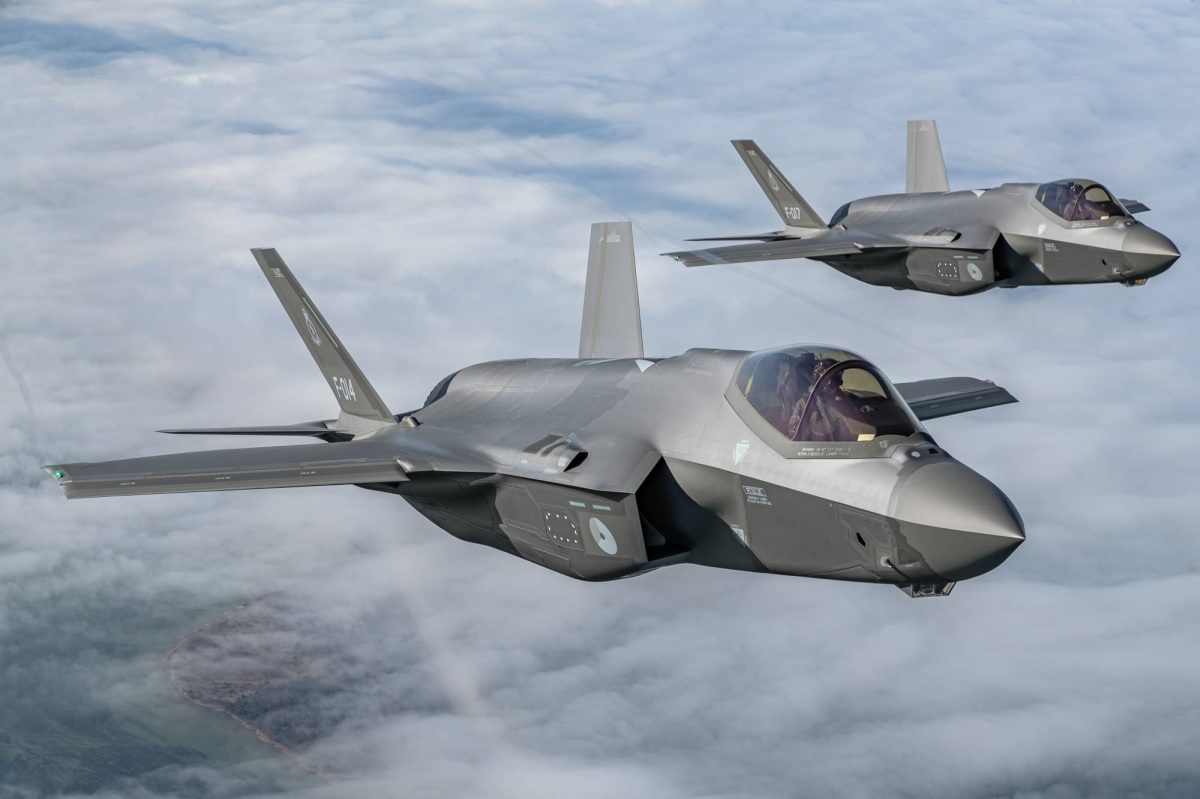
THE HAGUE : Dutch State Secretary for Defence Gijs Tuinman has stated that European operators of the F-35 Lightning II possess the technical capability to ensure operational independence from the United States if required, as part of a broader discussion on European defense readiness and long-term strategic autonomy.
Speaking in a recent interview with BNR Podcasts, Tuinman addressed concerns regarding the reliance of European F-35 fleets on US-managed software systems. During the exchange, he indicated that the aircraft’s software architecture could theoretically be bypassed, comparing the process to “jailbreaking” a consumer device.
“I’m going to say something I should never say, but I’ll do it anyway,” Tuinman said. “Just like your iPhone, you can jailbreak an F-35. I won’t say more about it.”
When asked whether European operators could modify the aircraft’s systems without US approval, Tuinman responded, “That’s not the point… we’ll see whether the Americans will show their true colors.”
His remarks were delivered in the context of Europe’s stated objective to achieve greater military self-reliance by the end of 2028, including the ability to defend itself without direct US assistance.
The Software Architecture Behind the F-35
The F-35 Lightning II, developed by Lockheed Martin, differs from earlier-generation combat aircraft in its extensive reliance on centralized digital infrastructure and software integration. European operators — including the Netherlands — depend on several US-managed systems that support maintenance, logistics, and mission functionality.
One key element is the Operational Data Integrated Network (ODIN), which replaced the earlier Autonomic Logistics Information System (ALIS). ODIN is designed to monitor aircraft health, track component degradation, manage maintenance schedules, and transmit operational data to centralized servers. The system supports predictive maintenance and fleet readiness management across participating nations.
The aircraft also relies on Mission Data Files (MDFs), which are essential to its sensor and electronic warfare capabilities. MDFs contain detailed threat libraries that allow the F-35 to identify and classify radar systems, missile batteries, and aircraft signatures. These files are compiled, validated, and updated through US-led processes before distribution to partner nations.
Additionally, the F-35 operates within encrypted NATO communications frameworks, including Link-16 and other secure networks. Access to certain advanced weapons systems and secure communications requires cryptographic keys and authorization protocols managed within alliance structures.
Because of this architecture, defense analysts have long discussed whether the United States retains indirect leverage over foreign-operated F-35 fleets. While there is no publicly confirmed mechanism that allows the US to remotely disable an aircraft in flight, limitations on software updates, maintenance system access, mission data updates, or cryptographic support could gradually affect operational readiness.
Implications of the “Jailbreaking” Reference
In technology terms, “jailbreaking” refers to bypassing manufacturer-imposed software restrictions to gain greater system control. Applied to the F-35 context, Tuinman’s analogy suggests that European technicians could potentially develop technical workarounds to reduce or eliminate dependencies on US-controlled software elements if political circumstances required it.
The Dutch Ministry of Defence has not provided technical details on what specific systems could be modified or how such changes would be implemented. It remains unclear whether Tuinman was referring to a theoretical capability, contingency planning, or an existing technical pathway.
Neither Lockheed Martin nor the US Department of Defense has issued public responses to the remarks.
European Strategic Autonomy and the 2028 Objective
Tuinman’s comments align with broader discussions across European capitals about strengthening defense sovereignty. Several European governments have increased defense spending and expanded industrial cooperation in response to evolving security dynamics.
The Netherlands, as an F-35 partner nation, has invested significantly in the aircraft program and operates the jet as the backbone of its air force. Ensuring unrestricted operational control over such a core capability is central to any credible timeline for European defense autonomy.
Tuinman stated that Europe aims to be capable of defending itself independently by late 2028. Achieving that objective would require secure access to logistics networks, mission data updates, munitions integration, and communications systems without vulnerability to external political decisions.
His remarks reflect ongoing discussions within Europe regarding the long-term structure of transatlantic security arrangements. By indicating that software workarounds may exist, Tuinman highlighted that European governments are examining contingency measures while continuing to operate within established alliance frameworks.
No Immediate Policy Changes Announced
Despite the attention generated by the comments, there has been no indication of immediate operational changes to Dutch or European F-35 fleets. The Netherlands remains a NATO member and a close defense partner of the United States.
The Dutch Ministry of Defence has not announced plans to modify aircraft software, alter participation in US-managed support systems, or pursue independent mission data development outside existing agreements.
At present, European F-35 operators continue to rely on established maintenance, software, and mission data frameworks coordinated through the multinational F-35 program office and US defense infrastructure.
——— End of Article ———